
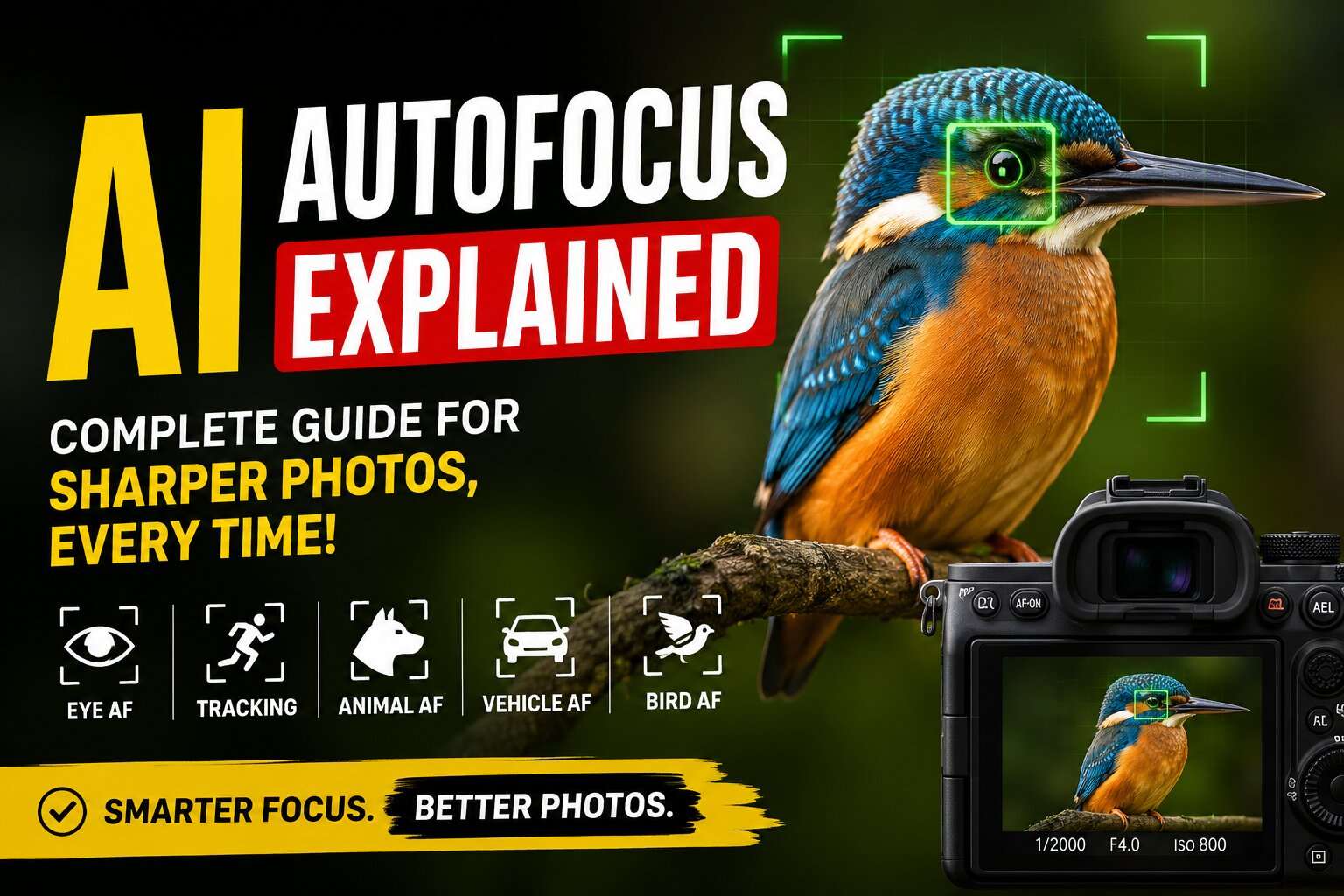
Learn how AI autofocus Explained works in modern cameras. Discover AI subject detection, eye autofocus, vehicle tracking, wildlife AF, advantages, limitations, and the best AI autofocus cameras in 2026.
Table of Contents
Last Updated: August 2026
Introduction
Modern cameras are smarter than ever before. Thanks to advances in artificial intelligence (AI), today’s mirrorless and DSLR cameras can recognize people, animals, vehicles, birds, airplanes, trains, and even insects with remarkable speed and accuracy. Instead of relying solely on traditional autofocus points, many modern cameras use AI autofocus to identify subjects, predict movement, and maintain focus even in challenging shooting conditions.
Whether you’re photographing a bride walking down the aisle, a bird in flight, a fast-moving athlete, or a child running across a park, AI autofocus helps improve your chances of capturing sharp, well-focused images. By combining machine learning, subject recognition, and advanced autofocus algorithms, camera manufacturers have made autofocus systems more intelligent than ever before.
However, many photographers still wonder:
- What exactly is AI autofocus?
- How does it work?
- Is AI autofocus better than traditional autofocus?
- Which cameras have the best AI autofocus systems?
- Is it worth upgrading for AI autofocus alone?
In this guide, we’ll explain how AI autofocus works, compare it with traditional autofocus systems, explore different subject detection technologies, discuss its advantages and limitations, and help you understand whether AI autofocus is worth using for your photography style.
If you’re new to artificial intelligence in photography, start with our AI Photography Guide before learning how AI autofocus works.
Quick Answer
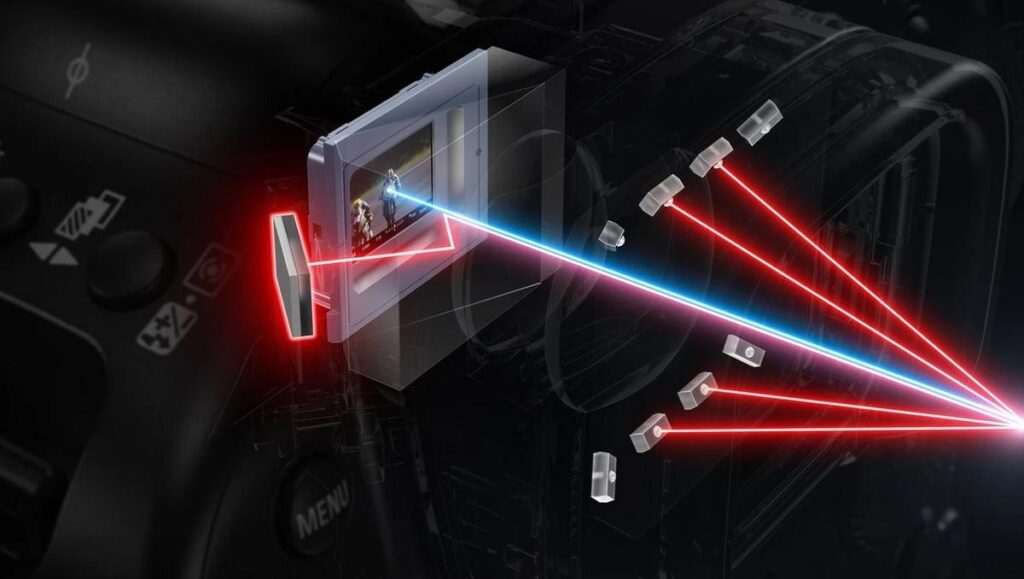
AI autofocus is an advanced camera focusing system that uses artificial intelligence and machine learning to recognize and track specific subjects, such as people, animals, birds, vehicles, or aircraft. Unlike traditional autofocus, which mainly focuses on contrast or phase detection, AI autofocus continuously analyzes the scene, predicts subject movement, and keeps the selected subject in focus, making it especially useful for sports, wildlife, event, and portrait photography.
AI Autofocus at a Glance
If you’re comparing traditional autofocus with modern AI autofocus, here’s a quick overview of the key differences.
| Feature | Traditional Autofocus | AI Autofocus |
|---|---|---|
| Subject Recognition | ❌ | ✅ |
| Eye Detection | Basic | Advanced |
| Animal Detection | Rare | Yes |
| Bird Detection | Rare | Yes |
| Vehicle Detection | No | Yes |
| Predictive Tracking | Limited | Advanced |
| Beginner Friendly | Moderate | Excellent |
| Best For | Static Subjects | Moving Subjects |
What Is AI Autofocus?
AI autofocus is an intelligent autofocus technology that combines traditional focusing systems with artificial intelligence.
Rather than simply detecting areas of contrast or phase difference, AI autofocus identifies what the subject actually is.
For example, instead of focusing on the closest object in the frame, an AI autofocus system may recognize:
- Human eyes
- Human faces
- Animal eyes
- Birds
- Dogs
- Cats
- Cars
- Motorcycles
- Trains
- Airplanes
- Wildlife
Once the camera recognizes the subject, it continuously tracks it throughout the frame, even if it moves unpredictably.
Why Is AI Autofocus Important?
Photography often involves subjects that move unexpectedly.
Examples include:
- Children playing
- Wedding couples walking
- Birds flying
- Racing cars
- Football players
- Wildlife
- Pets
Traditional autofocus may lose focus when the subject changes direction quickly or moves behind obstacles.
AI autofocus improves the camera’s ability to recognize and follow the intended subject, increasing the number of sharp images captured during continuous shooting.
How Does AI Autofocus Work?
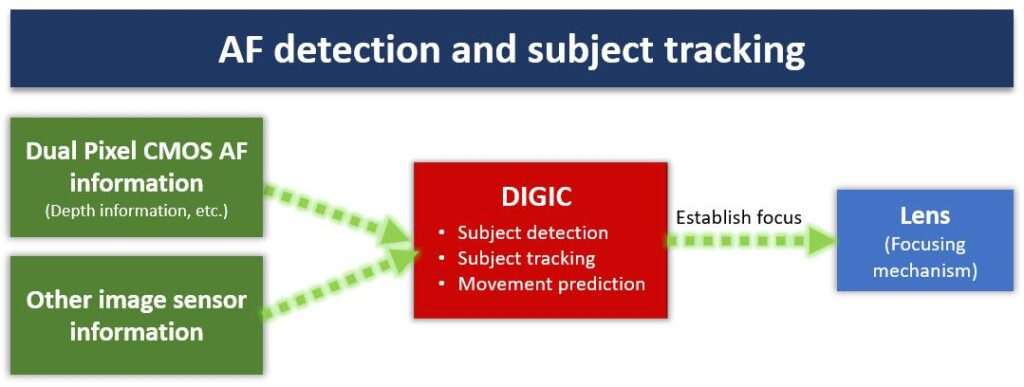
Although each camera manufacturer uses its own technology, AI autofocus generally follows a similar process.
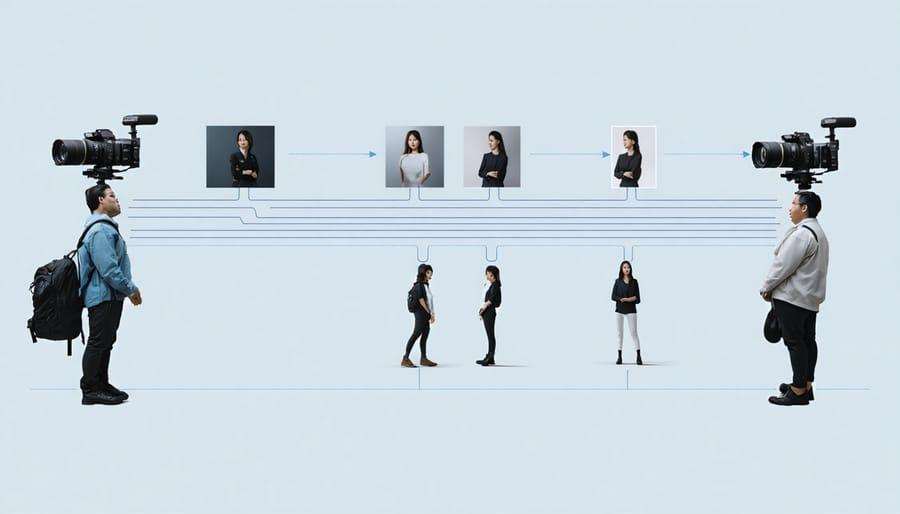
Step 1: Scene Analysis
The camera analyzes everything visible in the frame.
It looks for:
- Shapes
- Colors
- Movement
- Patterns
- Eyes
- Faces
- Bodies
- Vehicles
Step 2: Subject Recognition
Artificial intelligence compares the detected subject with patterns learned during development.
The camera identifies whether the subject is:
- A person
- A bird
- An animal
- A car
- A motorcycle
- An airplane
- A train
Many modern cameras can distinguish between multiple subject categories automatically.
Step 3: Subject Tracking
After identifying the subject, the autofocus system tracks it continuously.
If the subject moves:
- Left
- Right
- Forward
- Backward
- Across the frame
…the camera updates focus in real time.
Step 4: Focus Prediction
One of AI autofocus’s biggest strengths is predicting where a moving subject will be next.
Rather than reacting only after movement occurs, the system estimates the subject’s trajectory and adjusts focus proactively.
This predictive behavior helps maintain focus on fast-moving subjects.
Step 5: Continuous Focus Adjustment
During burst shooting or video recording, AI autofocus repeatedly refines focus many times per second.
This allows the camera to maintain sharp focus even during complex movements.
Evolution of Camera Autofocus
Autofocus technology has advanced significantly over the years.
Manual Focus
Earlier cameras required photographers to rotate the focus ring manually.
Success depended entirely on the photographer’s skill and experience.
Contrast Detection Autofocus
Digital cameras introduced contrast detection.
The camera searched for maximum image contrast to determine focus.
Advantages:
- Accurate
- Simple
Limitations:
- Slower
- Less effective for moving subjects
Phase Detection Autofocus
Phase detection autofocus greatly improved focusing speed.
It quickly determines whether focus should move forward or backward.
Advantages:
- Fast
- Excellent for moving subjects
- Widely used in DSLRs and mirrorless cameras
Hybrid Autofocus
Modern mirrorless cameras often combine:
- Contrast detection
- Phase detection
This hybrid approach delivers both speed and accuracy.
AI Autofocus
Today’s AI autofocus builds upon hybrid autofocus by adding intelligent subject recognition and tracking.
Instead of simply finding focus, it understands what should remain in focus.
Timeline: Evolution of Camera Autofocus
Camera autofocus has evolved significantly over the past few decades.
Manual Focus
↓
Contrast Detection Autofocus
↓
Phase Detection Autofocus
↓
Hybrid Autofocus
↓
AI Subject Detection
↓
Deep Learning Autofocus
↓
Predictive AI Tracking
↓
Future Intelligent Autofocus Systems
AI Autofocus vs Traditional Autofocus
| Feature | Traditional Autofocus | AI Autofocus |
|---|---|---|
| Subject Recognition | No | Yes |
| Eye Detection | Limited | Excellent |
| Animal Detection | Rare | Yes |
| Vehicle Detection | No | Yes |
| Predictive Tracking | Basic | Advanced |
| Wildlife Photography | Moderate | Excellent |
| Sports Photography | Good | Excellent |
| Portrait Photography | Good | Excellent |
| Automation | Moderate | High |
Overall, AI autofocus offers better subject awareness and tracking, especially in dynamic shooting situations.
Who Should Use AI Autofocus?
AI autofocus is useful for photographers of all skill levels, but it provides the greatest advantages for photographers working with moving subjects.
It is especially beneficial for:
- Wedding photographers
- Portrait photographers
- Wildlife photographers
- Bird photographers
- Sports photographers
- Event photographers
- Travel photographers
- Street photographers
- Content creators
- Videographers
- Photography enthusiasts
- Beginners learning interchangeable-lens cameras
Whether you’re photographing a fast-moving athlete or capturing a child’s natural expressions, AI autofocus can significantly improve focus accuracy and reduce missed shots.
Types of AI Subject Detection
Different camera systems can recognize different types of subjects.
Human Eye Autofocus
Locks focus directly on a person’s eye, helping create sharp portraits with accurate eye focus even at wide apertures.
Face Detection
Detects and tracks human faces when eyes are not clearly visible.
Useful for:
- Events
- Street photography
- Group photos
- Video recording
Animal Eye AF
Recognizes the eyes of many animals, improving focus accuracy for pet and wildlife photography.
Commonly supports:
- Dogs
- Cats
- Horses
- Other mammals (varies by camera)
Bird Eye AF
Designed specifically for birds, including those in flight.
This feature has become especially valuable for wildlife photographers.
Vehicle Detection
Many cameras can identify:
- Cars
- Motorcycles
- Racing vehicles
This helps maintain focus during motorsports photography.
Aircraft Detection
Some professional cameras recognize:
- Airplanes
- Helicopters
Useful for aviation photography and air shows.
Train Detection
Certain camera systems also include dedicated train recognition modes, assisting photographers who specialize in railway photography.
Which Cameras Use AI Autofocus?
Many modern mirrorless cameras now include AI-powered autofocus systems.
Major manufacturers offering AI autofocus include:
- Sony
- Canon
- Nikon
- Fujifilm
- OM System
- Panasonic
Each brand implements AI autofocus differently, with varying subject recognition capabilities and tracking performance.
Advantages of AI Autofocus
AI autofocus offers several practical benefits:
- Faster subject acquisition
- Improved tracking accuracy
- Better eye detection
- More consistent portrait focus
- Increased keeper rate during burst shooting
- Better wildlife performance
- Improved sports photography
- More reliable video autofocus
- Reduced missed shots
- Easier operation for beginners
These advantages help photographers focus more on composition and timing instead of manually adjusting focus.
Pros and Cons of AI Autofocus
Like any camera technology, AI autofocus has both strengths and limitations. Understanding them can help you decide when to rely on AI and when manual control may still be the better choice.
Pros
- Tracks moving subjects with impressive accuracy.
- Maintains focus on eyes, faces, animals, and vehicles.
- Increases the number of sharp images during burst shooting.
- Makes photography easier for beginners.
- Improves wildlife, sports, and action photography.
- Provides smoother and more reliable video autofocus.
- Reduces the need to manually move autofocus points.
- Helps photographers focus more on composition and timing.
Cons
- Available primarily on newer mirrorless cameras.
- Performance varies between camera brands and models.
- Can struggle when subjects are heavily obstructed.
- Requires compatible lenses for the best autofocus performance.
- May be less reliable in extremely low-light conditions.
- AI cannot replace good shooting technique or creative judgment.
Can AI Autofocus Replace Photographer Skill?
No.
AI autofocus is a powerful assistant, but it cannot replace the photographer’s judgment.
You still need to choose:
- Composition
- Camera settings
- Lighting
- Exposure
- Timing
- Creative direction
AI helps keep subjects in focus, but creating compelling images still depends on the photographer’s skill and vision.
Related Articles:
- AI Photography Guide
- Best AI Photography Software
- Best AI Tools for Photographers
- Camera Buying Guide
- Best Camera Under ₹30,000
- Portrait Photography Tutorials
- Wildlife Photography Tips
- Mirrorless Camera Buying Guide
- Photography Tutorials
Professional Insight: AI autofocus significantly improves the ability to track moving subjects, but it is not infallible. Performance depends on factors such as lighting conditions, subject visibility, lens quality, and camera settings. Learning when to use eye detection, subject tracking, or manual focus remains an important skill for photographers who want consistently reliable results.
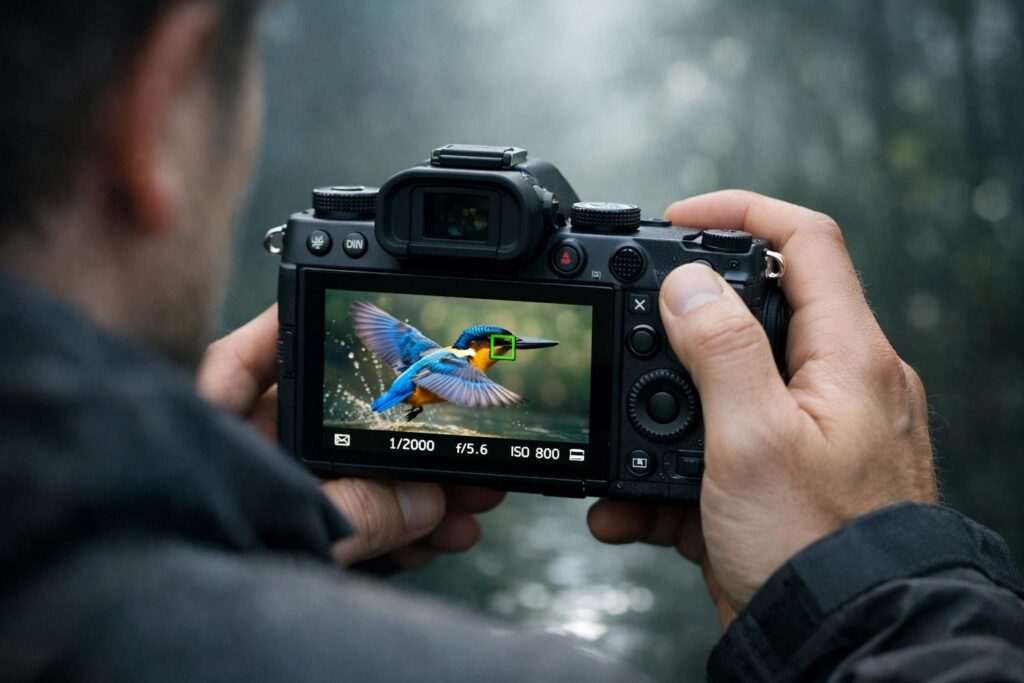
AI Eye Autofocus Explained
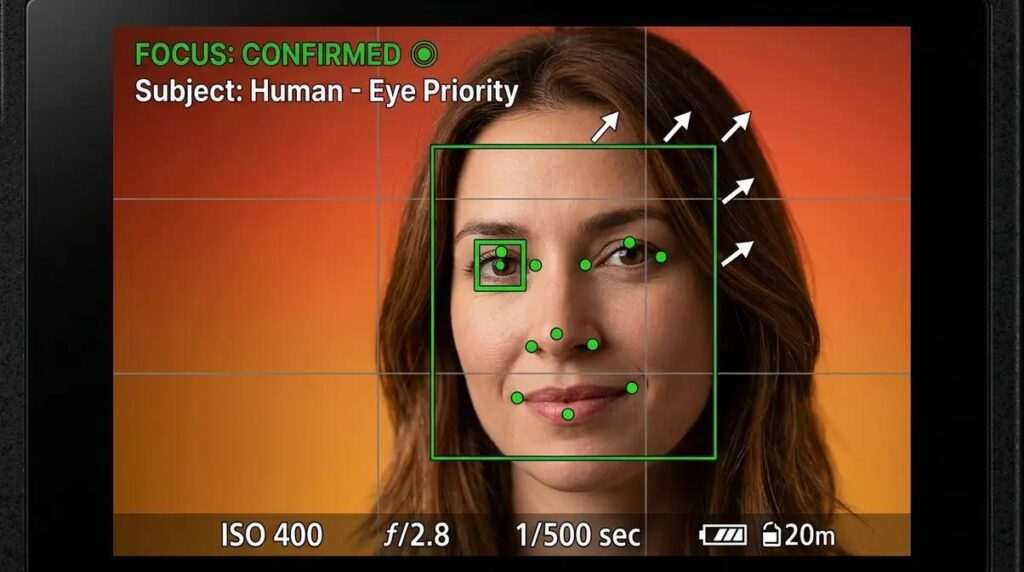
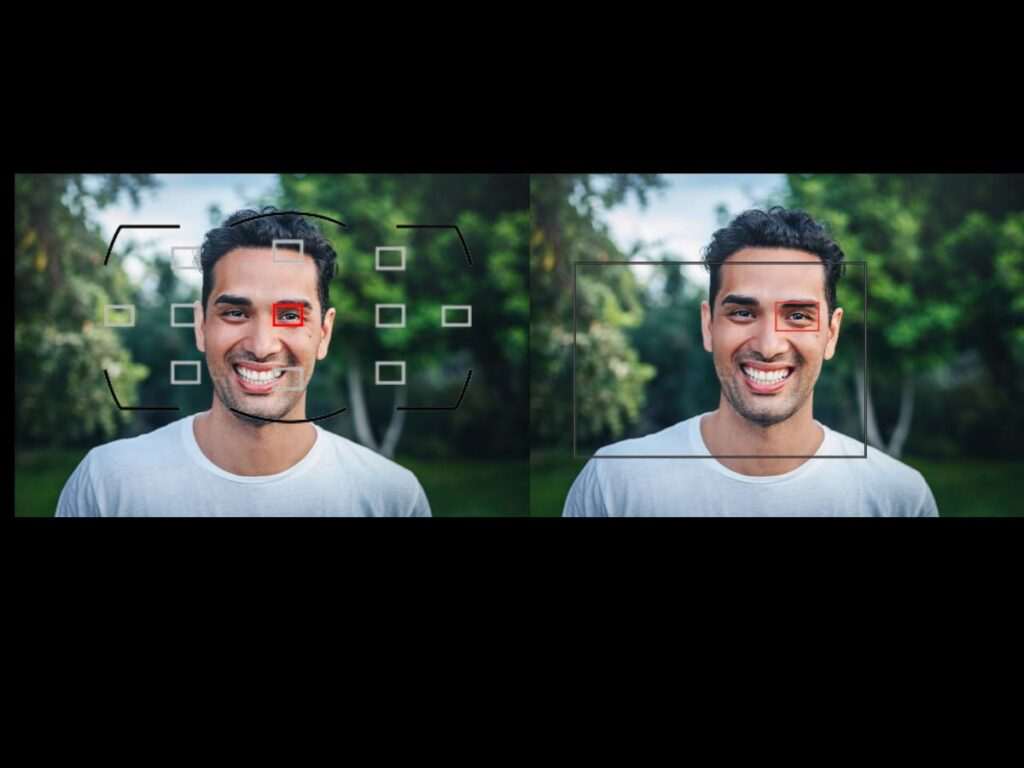
One of the most popular AI autofocus features is Eye Autofocus (Eye AF). Instead of simply focusing on a person’s face, the camera identifies the eyes and keeps them in sharp focus, even if the subject moves around the frame.
Eye autofocus is especially valuable because viewers naturally look at a person’s eyes first. A perfectly focused eye can make a portrait feel sharp and engaging, while slightly soft eyes can reduce the overall impact of an otherwise great image.
Modern cameras can switch between the left and right eye automatically or allow photographers to manually select which eye should receive focus.
Best Uses for Eye Autofocus
- Portrait photography
- Wedding photography
- Fashion photography
- Street photography
- Event photography
- Family photography
- Video interviews
Advantages
- Extremely accurate portraits
- Better focus with wide apertures
- Reliable subject tracking
- Reduced missed focus
Face Detection Autofocus
When the camera cannot clearly identify the eyes, it usually switches to Face Detection AF.
Instead of focusing on random autofocus points, the camera recognizes human faces and prioritizes them.
This is particularly useful when:
- Subjects turn sideways
- Faces are partially covered
- People move quickly
- Shooting groups
- Recording video
Many cameras seamlessly switch between Face Detection and Eye AF as the subject changes position.
Animal Eye Autofocus
Animal Eye AF is one of the biggest improvements for wildlife and pet photographers.
Instead of focusing on fur or the nose, AI identifies the animal’s eye and keeps it in focus.
Supported animals vary by manufacturer but often include:
- Dogs
- Cats
- Horses
- Deer
- Foxes
- Zoo animals
- Other mammals
This technology greatly improves portrait-style wildlife images where eye sharpness is essential.
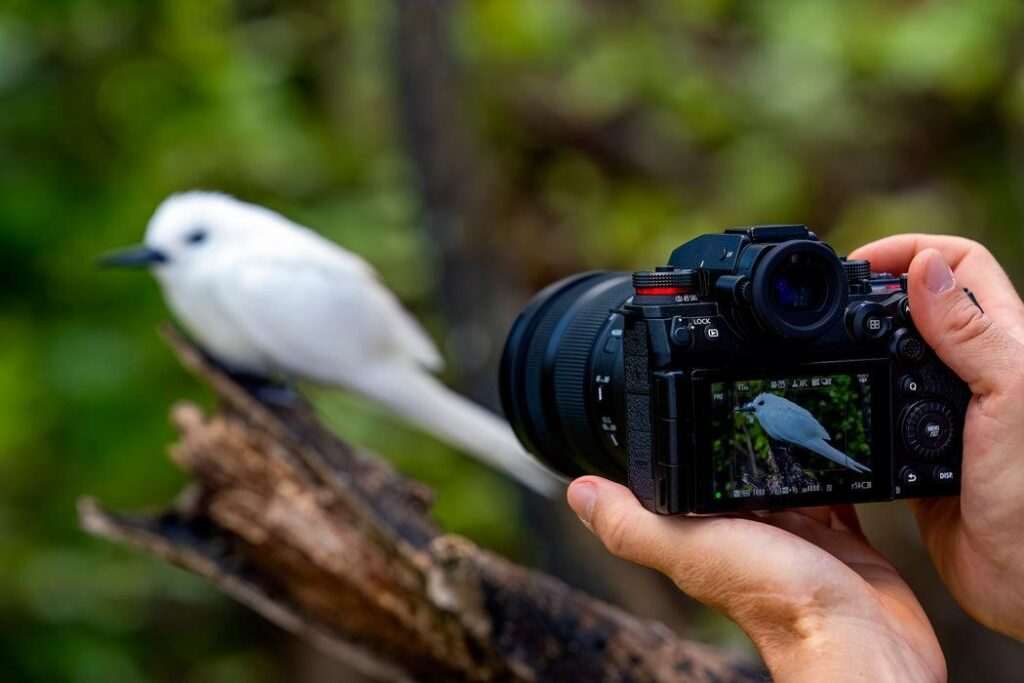
Bird Eye Autofocus
Bird photography presents one of the most difficult autofocus challenges because birds move unpredictably and often occupy only a small portion of the frame.
AI Bird Eye AF is trained to recognize birds and maintain focus on their eyes, even during flight.
Benefits
- Better tracking of birds in flight
- Faster subject acquisition
- Higher keeper rate
- Improved sharpness
- Reduced focus hunting
Bird Eye AF has become a major reason many wildlife photographers upgrade to newer mirrorless cameras.
Vehicle Detection Autofocus
Sports and motorsport photographers benefit from AI vehicle recognition.
Many cameras can identify:
- Cars
- Motorcycles
- Racing vehicles
- Bicycles (on supported models)
Instead of shifting focus to the background or nearby spectators, the camera follows the moving vehicle.
This is particularly useful during:
- Formula racing
- Rally events
- Motorcycle racing
- Cycling competitions
Aircraft Detection
Several flagship mirrorless cameras can recognize aircraft.
Supported subjects often include:
- Airplanes
- Helicopters
- Fighter jets
This helps aviation photographers maintain focus while photographing fast-moving aircraft during airshows or airport operations.
Train Detection
Some camera manufacturers have introduced train detection modes.
The autofocus system recognizes:
- High-speed trains
- Passenger trains
- Locomotives
Although this feature targets a niche audience, it demonstrates how AI subject recognition continues to expand.
AI Subject Tracking
Subject tracking combines AI recognition with continuous autofocus.
After selecting a subject, the camera follows it across the frame without requiring the photographer to manually move autofocus points.
The system constantly updates focus as the subject:
- Walks
- Runs
- Turns
- Changes direction
- Moves toward the camera
- Moves away from the camera
This is one of the biggest reasons modern mirrorless cameras outperform older autofocus systems.
Predictive Autofocus
AI autofocus doesn’t simply react to movement—it predicts it.
When photographing fast-moving subjects, the camera estimates where the subject will be by the time the shutter opens.
This predictive capability is particularly valuable for:
- Sports
- Wildlife
- Birds in flight
- Children playing
- Dance performances
Predictive autofocus helps increase the number of sharp images captured during continuous shooting.
AI Autofocus in Video
AI autofocus has transformed video recording.
Instead of constantly adjusting focus manually, videographers can rely on AI subject tracking.
Modern cameras smoothly transition focus while keeping subjects sharp.
Popular applications include:
- YouTube videos
- Interviews
- Weddings
- Documentary filmmaking
- Vlogging
- Live streaming
Reliable autofocus reduces distractions caused by focus hunting and helps maintain professional-looking footage.
Real-World Photography Examples
Wedding Photography
AI autofocus keeps the bride and groom in focus during:
- Walking down the aisle
- First dance
- Ring exchange
- Candid moments
Eye AF is especially helpful when subjects move unpredictably.
Wildlife Photography
Birds, deer, foxes, and other wildlife rarely stay still.
AI autofocus continuously tracks the animal, allowing photographers to concentrate on timing and composition instead of manually adjusting focus.
Sports Photography
Athletes move quickly and frequently change direction.
AI subject detection improves tracking during:
- Football
- Cricket
- Tennis
- Basketball
- Athletics
Combined with burst shooting, it helps capture decisive moments.
Portrait Photography
Portrait photographers often work with wide apertures such as f/1.2 or f/1.4, where the depth of field is extremely shallow.
Eye AF ensures that the eyes remain sharp, even if the subject shifts slightly.
Street Photography
People walking through crowded environments can be difficult to track.
AI autofocus helps maintain focus while allowing photographers to react quickly to spontaneous moments.
Benefits of AI Autofocus
Modern AI autofocus provides several practical advantages.
Faster Focusing
AI recognizes subjects almost instantly, reducing the time needed to acquire focus.
Higher Keeper Rate
More images remain sharp, especially during continuous shooting.
This means fewer missed opportunities and less time deleting out-of-focus photos.
Better Subject Tracking
The camera intelligently follows moving subjects across the frame, making action photography more reliable.
Easier for Beginners
Photographers new to interchangeable-lens cameras can achieve better focus accuracy without mastering advanced autofocus settings immediately.
Improved Professional Workflow
Professionals benefit from:
- Faster shooting
- Less manual adjustment
- Better consistency
- Increased confidence during critical moments
Limitations of AI Autofocus
Although AI autofocus is highly capable, it is not perfect.
Potential limitations include:
- Reduced accuracy in very low light
- Difficulty with heavily obstructed subjects
- Performance varies by camera model
- Some subject types may not be supported
- Fast or erratic movement can still challenge the system
- Certain features require compatible lenses or firmware updates
Understanding these limitations helps photographers choose the right autofocus mode for each situation.
Common Myths About AI Autofocus
Myth 1: AI Autofocus Never Misses Focus
False. While AI autofocus improves tracking accuracy, no autofocus system is flawless. Challenging lighting, obstructions, and unpredictable movement can still cause missed focus.
Myth 2: AI Autofocus Replaces Photographer Skill
False. AI assists with focusing, but composition, exposure, timing, and creativity remain the photographer’s responsibility.
Myth 3: AI Autofocus Is Only for Professionals
False. Beginners often benefit the most because AI makes it easier to capture sharp images while learning photography fundamentals.
Myth 4: Every Camera Has the Same AI Autofocus
False. Each manufacturer develops its own autofocus algorithms, subject recognition capabilities, and tracking performance, so results can differ between camera systems.
Professional Insight: AI autofocus works best when paired with the correct autofocus mode, appropriate shutter speed, and a compatible lens. Even the most advanced subject detection system cannot compensate for motion blur caused by slow shutter speeds or poor shooting technique. Learning how to combine AI autofocus with solid camera settings will consistently produce the highest keeper rate.
Best Cameras with AI Autofocus
AI autofocus performance varies between camera brands. While nearly every modern mirrorless camera includes some level of subject detection, flagship and mid-range models generally offer faster processing, more recognition modes, and better tracking accuracy.
Here’s how leading manufacturers approach AI autofocus.
| Camera Brand | AI Features | Best For |
|---|---|---|
| Sony | Real-time Recognition AF, Eye AF, Bird AF | Wildlife, Sports, Weddings |
| Canon | Dual Pixel CMOS AF II | Portraits, Events, Video |
| Nikon | 3D Tracking, Deep Learning AF | Wildlife, Sports |
| Fujifilm | AI Subject Detection | Travel, Street, Portrait |
| OM System | Intelligent Subject Detection AF | Wildlife, Birds |
| Panasonic | Phase Hybrid AF with AI | Video, Hybrid Creators |
Sony AI Autofocus
Sony has been one of the pioneers in AI-powered autofocus technology. Its Real-time Recognition AF combines deep learning algorithms with fast image processing to identify and track subjects across the frame.
Modern Sony cameras can recognize:
- Human eyes
- Human faces
- Birds
- Animals
- Insects (supported models)
- Cars
- Trains
- Airplanes
Sony’s autofocus system continuously analyzes subject movement and predicts where the subject will be, helping photographers maintain focus during high-speed action.
Best Sony Cameras for AI Autofocus
- Sony A1 II
- Sony A9 III
- Sony A7R V
- Sony A7 IV
- Sony A6700
Best For
- Wildlife photography
- Sports photography
- Wedding photography
- Bird photography
- Professional videography
Canon Dual Pixel CMOS AF II
Canon’s Dual Pixel CMOS AF II is widely regarded as one of the smoothest autofocus systems for both photography and video.
Its AI-powered subject detection supports:
- People
- Eyes
- Faces
- Animals
- Birds
- Horses
- Vehicles
One of Canon’s strengths is maintaining reliable eye tracking even when subjects briefly turn away or become partially obstructed.
Popular Canon Cameras
- EOS R1
- EOS R5 Mark II
- EOS R3
- EOS R6 Mark II
- EOS R8
Best For
- Portrait photographers
- Wedding photographers
- Hybrid photo/video creators
- Content creators
Nikon 3D Tracking with AI
Nikon combines traditional 3D Tracking with AI-assisted subject recognition to improve autofocus performance.
Its autofocus system identifies:
- Human subjects
- Birds
- Animals
- Vehicles
- Aircraft
Nikon cameras are particularly well known for dependable autofocus during sports and wildlife photography.
Popular Nikon Cameras
- Nikon Z9
- Nikon Z8
- Nikon Z6 III
- Nikon Zf
Best For
- Sports photography
- Wildlife photography
- Action photography
Fujifilm AI Autofocus
Fujifilm has significantly improved its autofocus systems in recent generations.
Its AI subject detection recognizes:
- Humans
- Animals
- Birds
- Cars
- Motorcycles
- Airplanes
- Trains
Fujifilm cameras combine these features with compact bodies, making them attractive for travel and street photographers.
Popular Fujifilm Cameras
- Fujifilm X-H2S
- Fujifilm X-T5
- Fujifilm X-S20
- Fujifilm GFX100 II
OM System AI Autofocus
OM System cameras are especially popular among bird and wildlife photographers.
Their AI autofocus recognizes:
- Birds
- Aircraft
- Trains
- Cars
Combined with lightweight telephoto systems, OM System offers an effective solution for photographers who travel frequently.
Panasonic AI Autofocus
Panasonic’s latest mirrorless cameras incorporate Phase Hybrid Autofocus along with AI-powered subject recognition.
Current subject detection includes:
- Humans
- Animals
- Vehicles
- Motorcycles
Panasonic’s autofocus performance has improved significantly for both still photography and video production.
Which Brand Has the Best AI Autofocus?
There is no universal winner because each system excels in different situations.
Wildlife Photography
Excellent choices:
- Sony
- Nikon
- OM System
Portrait Photography
Excellent choices:
- Canon
- Sony
Wedding Photography
Excellent choices:
- Canon
- Sony
- Nikon
Sports Photography
Excellent choices:
- Sony
- Nikon
- Canon
Video Creation
Excellent choices:
- Canon
- Panasonic
- Sony
AI Autofocus Comparison by Camera Brand
| Camera Brand | Eye AF | Bird AF | Vehicle AF | Video AF |
|---|---|---|---|---|
| Sony | ⭐⭐⭐⭐⭐ | ⭐⭐⭐⭐⭐ | ⭐⭐⭐⭐⭐ | ⭐⭐⭐⭐⭐ |
| Canon | ⭐⭐⭐⭐⭐ | ⭐⭐⭐⭐☆ | ⭐⭐⭐⭐☆ | ⭐⭐⭐⭐⭐ |
| Nikon | ⭐⭐⭐⭐☆ | ⭐⭐⭐⭐⭐ | ⭐⭐⭐⭐☆ | ⭐⭐⭐⭐☆ |
| Fujifilm | ⭐⭐⭐⭐☆ | ⭐⭐⭐⭐☆ | ⭐⭐⭐☆☆ | ⭐⭐⭐⭐☆ |
| OM System | ⭐⭐⭐⭐☆ | ⭐⭐⭐⭐⭐ | ⭐⭐⭐⭐☆ | ⭐⭐⭐☆☆ |
| Panasonic | ⭐⭐⭐⭐☆ | ⭐⭐⭐☆☆ | ⭐⭐⭐⭐☆ | ⭐⭐⭐⭐⭐ |
While every major manufacturer now offers AI-powered autofocus, each system has unique strengths. Sony is often praised for advanced subject recognition, Canon for portrait and video autofocus, Nikon for wildlife tracking, OM System for bird photography, and Panasonic for hybrid video performance.
Common AI Autofocus Mistakes
Even advanced autofocus systems can produce disappointing results if used incorrectly.
Using the Wrong Autofocus Mode
Selecting Single AF instead of Continuous AF for moving subjects is one of the most common mistakes.
For action photography, Continuous AF (AF-C or Servo AF) is usually the better choice.
Ignoring Subject Detection Settings
Many cameras allow photographers to choose specific subject types.
For example:
- Human
- Animal
- Bird
- Vehicle
Selecting the correct subject improves tracking accuracy.
Using Slow Shutter Speeds
A perfectly focused subject can still appear blurry because of motion blur.
For moving subjects, use shutter speeds appropriate to the scene.
Using the Wrong Focus Area
Modern cameras provide several focus area options, including:
- Single Point
- Zone AF
- Wide Area AF
- Tracking AF
Choosing the correct focus area helps AI autofocus perform more effectively.
Outdated Firmware
Camera manufacturers frequently improve autofocus performance through firmware updates.
Keeping your camera updated ensures access to the latest subject recognition improvements and autofocus refinements.
Tips for Better AI Autofocus Performance
Learn Your Camera’s Subject Modes
Spend time understanding how your camera switches between:
- Human detection
- Animal detection
- Bird detection
- Vehicle detection
Knowing when to change modes can improve focus accuracy.
Customize Autofocus Buttons
Many photographers assign Eye AF or Subject Tracking to custom buttons for faster access during a shoot.
Practice Tracking Moving Subjects
AI autofocus improves the technical side of focusing, but following subjects smoothly is still an important skill.
Practice photographing:
- Cyclists
- Birds
- Pets
- Children
- Sports events
Use Compatible Lenses
Modern autofocus systems perform best with lenses designed to support advanced autofocus features and fast focus motors.
Keep Subjects Visible
AI autofocus works most effectively when the camera has a clear view of the subject.
Heavy obstructions, dense foliage, or rapidly changing scenes may reduce tracking performance.
Does Lens Choice Affect AI Autofocus?
Yes.
Although the camera provides the intelligence behind AI autofocus, the lens plays a major role in how quickly and accurately focus is achieved.
Factors that influence autofocus performance include:
- Autofocus motor speed
- Lens compatibility
- Maximum aperture
- Optical design
- Firmware compatibility
Professional lenses with fast linear or ultrasonic motors typically deliver quicker and quieter autofocus than older entry-level lenses.
Is AI Autofocus Better Than Manual Focus?
For many situations, AI autofocus is faster and more consistent than manual focusing.
However, manual focus remains valuable in scenarios such as:
- Macro photography
- Astrophotography
- Long-exposure photography
- Studio product photography
- Focus stacking
Professional photographers often switch between AI autofocus and manual focus depending on the subject and shooting conditions.
Frequently Asked Camera Questions
Can AI autofocus work in low light?
Yes, but performance varies depending on the camera, lens, and available light. Higher-end cameras generally perform better in challenging lighting conditions.
Does AI autofocus work with every lens?
Not always. Some advanced autofocus features may require newer lenses that fully support the camera’s autofocus system.
Can AI autofocus recognize multiple people?
Many modern cameras can detect multiple faces and allow photographers to choose or automatically prioritize a subject.
Is AI autofocus useful for beginners?
Absolutely. AI autofocus helps beginners capture more sharp images while learning composition and camera settings.
Does AI autofocus improve video recording?
Yes. AI subject tracking and eye detection can provide smoother, more reliable focus during video, reducing the need for constant manual adjustments.
Does AI autofocus work in low light?
Yes. Modern AI autofocus systems are designed to perform well in challenging lighting conditions, but accuracy depends on the camera model, lens, and available light. Professional cameras generally perform better than entry-level models.
Is AI autofocus better than manual focus?
For most moving subjects, AI autofocus is faster and more reliable. However, manual focus remains the preferred choice for situations such as macro photography, astrophotography, focus stacking, and certain studio setups where precise control is required.
Does lens choice affect AI autofocus?
Yes. AI autofocus performance depends on both the camera and the lens. Modern lenses with fast autofocus motors generally deliver quicker and more accurate subject tracking than older or entry-level lenses.
Can AI autofocus recognize birds and animals?
Many modern mirrorless cameras include dedicated Bird Eye AF and Animal Eye AF modes. These features help maintain sharp focus on wildlife, pets, and birds, making them especially useful for nature photographers.
Which camera brand has the best AI autofocus?
There is no single winner for every situation. Sony is widely recognized for advanced subject recognition, Canon excels in portrait and video autofocus, Nikon is highly regarded for wildlife and sports tracking, while OM System offers excellent Bird Eye AF performance.
Is AI autofocus available in DSLR cameras?
Some DSLR cameras include limited subject detection features, but the most advanced AI autofocus technologies are found in modern mirrorless cameras with dedicated AI processors and advanced image recognition systems.
Is AI autofocus worth upgrading for?
If you regularly photograph moving subjects such as weddings, sports, wildlife, or events, upgrading to a camera with AI autofocus can improve your keeper rate and reduce missed focus. For photographers who mainly shoot landscapes or studio products, the benefits may be less significant.
Why Trust The Candid Shoot?
At The Candid Shoot, we create photography guides that combine practical experience with thorough research to help photographers make informed decisions. Our goal is to explain photography concepts in a way that’s useful for beginners while still providing valuable insights for enthusiasts and professionals.
For this guide, we reviewed how major camera manufacturers—including Canon, Sony, Nikon, Fujifilm, OM System, and Panasonic—implement AI autofocus technology. We compared official documentation, feature sets, autofocus capabilities, and real-world use cases to provide a balanced overview of how AI autofocus works across different camera systems.
Rather than recommending one brand over another, we focus on explaining the strengths, limitations, and ideal applications of each autofocus system. As camera technology continues to evolve through firmware updates and new hardware releases, we regularly review and update our content to keep it accurate and relevant.
Whether you’re buying your first mirrorless camera or upgrading your professional gear, our aim is to help you understand the technology so you can choose equipment that fits your photography style and shooting needs.
How We Researched This Guide
This article was developed using a consistent research process to ensure accuracy and usefulness for photographers.
Our evaluation included:
- Official camera manufacturer documentation
- AI autofocus feature announcements
- Camera user manuals and technical specifications
- Subject detection capabilities
- Eye autofocus and tracking technologies
- Wildlife, sports, portrait, and video autofocus performance
- Firmware improvements and feature updates
- Real-world photography workflows
- Industry best practices
Because AI autofocus technology evolves rapidly, some features may vary depending on your camera model, firmware version, and compatible lenses. We recommend checking your camera manufacturer’s official documentation for the latest autofocus capabilities and supported features.
Editorial Note
Camera manufacturers regularly improve AI autofocus through firmware updates and new hardware releases. Subject detection capabilities, tracking performance, and supported autofocus features may vary depending on your camera model, lens, and software version.
For the most accurate information, always refer to your camera manufacturer’s official documentation before relying on a specific AI autofocus feature for professional work.
Final Verdict
AI autofocus has transformed modern photography by making cameras faster, smarter, and more reliable at tracking moving subjects. Whether you’re photographing portraits, weddings, wildlife, sports, or creating video content, AI-powered subject recognition can significantly improve focus accuracy and increase the number of sharp images you capture.
However, AI autofocus is not a substitute for photography skills. Understanding composition, exposure, timing, and the appropriate autofocus settings remains essential. The best results come from combining intelligent camera technology with solid photographic technique.
If you’re considering a camera upgrade, AI autofocus is one of the most valuable features to look for—especially if you frequently photograph action, people, animals, or other moving subjects. While every major camera manufacturer offers impressive autofocus systems, the right choice depends on your photography style, preferred lenses, and budget.
As AI continues to evolve, future cameras will likely deliver even more accurate subject recognition, faster predictive tracking, and smarter automation. Even so, the photographer will always remain the creative force behind every memorable image.
Conclusion
AI autofocus has become one of the most significant advancements in digital camera technology. By combining traditional autofocus systems with artificial intelligence, today’s cameras can recognize subjects, predict movement, and maintain accurate focus in situations that were once challenging for photographers.
For beginners, AI autofocus makes it easier to capture sharp, well-focused images without constantly adjusting focus points. For enthusiasts and professionals, it speeds up workflows, increases the keeper rate during burst shooting, and provides greater confidence when photographing fast-moving subjects.
While no autofocus system is perfect, AI-powered cameras continue to improve through new hardware and firmware updates. Learning how your camera’s autofocus modes, subject detection options, and tracking features work will help you take full advantage of these advancements.
Whether you’re photographing people, wildlife, sports, events, or travel scenes, understanding AI autofocus will help you make better use of your camera and improve your photography results. As the technology continues to advance, AI autofocus is likely to become an even more essential tool for photographers of every skill level.
Continue Learning:
- AI Photography Guide: Powerful Tools and Tips
- Best AI Photography Software (Complete Guide)
- Adobe Firefly for Photographers
- ChatGPT for Photographers
- AI Photo Culling Software for Photographers
- AfterShoot vs Narrative Select
- AI Proofing Software for Photographers
- AI Workflow Automation for Photography Businesses
- AI Studio Management Software for Photographers
- AI Client Gallery Platforms
- AI Album Design Software
- Best Camera Under ₹30,000 for YouTube Vlogging (2026 Guide)




Leave a Reply