

Discover the best cameras for product photography in 2026. Compare DSLR and mirrorless cameras for eCommerce, Amazon, Shopify, jewelry, and commercial product photography.
Table of Contents
Best Camera for Product Photography: The Complete Buyer’s Guide
Introduction
High-quality product photography has become one of the biggest factors influencing online sales. Whether you’re selling on Amazon, Shopify, Etsy, Flipkart, or your own eCommerce website, customers rely heavily on product images before making a purchase. Sharp, well-lit, and professionally composed photos build trust, improve click-through rates, and increase conversions.
Although smartphones have made remarkable progress in recent years, a dedicated camera still offers significant advantages for businesses, photographers, and content creators who want consistent, professional-quality product images. Better image sensors, interchangeable lenses, improved color accuracy, superior dynamic range, and manual controls allow photographers to capture products exactly as they appear in real life.
Choosing the best camera for product photography isn’t simply about buying the most expensive model. The ideal camera depends on the type of products you photograph, your budget, your lighting setup, and whether you also create videos for marketing or social media.
In this comprehensive guide, we’ll compare the best cameras for product photography in 2026, explain the essential features to look for, and help you select the right camera for your business or photography workflow. Whether you’re a beginner launching an online store or a professional photographer handling commercial shoots, you’ll find recommendations that fit your needs.
If you’re new to content creation, check out our complete camera buying guide for beginners to learn how to choose the right camera, lens, microphone, and accessories for your budget.
Choosing the right YouTube camera involves understanding video quality, autofocus performance, stabilization, and lens compatibility. Resources like Camera Specifications & Comparisons and Beginner Video Creation & YouTube Filming Tips can help you make a more informed buying decision.
Why You Can Trust This Camera & Equipment Guide
At The Candid Shoot, we publish practical camera and photography equipment guides designed to help beginners, creators, professionals, and businesses choose the right gear with confidence. Our recommendations are based on extensive product research, manufacturer specifications, real-world photography workflows, current market trends, and comparisons across multiple camera brands.
Whenever possible, we evaluate cameras and photography accessories based on factors that matter most in real-world use, including:
- Image quality and sensor performance
- Autofocus speed and subject tracking
- Low-light capabilities
- Video recording features
- Lens ecosystem and upgrade potential
- Battery life and portability
- Overall value for different budgets
Because camera technology evolves rapidly, this guide is reviewed and updated regularly to reflect new camera launches, firmware improvements, pricing changes, and industry developments.
Our goal is simple:
Help photographers buy the right equipment—not simply the most expensive one.
Quick Answer
Choosing the right camera equipment depends on your photography style, budget, and future goals—not just megapixels or price. Beginners often benefit most from entry-level mirrorless cameras with versatile kit lenses, while professionals may prioritize advanced autofocus, weather sealing, high-resolution sensors, or specialized lenses. Before buying, compare image quality, lens availability, ergonomics, video capabilities, and long-term upgrade options to invest wisely.
Continue Learning
If you’re building your photography kit from scratch or planning your next upgrade, don’t miss our complete buying guide:
👉 25 Essential Camera & Equipment Buying Secrets Every Photographer
This pillar guide explains:
- DSLR vs Mirrorless
- Choosing your first camera
- Best lenses for different photography styles
- Essential accessories
- Budget buying tips
- Mistakes to avoid before purchasing camera gear
Why Does Camera Choice Matter in Product Photography?
Many beginners believe expensive cameras automatically produce better product photos. In reality, great product photography is the combination of the right camera, proper lighting, suitable lenses, and careful composition.
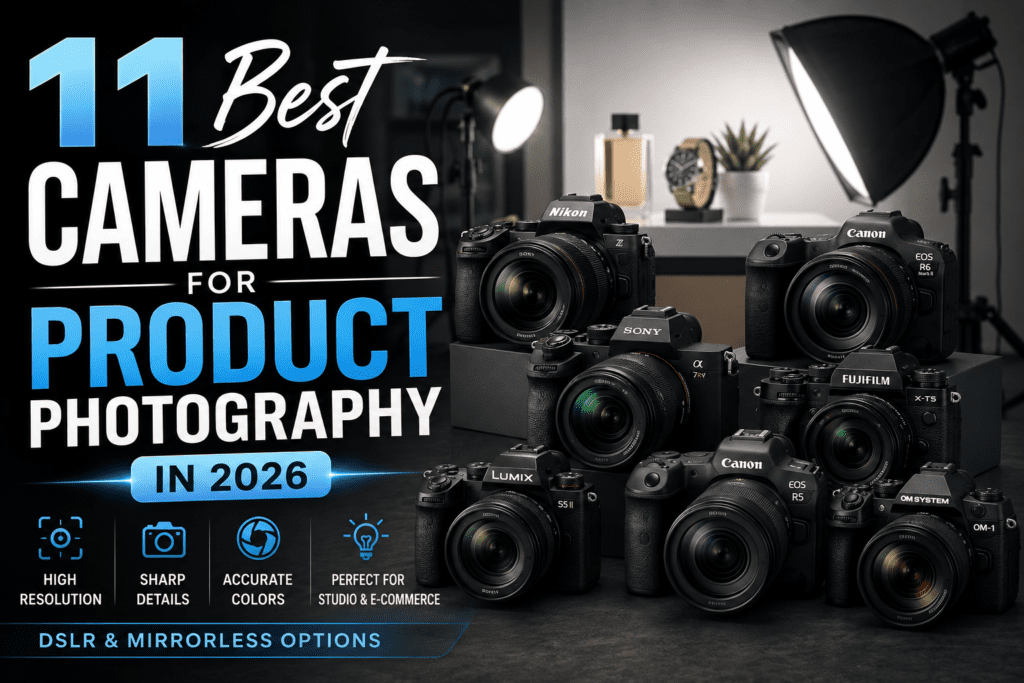
A dedicated camera offers several advantages over a smartphone:
Superior Image Quality
Larger sensors capture more detail, better dynamic range, and cleaner images with less digital noise. This becomes especially important when photographing intricate textures, reflective surfaces, or luxury products.
Better Color Accuracy
Customers expect products to match what they receive. Mirrorless and DSLR cameras produce more accurate colors, reducing returns caused by misleading product images.
Interchangeable Lenses
Different products require different focal lengths. A macro lens captures jewelry and watches, while a standard prime lens works well for cosmetics, electronics, and lifestyle products.
Greater Creative Control
Professional cameras provide complete manual control over shutter speed, aperture, ISO, and white balance. These settings help maintain consistent results across an entire product catalog.
Higher Resolution
Many online marketplaces recommend large, high-resolution images that allow customers to zoom in without losing detail. Cameras with 24MP or higher sensors easily meet these requirements.
What Makes the Best Camera for Product Photography?
Before comparing individual models, it’s important to understand the features that have the greatest impact on product photography.
High Resolution
Resolution determines how much detail your camera captures. For most businesses, a 24MP sensor is more than enough, while commercial photographers who create large prints or premium catalogs may benefit from 40MP or higher.
Recommended Resolution
- Entry-level: 24MP
- Professional: 33–45MP
- Commercial studio work: 45MP+
Excellent Dynamic Range
Product photography often includes reflective packaging, glass bottles, metallic surfaces, and white backgrounds. A camera with strong dynamic range preserves highlights and shadows, making editing easier and reducing blown-out areas.
Accurate Color Reproduction
When photographing clothing, cosmetics, jewelry, or handcrafted products, accurate colors are essential. Cameras with excellent color science reduce editing time and help maintain consistency across your product catalog.
Lens Compatibility
The camera body is only one part of your investment. A good lens system allows you to expand your capabilities over time.
For example:
- 50mm prime lenses work well for general products.
- 90mm–105mm macro lenses capture intricate details.
- 24–70mm zoom lenses provide flexibility for commercial shoots.
Choosing a camera with a strong lens ecosystem ensures you can upgrade without replacing your entire setup.
Tethered Shooting Support
Professional product photographers often connect their cameras directly to a computer while shooting. This process, known as tethered shooting, allows images to appear instantly on a larger screen for detailed inspection.
If you plan to photograph products for clients or online stores regularly, tethering support is a valuable feature.
Video Capabilities
Modern businesses rarely create only photographs. Many also produce product videos, tutorials, behind-the-scenes footage, and social media advertisements.
A camera capable of high-quality 4K video adds versatility and future-proofs your investment.
Quick Comparison Table
| Camera | Best For | Sensor | Resolution | Video | Skill Level |
|---|---|---|---|---|---|
| Sony A7 IV | Overall Product Photography | Full Frame | 33MP | 4K | Intermediate–Pro |
| Canon EOS R6 Mark II | Studio & Commercial Work | Full Frame | 24MP | 4K | Intermediate |
| Nikon Z6 III | Hybrid Photography | Full Frame | 24MP | 6K | Intermediate–Pro |
| Sony A6700 | Small Businesses | APS-C | 26MP | 4K | Beginner–Intermediate |
| Canon EOS R10 | Budget Product Photography | APS-C | 24MP | 4K | Beginner |
| Fujifilm X-T5 | High Resolution | APS-C | 40MP | 6.2K | Intermediate |
| Sony A7R V | Professional Studio Work | Full Frame | 61MP | 8K | Professional |
| Canon EOS R50 | Beginners | APS-C | 24MP | 4K | Beginner |
| Nikon Z50 II | Entry-Level Photography | APS-C | 21MP | 4K | Beginner |
| Panasonic Lumix S5 II | Video + Product Photography | Full Frame | 24MP | 6K | Advanced |
| Sony ZV-E10 II | Small Business Content | APS-C | 26MP | 4K | Beginner |
1. Sony A7 IV
Best Overall Camera for Product Photography
If you’re looking for one camera that excels in almost every aspect of product photography, the Sony A7 IV is one of the strongest choices available. It combines a high-resolution full-frame sensor, outstanding autofocus, excellent color depth, and reliable performance in both studio and lifestyle product shoots.
Its 33MP sensor captures exceptional detail, making it ideal for eCommerce listings, magazine publications, catalogs, and large-format prints. The camera also performs exceptionally well in low-light environments, though most product photographers will still rely on controlled studio lighting for consistent results.
Another major advantage is Sony’s extensive lens ecosystem. Whether you’re photographing jewelry with a macro lens or furniture with a wider focal length, you’ll find high-quality lenses suited to every workflow.


Key Features
- 33MP Full-Frame Sensor
- 4K Video Recording
- Excellent Dynamic Range
- Fast Hybrid Autofocus
- Dual Card Slots
- Extensive Sony Lens Selection
Pros
- Outstanding image quality
- Excellent detail retention
- Great low-light performance
- Versatile for both photos and videos
- Strong upgrade path within Sony’s ecosystem
Cons
- Higher initial investment
- Premium lenses can be expensive
Best For
- Commercial photographers
- Shopify store owners
- Amazon sellers
- Luxury product photography
- Professional studios
2. Canon EOS R6 Mark II
Best Camera for Studio Product Photography
The Canon EOS R6 Mark II is an excellent choice for photographers who prioritize dependable performance and accurate color reproduction. Although its 24MP resolution is lower than some competitors, it remains more than sufficient for nearly every eCommerce platform and commercial application.
Canon’s renowned color science delivers natural-looking product images with minimal editing, making it especially popular among photographers who shoot clothing, food, cosmetics, and lifestyle products.
The camera’s intuitive interface also makes it approachable for beginners while providing advanced tools for experienced professionals.
Key Features
- 24MP Full-Frame Sensor
- In-Body Image Stabilization
- Excellent Autofocus
- 4K Video
- Fast Continuous Shooting
Pros
- Beautiful color accuracy
- Reliable autofocus
- Excellent ergonomics
- Great balance between photography and video
Cons
- Lower resolution than some competing models
- RF lenses can increase the total system cost
Best For
- Product studios
- Food photographers
- Lifestyle product creators
- Commercial photographers
3. Nikon Z6 III
Best Hybrid Camera for Product Photography and Video
Many businesses today need more than still photographs. Product videos, promotional content, and behind-the-scenes footage have become essential for marketing campaigns.
The Nikon Z6 III provides an excellent balance between photography and professional video production, making it an ideal option for agencies and businesses that create multimedia content.
Its durable construction, advanced autofocus, and excellent image quality ensure reliable performance during long shooting sessions.
Key Features
- Full-Frame Sensor
- Advanced Autofocus
- Excellent Low-Light Performance
- 6K Video Recording
- Durable Magnesium Alloy Body
Pros
- Excellent hybrid capabilities
- Strong dynamic range
- Reliable autofocus
- Great build quality
Cons
- Lens selection smaller than Sony
- Premium pricing
Best For
- Agencies
- Marketing teams
- Commercial content creators
- Product videography
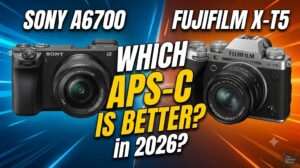
4. Sony A6700
Best APS-C Camera for Growing Businesses
For entrepreneurs and small businesses looking to balance affordability with professional performance, the Sony A6700 is one of the smartest investments available.
Its APS-C sensor delivers outstanding image quality while keeping the overall system compact and lightweight. Combined with Sony’s advanced autofocus technology, it produces consistently sharp product images with minimal effort.
The A6700 is particularly well-suited for businesses that also create social media videos, tutorials, and promotional content alongside product photography.
Key Features
- 26MP APS-C Sensor
- AI Autofocus
- 4K 120fps Video
- In-Body Image Stabilization
- Compact Design
Pros
- Excellent value
- Outstanding autofocus
- Lightweight body
- Great for hybrid creators
Cons
- Smaller sensor than full-frame models
- Premium APS-C lenses can still be costly
Best For
- Small businesses
- Content creators
- Product marketers
- eCommerce entrepreneurs
5. Canon EOS R10
Best Budget Camera for Product Photography
A limited budget doesn’t mean compromising on quality. The Canon EOS R10 delivers excellent image quality, reliable autofocus, and intuitive controls at a price point that’s accessible for beginners and small businesses.
Its lightweight design makes it easy to use for extended product photography sessions, while Canon’s color science ensures attractive results straight out of the camera.
Key Features
- 24MP APS-C Sensor
- 4K Video
- Fast Autofocus
- Lightweight Body
Pros
- Affordable
- Easy to learn
- Great image quality
- Excellent value
Cons
- No in-body stabilization
- Smaller battery
Best For
- Beginners
- Etsy sellers
- Small online stores
- Hobby photographers
6. Fujifilm X-T5
Best High-Resolution APS-C Camera
If capturing intricate textures and fine details is your priority, the Fujifilm X-T5 is an outstanding choice. Its 40MP APS-C sensor provides remarkable resolution, making it ideal for photographing jewelry, watches, handcrafted products, textiles, and artwork.
Fujifilm’s renowned color science also produces vibrant yet natural colors, reducing editing time while maintaining consistency across product catalogs.
Key Features
- 40MP APS-C Sensor
- 6.2K Video
- Film Simulation Modes
- In-Body Image Stabilization
Pros
- Exceptional detail
- Excellent color reproduction
- Compact body
- Great image stabilization
Cons
- Autofocus not as advanced as Sony’s latest models
- Higher price than entry-level APS-C cameras
Best For
- Jewelry photography
- Luxury product photography
- Handmade products
- Fine art reproduction
7. Sony A7R V
Best High-Resolution Camera for Professional Product Photography
If your work involves photographing luxury watches, fine jewelry, cosmetics, artwork, premium fashion, or products that require heavy cropping, the Sony A7R V stands out as one of the best cameras available. Its 61-megapixel full-frame sensor captures extraordinary detail, allowing photographers to zoom into textures, engravings, and packaging without sacrificing image quality.
For commercial studios, advertising agencies, and brands producing large-format prints or premium catalogs, this level of resolution offers tremendous flexibility. Images can be cropped for multiple platforms while maintaining sharpness, making the camera an excellent long-term investment.
The A7R V also features Sony’s latest AI-powered autofocus, which accurately detects and tracks subjects during lifestyle product shoots. Combined with excellent dynamic range, it produces files that are highly flexible during post-processing.
Key Specifications
- 61MP Full-Frame CMOS Sensor
- 8K Video Recording
- AI Subject Recognition Autofocus
- 8-Stop In-Body Image Stabilization
- Dual Card Slots
Pros
- Exceptional image detail
- Outstanding dynamic range
- Professional autofocus performance
- Excellent for commercial advertising
- Extensive Sony lens ecosystem
Cons
- Premium price
- Large RAW file sizes require powerful editing hardware
Best For
- Commercial studios
- Luxury product photography
- Jewelry photography
- Advertising agencies
- Professional photographers
8. Canon EOS R50
Best Entry-Level Camera for Small Business Owners
Not every business needs an expensive full-frame camera. If you’re launching an online store or creating product images for marketplaces like Amazon, Etsy, or Shopify, the Canon EOS R50 delivers impressive image quality without a steep learning curve.
Its compact design, intuitive menu system, and reliable autofocus make it ideal for entrepreneurs handling photography themselves. When paired with affordable prime lenses and proper lighting, the R50 is capable of producing professional-looking product images suitable for websites, social media, and digital advertising.
The camera also supports 4K video, allowing businesses to create product demonstrations, unboxing videos, and promotional content using the same setup.
Key Specifications
- 24.2MP APS-C Sensor
- Dual Pixel CMOS AF II
- 4K Video Recording
- Vari-Angle Touchscreen
- Compact and Lightweight Body
Pros
- Beginner-friendly interface
- Excellent image quality for the price
- Reliable autofocus
- Lightweight and portable
Cons
- Limited battery life
- Smaller RF-S lens lineup compared to mature systems
Best For
- Small business owners
- Handmade product sellers
- Etsy and Shopify stores
- Beginner photographers
9. Nikon Z50 II
Best Value Camera for Product Photography Beginners
The Nikon Z50 II is an excellent option for beginners who want reliable image quality without investing in professional equipment. Its APS-C sensor delivers sharp, detailed photographs, while Nikon’s natural color reproduction makes products look accurate and appealing.
The camera performs particularly well in controlled lighting environments, making it suitable for tabletop photography, food photography, stationery, electronics, and handcrafted products.
Its ergonomic design and straightforward controls make learning manual photography less intimidating for first-time users.
Key Specifications
- APS-C Sensor
- Advanced Hybrid Autofocus
- 4K Video
- Tilting Touchscreen
- Lightweight Magnesium Alloy Body
Pros
- Excellent value
- Comfortable ergonomics
- Accurate color rendering
- Easy-to-use controls
Cons
- Smaller native lens ecosystem than Sony or Canon
- Lower resolution than premium models
Best For
- Beginners
- Hobby photographers
- Small online businesses
- Product catalog photography
10. Panasonic Lumix S5 II
Best Camera for Product Photography and Marketing Videos
Today’s businesses rarely rely on still images alone. Product videos, social media advertisements, tutorials, and promotional campaigns have become essential marketing tools.
The Panasonic Lumix S5 II excels as a hybrid camera, offering exceptional still photography alongside advanced video capabilities. Its full-frame sensor produces excellent detail and dynamic range, while Panasonic’s improved phase-detection autofocus ensures reliable performance for both photography and video.
Businesses planning to create cinematic product videos alongside high-quality product photos will appreciate its versatility.
Key Specifications
- 24.2MP Full-Frame Sensor
- 6K Video Recording
- Phase Hybrid Autofocus
- Advanced Image Stabilization
- Weather-Sealed Body
Pros
- Excellent hybrid performance
- Professional video features
- Strong stabilization
- Beautiful image quality
Cons
- Larger body than APS-C cameras
- Premium lens investment
Best For
- Marketing agencies
- Commercial studios
- Product videography
- Brand content teams
11. Sony ZV-E10 II
Best Camera for Product Photography and Social Media Content
Many small businesses create product images and social media content using the same camera. The Sony ZV-E10 II is designed precisely for this type of workflow.
Its interchangeable lenses, advanced autofocus, and creator-focused features make it easy to transition between photographing products, recording Instagram Reels, filming YouTube tutorials, and capturing behind-the-scenes content.
For brands focusing on content marketing rather than studio-only photography, the ZV-E10 II offers exceptional versatility at an accessible price.
Key Specifications
- 26MP APS-C Sensor
- AI Autofocus
- 4K Video Recording
- Flip-Out Touchscreen
- Interchangeable Lens System
Pros
- Excellent autofocus
- Lightweight body
- Great for hybrid content creation
- Strong value for money
Cons
- No electronic viewfinder
- Limited weather sealing
Best For
- Shopify businesses
- Social media managers
- Product content creators
- Small marketing teams
Which Camera Should You Choose?
If you’re still deciding, here’s a quick recommendation based on your needs:
| Your Requirement | Recommended Camera |
|---|---|
| Overall Best | Sony A7 IV |
| Best for Beginners | Canon EOS R50 |
| Best Budget Option | Canon EOS R10 |
| Best High Resolution | Sony A7R V |
| Best for Jewelry | Fujifilm X-T5 |
| Best Hybrid Photo & Video | Panasonic Lumix S5 II |
| Best Small Business Camera | Sony A6700 |
| Best Content + Product Photography | Sony ZV-E10 II |
| Best Commercial Studio | Canon EOS R6 Mark II |
| Best Nikon Choice | Nikon Z6 III |
Final Thoughts
Choosing the best camera for product photography is about finding the right balance between your budget, business goals, and creative requirements. While it’s tempting to focus solely on camera specifications, remember that outstanding product photography results from a combination of quality equipment, proper lighting, thoughtful composition, and consistent editing.
For beginners and small business owners, cameras like the Canon EOS R50 and Canon EOS R10 offer excellent value while delivering professional-quality images. As your business grows, investing in versatile options such as the Sony A7 IV or Canon EOS R6 Mark II provides greater flexibility for both commercial photography and marketing videos. If you’re working with luxury products, jewelry, or high-end advertising campaigns, high-resolution cameras like the Sony A7R V can capture exceptional detail that elevates your brand.
No matter which camera you choose, focus on building a complete workflow. Pair your camera with a sturdy tripod, quality lighting, a suitable lens, and reliable editing software. These elements often have a greater impact on the final image than upgrading to the most expensive camera body.
Ultimately, the best camera is the one that helps you create consistent, high-quality product images that inspire customer confidence and drive sales.
Frequently Asked Questions
What camera should beginners buy?
Beginners usually benefit from an entry-level mirrorless or DSLR camera with a kit lens. Look for reliable autofocus, good image quality, ease of use, and a lens ecosystem that allows future upgrades.
Is a mirrorless camera better than a DSLR?
Mirrorless cameras generally offer faster autofocus, better video features, and a lighter design, while DSLRs still provide excellent image quality and longer battery life. The right choice depends on your budget and shooting style.
Which camera brand is best for photography?
Canon, Nikon, Sony, Fujifilm, Panasonic, and OM System all produce excellent cameras. The best brand depends on your needs, preferred lenses, and the type of photography you plan to pursue.
How much should I spend on my first camera?
For most beginners, investing in a reliable entry-level camera and quality lens provides better long-term value than purchasing the most expensive camera body. Prioritize lenses and practical accessories alongside the camera itself.
How often should I upgrade my camera?
Most photographers do not need to upgrade every year. Consider replacing your camera only when your current equipment limits your photography, workflow, or professional requirements.
Ready to Elevate Your Product Photography?
A great camera is just one part of creating compelling product images. The right combination of equipment, lighting, technique, and editing will help your products stand out in a crowded marketplace.
Whether you’re launching your first online store, expanding your eCommerce business, or upgrading your commercial photography kit, investing in equipment that matches your current needs—and allows room to grow—will deliver the best long-term value.
Explore our camera and photography guides to learn how to build a complete workflow that consistently produces professional-quality product images.
Related Articles
You may also enjoy:
- Best Camera for Beginners in Photography
- DSLR vs Mirrorless Camera: Which Is Better?
- Best Budget Camera for Photography
- Best Cameras for YouTube Beginners
- Best Cameras for Wedding Photography
- Best Cameras for Product Photography
- Lightroom vs Photoshop: Which One Should You Learn?
- Best Ring Lights for Photography
🌍 Authoritative Resources
For additional technical information and official specifications, explore these trusted photography resources:
- Canon Camera Buying Guides
- Nikon Imaging Learning Center
- Sony Alpha Camera Guides
- Adobe Lightroom & Photoshop Help Center
- DPReview Camera Reviews
- PetaPixel Photography News
These resources provide official documentation, firmware announcements, camera specifications, and industry updates that complement the practical advice shared on The Candid Shoot.

Leave a Reply