
Whether you’re photographing products for an online store, social media, Amazon listings, or personal projects, our tutorials are designed to help you improve image quality while making informed equipment and workflow decisions.
Quick Answer
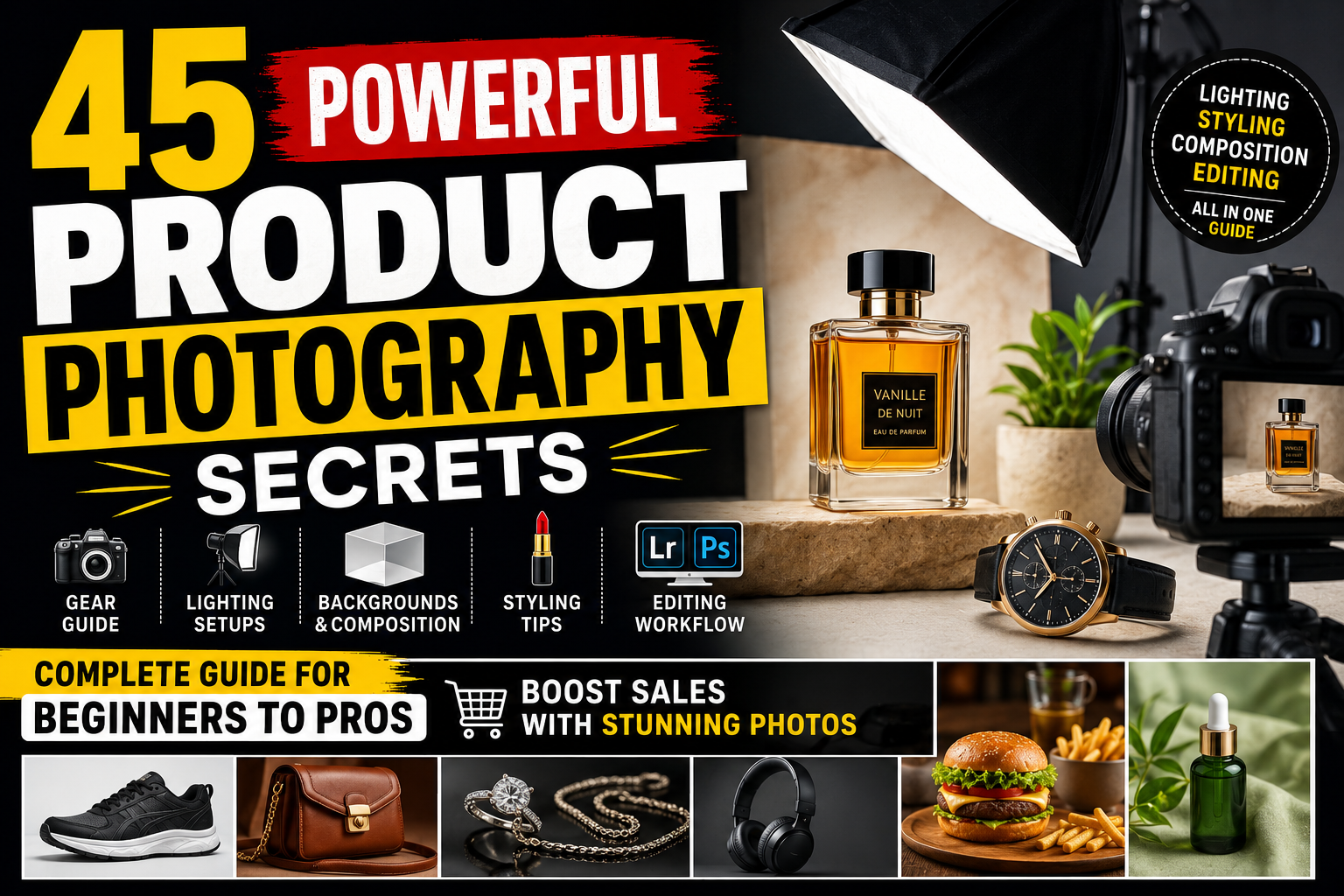
Product photography is the process of creating high-quality images that accurately showcase a product’s appearance, features, and details. Effective product photography combines proper lighting, composition, camera settings, backgrounds, and editing techniques to produce professional images that increase customer trust and improve online sales.
Learn More About Product Photography
If you’re looking to master product photography from beginner to advanced level, don’t miss our complete guide:
👉 Powerful Product Photography Secrets for Photos
Inside this comprehensive guide, you’ll learn:
- Camera settings for product photography
- Lighting techniques for every budget
- Background selection
- Composition tips
- Lens recommendations
- Editing workflow
- AI tools for product photography
- Studio setup ideas
- Photography mistakes to avoid
- Professional workflow from planning to final image
This pillar guide connects all of our product photography tutorials in one place, making it the perfect starting point for beginners and experienced photographers alike.
Why Style Sarongs Are a Must-Have for Lifestyle Photoshoots
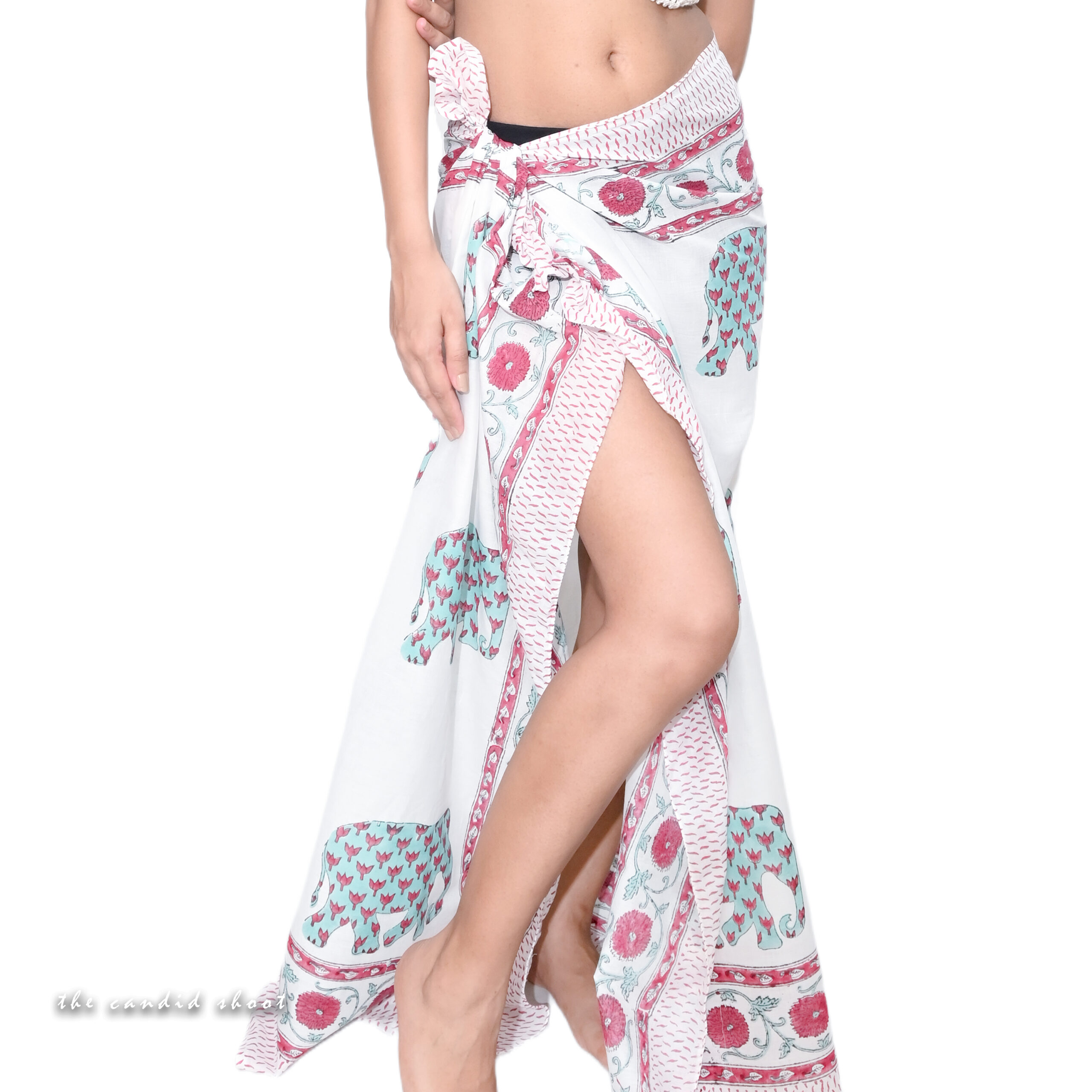
Sarongs are versatile, vibrant, and timeless pieces of fabric that can transform a photoshoot into an aesthetic masterpiece. From their cultural roots to their modern-day appeal, sarongs offer endless styling possibilities for lifestyle photography. Whether you’re on a sandy beach, by the pool, or in an urban environment, learning how to style sarongs can help create stunning visuals that tell compelling stories. This blog explores the art of styling sarongs for lifestyle photoshoots. With tips, techniques, and creative ideas, you’ll discover how this simple accessory can elevate your photos to the next level.
1. The Cultural and Fashion Appeal of Sarongs
1.1 What Are Sarongs?
A sarong is a rectangular piece of fabric traditionally worn in Southeast Asia, Africa, and the Pacific Islands. Over the years, its usage has evolved from cultural attire to a staple in modern fashion.
1.2 Why Sarongs Are Popular in Lifestyle Photography
- Their vibrant colors and patterns add visual appeal.
- They’re adaptable to various themes and locations.
- They evoke a sense of wanderlust and relaxation.
1.3 Sarongs as a Sustainable Fashion Choice
Using sarongs for photoshoots promotes sustainable fashion by reimagining traditional garments in contemporary ways.
2. Essential Factors to Consider When Style Sarongs
2.1 Fabric Types
- Cotton Sarongs: Ideal for casual and rustic photoshoots.
- Silk Sarongs: Perfect for luxurious and elegant themes.
- Chiffon or Polyester Sarongs: Lightweight and flowy, great for outdoor shoots.
2.2 Choosing the Right Colors and Patterns
- Bright hues for tropical and vibrant themes.
- Earthy tones for boho or nature-inspired settings.
- Intricate patterns for cultural and artistic shoots.
2.3 Pairing Sarongs with Accessories
- Statement jewelry to enhance the look.
- Hats, sunglasses, or bags for a complete lifestyle vibe.
2.4 Sarong Lengths and Their Impact
- Short sarongs for playful and energetic vibes.
- Long sarongs for graceful and elegant compositions.


3. Styling Sarongs for Different Themes and Locations
3.1 Beach Photoshoots
- Classic Wrap Dress: Tie the sarong around the neck for a halter-style dress.
- High-Slit Skirt: Wrap it around the waist and secure it for a flowy look.
- Headscarf: Use it as a head wrap to add a chic touch.
3.2 Urban Lifestyle Photography
- Layered Over Jeans: Tie a short sarong around your waist over jeans for a modern twist.
- Asymmetrical Top: Transform the sarong into a unique top for edgy vibes.
3.3 Bohemian-Inspired Shoots
- Loose Shawl: Drape the sarong over the shoulders for a carefree look.
- Layered Skirt: Wrap it loosely around a dress for a layered effect.
3.4 Poolside Glam
- Sheer Cover-Up: Use a lightweight sarong as a semi-transparent cover-up.
- Knotted Crop Top: Fold the sarong and knot it at the front for a trendy top.
3.5 Cultural-Themed Shoots
- Incorporate traditional tying styles to honor the sarong’s cultural roots.
- Pair with ethnic jewelry and accessories for authenticity.
4. Techniques to Tie and Style Sarongs for Unique Looks
4.1 Tying Techniques
- The Basic Wrap: Simple and classic.
- The Halter Dress: Versatile for casual and formal themes.
- The Bandeau Top: Ideal for modern and youthful vibes.
- The Off-Shoulder Drape: Adds elegance to any outfit.
4.2 Advanced Styling Hacks
- Use a belt to secure and shape the sarong.
- Twist the fabric for added texture and uniqueness.
- Layer multiple sarongs for a boho-chic aesthetic.
4.3 Incorporating Props with Sarongs
- Use sarongs as picnic blankets or backdrops.
- Drape them over chairs or other furniture for creative compositions.
5. Posing with Sarongs for Lifestyle Photography
5.1 Movement and Flow
- Capture the sarong mid-movement for dynamic and lively images.
- Use windy conditions to create dramatic effects.
5.2 Highlighting Patterns and Colors
- Position the sarong in a way that showcases its intricate designs.
- Use close-up shots to emphasize textures.
5.3 Interaction with the Environment
- Incorporate natural elements like water, sand, or greenery.
- Experiment with reflections and shadows for artistic results.
6. Choosing the Perfect Sarong for Your Photoshoot
6.1 Where to Source High-Quality Sarongs
- Local artisans for authentic and handmade pieces.
- Sustainable fashion brands promoting ethical practices.
- Online stores with a wide variety of options.
6.2 Customizing Sarongs for Unique Styles
- Add embellishments like beads or embroidery.
- Experiment with dyeing techniques for personalized designs.
7. Common Mistakes to Avoid When Styling Sarongs
7.1 Over-Accessorizing
- Keep the look balanced to avoid overshadowing the sarong.
7.2 Poor Fabric Choice
- Avoid heavy fabrics for flowy looks or windy conditions.
7.3 Ignoring the Setting
- Choose sarongs that complement the location and theme.
7.4 Neglecting Comfort
- Ensure the sarong is tied securely to avoid wardrobe malfunctions.
8. Post-Processing Tips for Sarong Lifestyle Photoshoots
8.1 Enhancing Colors and Textures
- Use editing software to highlight the sarong’s vibrancy.
- Adjust contrast to make patterns pop.
8.2 Retouching Without Overdoing
- Maintain the natural look of the fabric and setting.
- Remove any distractions in the background.
8.3 Creating Cohesive Themes
- Apply filters or color grading that complements the sarong’s style.
9. Inspiring Examples and Case Studies
- Tropical Beach Shoots: Sarongs as bold and colorful statement pieces.
- Cityscapes and Urban Styles: Combining traditional sarongs with modern outfits.
- Cultural Festivals: Using authentic tying styles to highlight traditions.
Conclusion: Embrace the Versatility of Sarongs in Lifestyle Photography
Sarongs are more than just a piece of fabric—they are a canvas for creativity and self-expression. With endless styling possibilities, they can transform any lifestyle photoshoot into a visually stunning and memorable experience. By mastering the art of styling sarongs, you not only elevate your photography but also pay homage to a rich cultural heritage.
Whether you’re a professional photographer or a beginner, incorporating sarongs into your photoshoots opens up a world of possibilities. Experiment, innovate, and let your imagination run wild!
FAQ:
Related Product Photography Guides
Continue improving your photography skills with these helpful resources:
- Product Photography Lighting Guide
- Best Cameras for Product Photography
- DIY Product Photography Setup at Home
- White Background Product Photography Tips
- Product Photography Camera Settings Explained
- Best Lenses for Product Photography
- AI Product Photography Tools
- Product AI Photo Editing Guide
- Photography Tutorials for Beginners
Recommended Resources
- Adobe Lightroom Learning Center
- Adobe Photoshop Learn
- Nikon Learn & Explore
Improve Your Product Photography Skills
Photography is a skill that improves with practice. Try experimenting with different lighting setups, camera angles, and editing techniques to discover what works best for your products. Even small improvements in composition and lighting can make your images look significantly more professional.
If you enjoyed this guide, explore more tutorials on The Candid Shoot to continue improving your photography s
About The Candid Shoot
The Candid Shoot is an independent photography resource dedicated to helping photographers, creators, couples, models, brands, and photography enthusiasts make better decisions and create better images.
Our content covers practical photography techniques, camera and equipment guidance, posing ideas, portrait and fashion photography, product photography, AI photography tools, and photography workflows.
We focus on practical, experience-informed guidance rather than simply repeating generic information found across the web. Our goal is to make photography easier to understand, easier to apply, and more useful in real-world situations.
Why Trust The Candid Shoot?
We build our articles around a simple editorial principle: useful information first, clear explanations second, and unnecessary hype last.
Our articles are developed with attention to:
- Practical photography use cases and real-world shooting situations
- Camera, lens, software, and photography workflow considerations
- Clear explanations for beginners while retaining useful information for experienced creators
- Current tools, techniques, and photography trends where relevant
- Comparisons of advantages, limitations, features, and practical applications
- Original editorial organization instead of simply rewriting existing articles
- Internal linking to related photography resources so readers can explore a topic in depth
Our objective is not to recommend something simply because it is popular. We aim to explain when a technique, tool, workflow, or approach makes sense — and when it may not.
Our Editorial Process
Every article published on The Candid Shoot follows a structured editorial process designed to improve accuracy, usefulness, and clarity.
Research: We review relevant photography concepts, tools, techniques, product information, and established industry resources before developing an article.
Practical Evaluation: Information is considered from the perspective of actual photography use cases, including shooting conditions, workflow, composition, posing, editing, equipment selection, and creator needs.
Editorial Development: We organize information into clear sections, practical explanations, examples, recommendations, and actionable takeaways.
Fact Checking: Technical claims, specifications, terminology, and important factual information are checked against reliable sources where appropriate.
Reader-First Review: We evaluate whether the article actually answers the search intent, whether the recommendations are understandable, and whether the content provides useful next steps.
Ongoing Updates: Articles may be reviewed and updated when photography technology, software, equipment, techniques, or industry practices change.
Our Editorial Standards
The Candid Shoot aims to keep its editorial content:
Accurate: We work to verify important technical and factual information.
Useful: Information should help the reader solve a real photography problem or make a better decision.
Transparent: We distinguish educational guidance, editorial opinions, comparisons, and factual information.
Practical: Wherever possible, we focus on how photography concepts can actually be applied.
Independent: Articles are created to serve readers first rather than simply promote a product, technique, or trend.
Sources & Photography Resources
We believe readers should be able to continue their research. Depending on the topic, our articles may reference or recommend authoritative photography and technology resources.
Useful external resources may include:
- Adobe Photography
- Adobe Lightroom
- Nikon Learn & Explore
- Canon Learning
- Sony Alpha Universe
- Google Search Central
- Google AI
- OpenAI
External links are included where they provide additional context, technical information, official documentation, or useful learning resources.
Explore More From The Candid Shoot
Continue learning through our photography resources:
Photography Tutorials:
https://thecandidshoot.com/category/photography-tutorials/
Couple Photography:
https://thecandidshoot.com/category/couple-photography/
Camera & Equipment:
https://thecandidshoot.com/category/camera-equipment/
Portrait & Fashion Photography:
https://thecandidshoot.com/category/portrait-fashion-photography/
Product Photography:
https://thecandidshoot.com/category/product-photography/
AI Photography:
https://thecandidshoot.com/category/ai-photography/
Photography Guides & Resources:
https://thecandidshoot.com/
Reader Feedback & Reviews
The Candid Shoot values feedback from photographers, creators, and readers who use our guides in their own work.
Reader questions and feedback help us identify confusing topics, missing information, outdated recommendations, and areas where an article can become more useful.
We continually use this feedback to improve the quality, clarity, and practical value of our photography resources.
Editorial Note
Photography is highly dependent on the subject, lighting conditions, equipment, creative goals, budget, and shooting environment. Recommendations that work for one photographer may not be ideal for another.
For that reason, The Candid Shoot focuses on explaining the reasoning behind a recommendation instead of presenting every technique, product, or workflow as universally suitable.
Related Articles
Continue exploring The Candid Shoot’s photography guides:
- 25 Essential Photography Tutorials for Beginners
Learn the fundamentals of photography, camera settings, exposure, lenses, and essential techniques. - 25 Essential Camera & Equipment Buying Secrets
Understand cameras, lenses, sensors, autofocus, and how to choose photography equipment wisely. - 35 Powerful Portrait & Fashion Photography Secrets
Explore portrait composition, lighting, posing, cameras, and fashion photography techniques. - 45 Powerful Product Photography Secrets
Discover practical product photography techniques, lighting setups, equipment, and creative ideas. - 30 Easy Couple Poses for Photoshoot at Home
Find simple, romantic, candid, and creative couple poses for indoor and outdoor photoshoots. - How to Use Golden Hour for Stunning Travel Photos
Learn how golden-hour lighting can improve portraits, landscapes, travel photos, and outdoor photography. - AI Photography Guide: Powerful Tools and Tips
Explore AI photography tools, editing workflows, image enhancement, and practical AI techniques. - Couple Photography Guide
Explore more couple photography ideas, posing guides, romantic concepts, and creative photoshoot inspiration. - Photography Tutorials
Browse practical photography tutorials covering camera techniques, composition, lighting, editing, and beginner guidance. - Camera & Equipment Guides
Explore camera buying guides, lenses, equipment comparisons, photography gear, and technical resources.
Last reviewed: [August, 2026]
Editorial team: The Candid Shoot Editorial Team

Leave a Reply