
Discover the best cameras for travel photography in 2026. Compare Sony, Canon, Nikon, Fujifilm and more for portability, image quality, landscapes, street photography and travel video.
Table of Contents
Introduction
Travel photography is one of the most demanding types of photography because your camera needs to handle almost everything.
One moment you may be photographing a mountain landscape at sunrise. A few hours later, you might be shooting architecture in a busy city, portraits of travel companions, street scenes, food, wildlife, or a sunset from a moving boat.
That makes choosing the best camera for travel photography different from choosing the best camera for sports, wildlife, studio work, or professional portraits.
The ideal travel camera needs to balance image quality, portability, battery life, autofocus, stabilization, lens versatility, durability, and ease of use.
A technically excellent camera isn’t necessarily the best travel camera if it is so large and heavy that you leave it in your hotel room.
For 2026, the travel-camera market offers several excellent options ranging from compact full-frame mirrorless cameras to lightweight APS-C systems and genuinely pocketable fixed-lens cameras. Current travel-camera guides similarly emphasize the importance of compact bodies, versatile lenses, image quality, and portability rather than simply choosing the camera with the largest sensor.
In this guide, we’ve selected 10 of the best cameras for travel photography in 2026, covering different budgets, shooting styles, and travel needs.
Whether you’re planning an international vacation, backpacking adventure, city trip, landscape expedition, family holiday, or a long-term photography journey, this guide will help you find the right camera for your style of travel.
Quick Answer: What Are the Best Cameras for Travel Photography in 2026?
Here are our top 10 picks:
| Rank | Camera | Best For |
|---|---|---|
| 1 | Sony α7C II | Best Overall Travel Camera |
| 2 | Fujifilm X-T50 | Best APS-C Travel Camera |
| 3 | Sony α6700 | Best All-Round Compact Mirrorless |
| 4 | Sony α7CR | Best High-Resolution Full-Frame Travel Camera |
| 5 | Fujifilm X100VI | Best Fixed-Lens Travel Camera |
| 6 | OM SYSTEM OM-3 | Best Adventure & Outdoor Travel Camera |
| 7 | Nikon Zf | Best Travel Camera for Street Photography |
| 8 | Canon EOS R8 | Best Lightweight Full-Frame Value |
| 9 | Fujifilm X-M5 | Best Budget Lightweight Travel Camera |
| 10 | Ricoh GR IV | Best Pocketable Travel Camera |
Our top recommendation
For most photographers, the Sony α7C II is an outstanding overall choice because it combines a compact full-frame body with a 33MP sensor, advanced autofocus, in-body stabilization, and strong video capabilities. Sony lists a 33MP full-frame sensor, AI-based subject recognition, 7-stop optical image stabilization, and a lightweight body among its key features.
However, there isn’t one perfect travel camera for everyone.
A backpacker who wants the lightest possible kit may prefer an APS-C camera. A street photographer may want a fixed-lens compact. A landscape photographer may prioritize resolution and dynamic range, while a traveler who photographs wildlife may need a longer zoom and stronger autofocus.
That’s why the rest of this guide compares these cameras according to real travel scenarios rather than simply ranking them by specifications.
EEAT: How We Selected the Best Travel Cameras
Experience
Travel photography places unusual demands on camera equipment because photographers frequently work in changing environments, unfamiliar locations, different weather conditions, and situations where carrying a large amount of gear isn’t practical.
Our recommendations therefore focus on characteristics that matter when a camera is actually being carried and used during travel, including size, weight, stabilization, lens flexibility, battery considerations, autofocus, durability, and handling.
Expertise
The cameras in this guide are evaluated according to their published specifications, current market positioning, camera-system capabilities, and suitability for common travel photography scenarios.
We consider factors such as:
- Sensor size and resolution
- Image stabilization
- Autofocus performance
- Lens availability
- Camera and lens weight
- Weather resistance
- Battery life
- Viewfinder and screen design
- Video capabilities
- Low-light performance
- Portability
- Travel-specific versatility
We also consider the complete camera system, because the body is only part of what you carry while traveling.
Authoritativeness
The recommendations are informed by current manufacturer specifications and established camera-industry buying guides and reviews. Current 2026 travel-camera coverage from sources such as DPReview and RTINGS also emphasizes compactness, image quality, lens versatility, and the balance between full-frame performance and system portability.
Trustworthiness
We do not claim to have personally tested every camera in this guide.
Instead, recommendations are based on published specifications, camera-system characteristics, established photography requirements, and current market information. Where a camera has an important limitation for travel, such as size, battery life, fixed focal length, or lack of weather sealing, we explain that limitation rather than presenting every model as universally suitable.
What Makes a Good Travel Camera?
The best travel camera isn’t necessarily the camera with the highest resolution, fastest burst rate, or largest sensor.
Travel photography is fundamentally about balance.
You need enough image quality to produce excellent photographs while keeping your equipment manageable enough that you’ll actually carry it throughout the trip.
Here are the most important factors to consider.
1. Portability and Weight
Portability is arguably the most important characteristic of a travel camera.
When you’re traveling, every additional item adds weight to your backpack or luggage.
A camera that weighs several hundred grams more might not seem significant on paper. But when you add two or three lenses, batteries, memory cards, a charger, a tripod, and personal belongings, the difference becomes noticeable.
This is one reason APS-C and compact full-frame cameras are so attractive for travel.
For example, the Fujifilm X-T50 weighs approximately 438g including battery and memory card, while still providing a 40.2MP APS-C sensor and 7-stop IBIS.
That combination gives travelers a relatively lightweight body without giving up high-resolution still photography.
But don’t judge portability by body weight alone
This is extremely important.
A 500g camera paired with a large 1kg full-frame zoom is not really a lightweight travel setup.
When comparing travel cameras, consider:
Camera body + lens + batteries + accessories = actual travel weight.
A smaller sensor system can sometimes provide a significantly lighter complete kit because the lenses can also be smaller.
That’s one reason current travel-camera guides frequently distinguish between the portability of the body and the portability of the complete camera system.
2. Sensor Size and Image Quality
Sensor size affects several aspects of photography, including low-light performance, dynamic range, depth of field, and the physical size of the camera system.
The major formats you’ll encounter when shopping for a travel camera include:
- Full frame
- APS-C
- Micro Four Thirds
- Smaller sensors in compact cameras
Full-frame
Full-frame cameras generally provide excellent image quality, dynamic range, and low-light performance.
They’re particularly attractive for:
- Landscape photography
- Night photography
- Architecture
- Travel portraits
- High-quality prints
- Professional travel photography
The downside is that full-frame lenses can become relatively large and heavy.
APS-C
APS-C offers an excellent compromise between image quality and portability.
Modern APS-C cameras can provide extremely high resolution while allowing photographers to use smaller lenses than many equivalent full-frame systems.

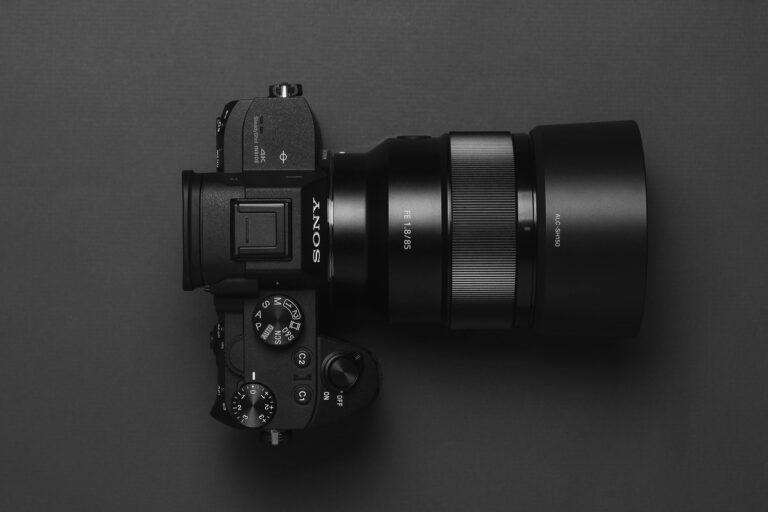
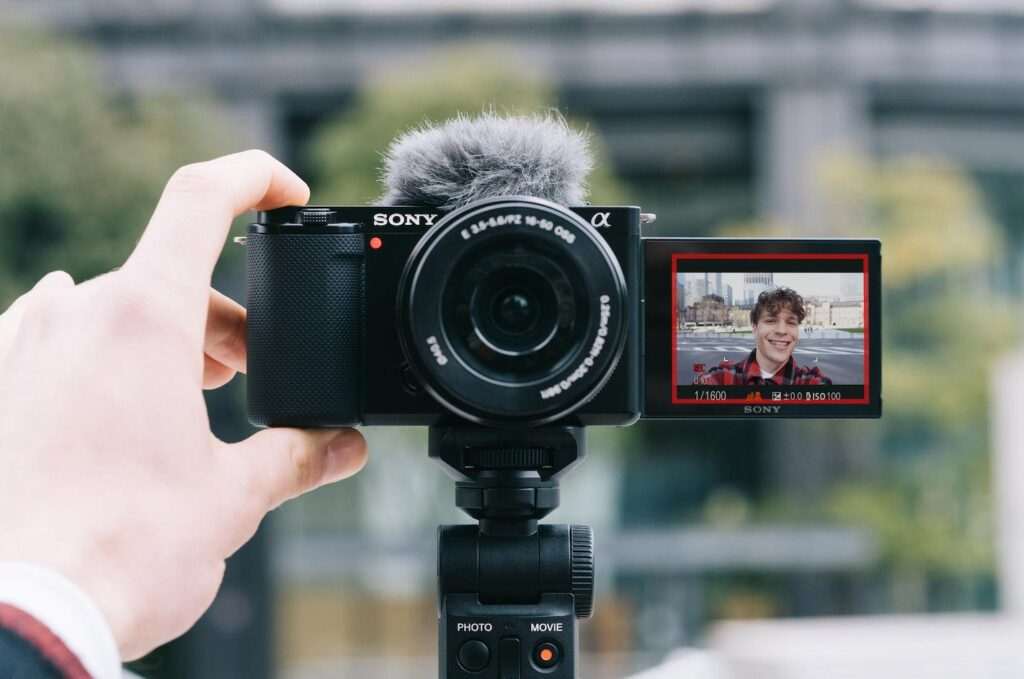
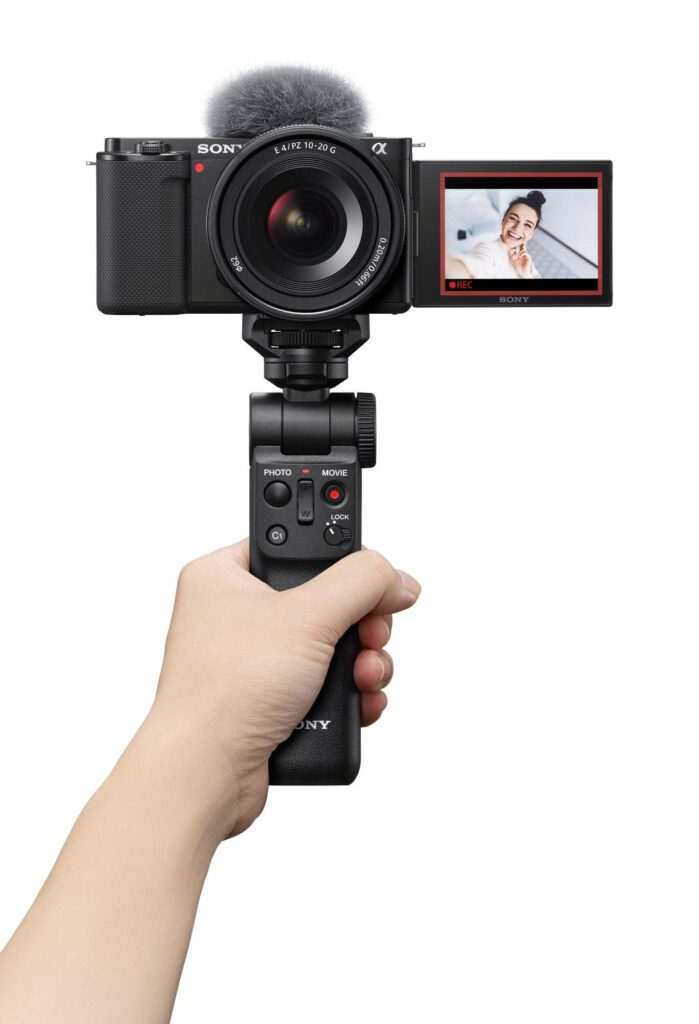
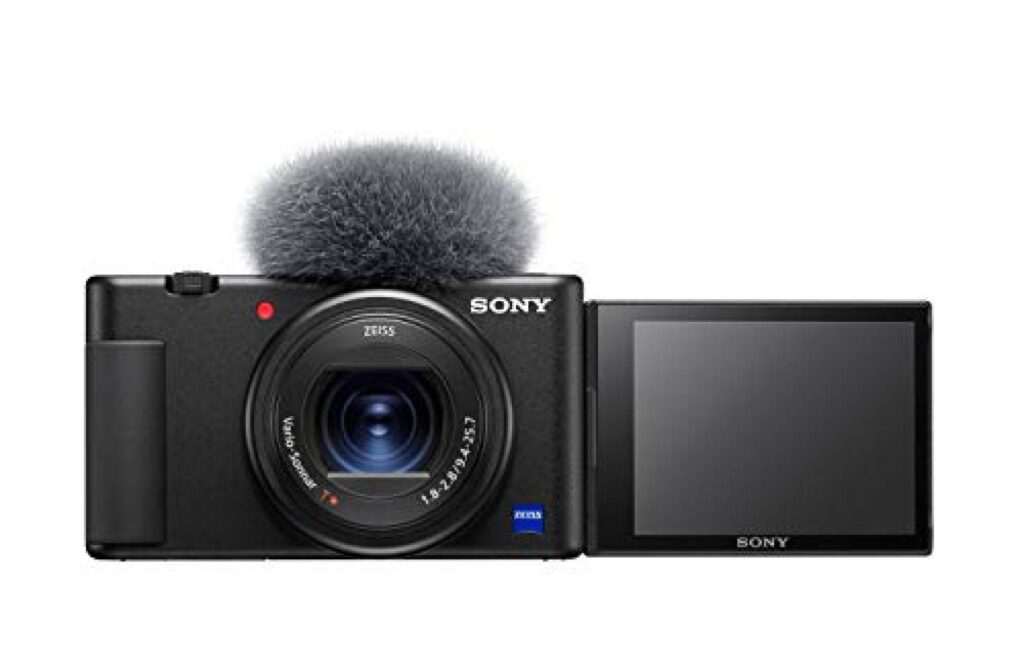
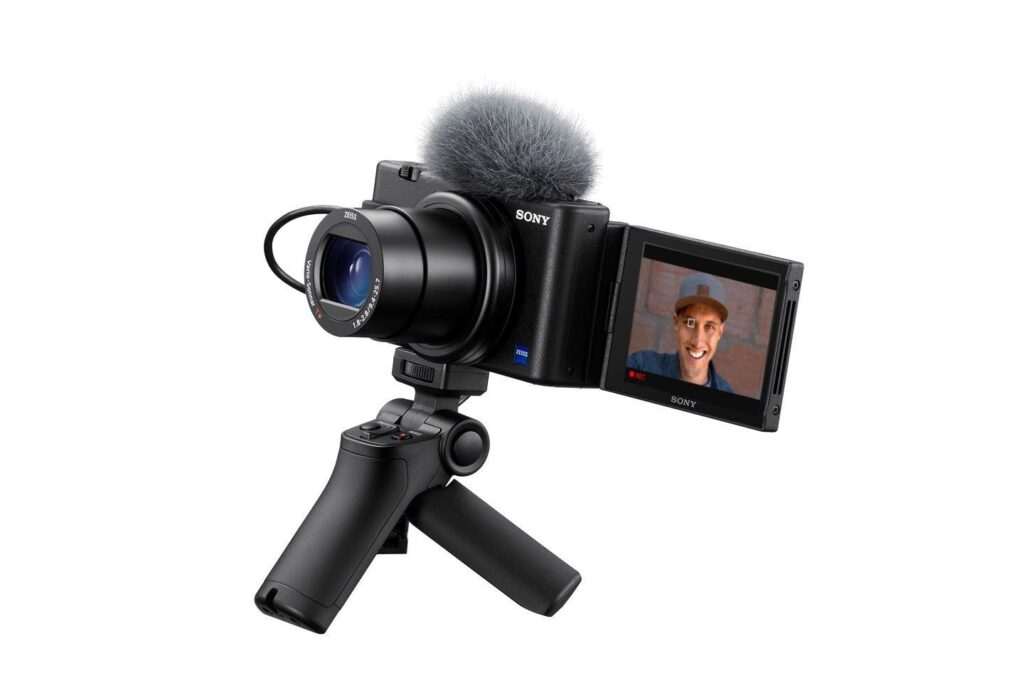
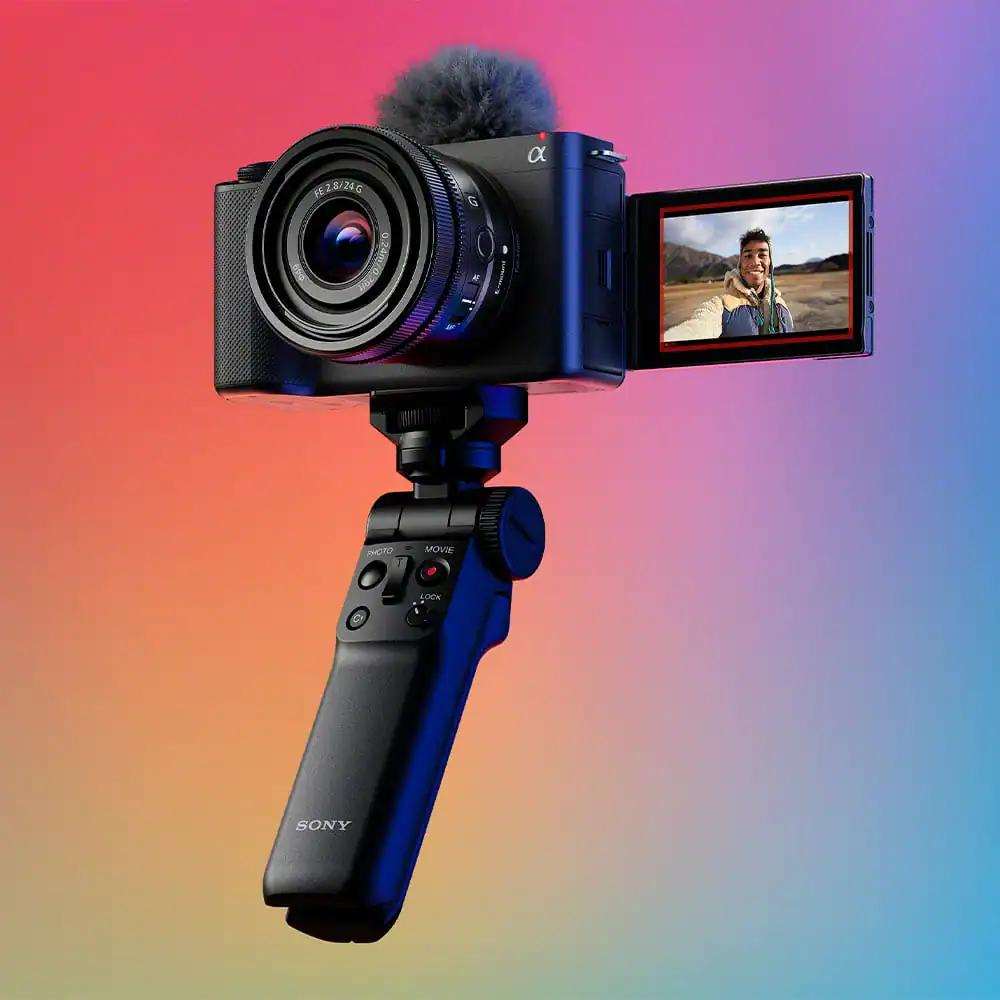
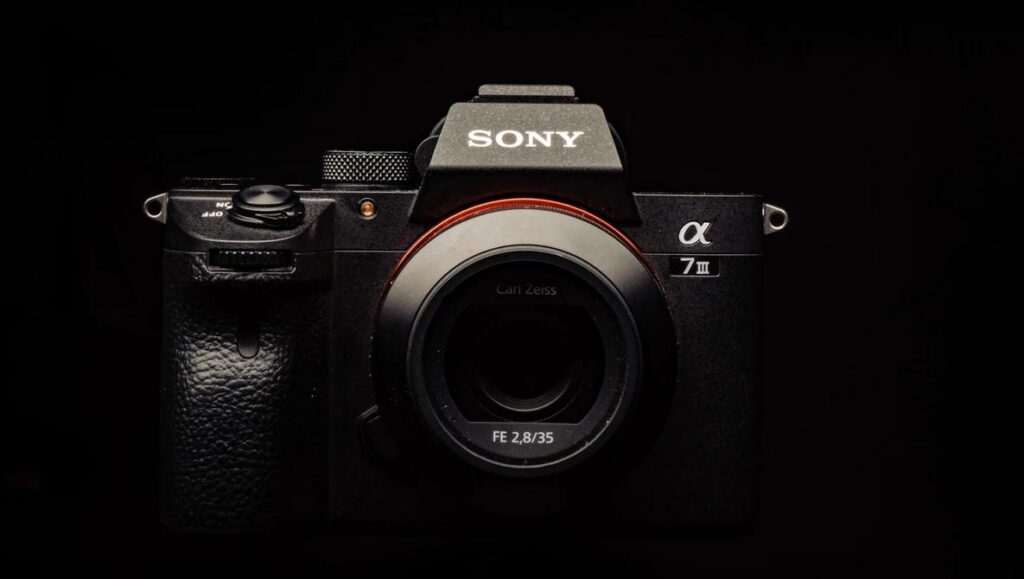
The Fujifilm X-T50 is a good example. Its 40.2MP APS-C sensor and compact 438g body provide substantial resolution without moving into the size and weight of many full-frame systems.
Micro Four Thirds
Micro Four Thirds systems can offer particularly compact lenses and bodies.
They’re especially interesting for travelers who prioritize:
- Lightweight kits
- Hiking
- Outdoor adventures
- Long telephoto reach
- Wildlife while traveling
Compact cameras
Compact cameras take portability even further.
A camera such as the Ricoh GR IV combines an APS-C sensor with a fixed 28mm-equivalent f/2.8 lens in a pocketable body. DPReview currently highlights it specifically as a pocketable travel option.
The trade-off is flexibility: a fixed lens cannot provide the range of focal lengths available from an interchangeable-lens system.
3. Lens Versatility
The camera body isn’t the entire travel-photography system.
In many cases, the lens you choose will have a greater effect on your travel experience than the difference between two similar camera bodies.
A versatile travel zoom can allow you to photograph:
- Landscapes
- Architecture
- Street scenes
- Portraits
- Food
- Details
- Distant subjects
without constantly changing lenses.
A lens covering something similar to a 24–70mm full-frame-equivalent range can be an excellent general-purpose travel option.
A wider lens can be better for:
- Landscapes
- Architecture
- Interiors
- City scenes
A longer zoom can be useful for:
- Wildlife
- Sports
- Distant architecture
- Compressed landscapes
- Candid portraits
For this reason, when comparing travel cameras, we’ll consider the available lens ecosystem, not just the camera body.
4. In-Body Image Stabilization
IBIS can be extremely useful while traveling.
You won’t always have a tripod with you, and many travel photographs happen in challenging lighting.
Stabilization can help when photographing:
- Churches and historic buildings
- Night streets
- Museums
- Indoor markets
- Evening city scenes
- Landscapes at dusk
- Handheld video
The Fujifilm X-T50, for example, provides up to 7 stops of in-body stabilization according to Fujifilm’s published specifications.
The Sony α7C II also provides up to 7-stop optical image stabilization.
However, remember that stabilization primarily helps compensate for camera movement.
It doesn’t freeze a moving person, vehicle, animal, or other subject.
For moving subjects, shutter speed and autofocus remain important.
5. Autofocus Performance
Travel photography involves much more movement than it may initially seem.
You might photograph:
- Children running through a street
- Cyclists
- Animals
- Boats
- Cars
- Birds
- Performers
- Street portraits
- People walking toward you
A good autofocus system therefore makes a travel camera considerably more versatile.
Modern cameras increasingly use subject-recognition systems to identify people, animals, vehicles, and other subjects.
The Fujifilm X-T50, for example, includes AI-based subject-detection autofocus capable of recognizing multiple types of subjects, while Sony’s α7C II incorporates an AI processing unit for subject recognition.
For general travel photography, reliable autofocus is usually more valuable than extreme continuous-shooting speeds.
6. Weather Resistance and Durability
Travel can expose your camera to environments that you cannot fully control.
You may encounter:
- Rain
- Dust
- Sand
- Humidity
- Snow
- Sea spray
- Cold temperatures
- Hot climates
A camera with weather-resistant construction can provide additional peace of mind.
However, weather resistance is not the same as waterproofing.
Even when a camera is weather sealed, you should still use appropriate protection during heavy rain, storms, or situations where the camera could be exposed to water for extended periods.
This is particularly important when choosing compact cameras. For example, DPReview notes that the Ricoh GR IV does not claim weather sealing, so travelers should take extra care in unpleasant weather.
7. Battery Life
Battery life is easy to overlook when you’re planning a camera purchase.
But on a long day of travel, you may spend 10–14 hours away from your hotel.
You could be photographing from sunrise through dinner, using:
- GPS or smartphone connectivity
- Wi-Fi/Bluetooth
- Electronic viewfinder
- Rear display
- Autofocus
- Image stabilization
- Video recording
All of these can affect battery consumption.
A travel photographer should ideally carry at least one spare battery or have a reliable charging/power-bank solution.
USB charging is also particularly useful because it reduces the number of dedicated chargers you need to pack.
8. Viewfinder and Screen Design
A fully articulating or tilting screen can be extremely useful when traveling.
It helps when photographing from:
- Ground level
- Above crowds
- Narrow streets
- Low viewpoints
- High viewpoints
- Unusual angles
A good electronic viewfinder is also valuable in bright sunlight because it lets you compose photographs without relying entirely on the rear display.
For travelers who photograph themselves, a fully articulating screen can also make a camera much easier to use for:
- Travel vlogging
- Self portraits
- Group photographs
- Talking-head videos
9. Video Capabilities
Many travelers now expect one camera to handle both photography and video.
You may want to capture:
- Travel reels
- YouTube videos
- Family memories
- Walking tours
- Hotel reviews
- Food videos
- Short cinematic clips
For that reason, video capability is worth considering even if photography is your primary goal.
The Sony α7C II, for example, supports 4K 60p recording and Sony’s S-Log3 profile, making it considerably more capable for hybrid travel creators than a camera designed almost exclusively around still photography.
10. Ease of Use
Finally, don’t underestimate usability.
A technically advanced camera can become frustrating if you constantly need to navigate complicated menus while traveling.
A good travel camera should allow you to quickly change important settings such as:
- Shutter speed
- Aperture
- ISO
- Exposure compensation
- Autofocus mode
- Drive mode
This is one reason cameras with dedicated physical controls can be particularly enjoyable for travel photography.
Fujifilm’s X-T50, for example, combines physical controls with a dedicated Film Simulation dial, making it easy to change the camera’s look without navigating deeply through menus.
The Most Important Travel Camera Rule
Before choosing a camera, ask yourself one question:
Will I actually carry it with me?
A theoretically superior camera that stays in your hotel room because it’s too large or heavy isn’t a better travel camera.
For many travelers, a slightly smaller camera with a versatile lens will produce more useful photographs than a larger professional system that becomes a burden.
That’s why this guide considers the complete travel setup, not just camera specifications.
In the next sections, we’ll examine the individual cameras and explain exactly who each one is best suited for.
1. Sony α7C II — Best Overall Travel Camera
The Sony α7C II is our top overall choice for travel photography in 2026 because it delivers an unusually strong combination of full-frame image quality, compact size, autofocus performance, stabilization, and hybrid shooting capability.
For travelers who want one camera that can handle landscapes, city photography, portraits, food, low-light scenes, and video without carrying a large professional body, the α7C II is difficult to overlook.
Its 33MP full-frame sensor provides plenty of resolution for cropping and large prints, while Sony’s AI-based processing and subject-recognition autofocus make it capable of handling moving subjects as well as conventional travel scenes. Sony also rates its in-body stabilization at up to 7 stops.
Key Features
- 33MP full-frame sensor
- Compact full-frame body
- Up to 7-stop image stabilization
- AI-based subject recognition
- Advanced real-time autofocus
- 4K video capabilities
- Fully articulating touchscreen
- Strong Sony E-mount lens ecosystem
- USB charging
- Weather-resistant construction
Why the Sony α7C II Is Excellent for Travel
The biggest advantage isn’t any single specification.
It’s the balance.
You get full-frame image quality without carrying a traditional large full-frame DSLR-style body.
That matters when your day involves walking through a city for several hours, climbing viewpoints, taking public transportation, or hiking between locations.
The 33MP sensor also gives you enough resolution to crop photographs when you don’t have time to change lenses.
For example, imagine photographing a distant architectural detail with a standard zoom. A higher-resolution file gives you more flexibility to crop that detail later.
Excellent Low-Light Performance
Travel photographers frequently find themselves shooting after sunset.
Think:
- Night markets
- City streets
- Restaurants
- Indoor architecture
- Museums
- Evening portraits
- Blue-hour landscapes
The α7C II’s full-frame sensor gives it an advantage in these situations, particularly when paired with a fast lens.
Combined with image stabilization, it can make handheld evening photography significantly easier.
Excellent for Travel Video
The α7C II is also a strong option for travelers who want to create video.
Its 4K recording capabilities, articulating screen, autofocus, and compact form factor make it suitable for travel vlogging and hybrid photography. Sony lists 4K 60p recording and S-Log3 among its video capabilities.
Where the α7C II Falls Short
It isn’t perfect.
The compact body means some photographers may prefer a larger grip when using heavy lenses.
And while the camera itself is relatively small, full-frame lenses can quickly increase the size and weight of your travel kit.
That’s an important consideration.
A small full-frame body paired with a large 24–70mm f/2.8 lens isn’t exactly a lightweight vacation setup.
Best Travel Lens Pairing
For general travel photography, consider a compact standard zoom covering approximately:
24–70mm equivalent
For travelers who want more range:
24–105mm equivalent
For lightweight street and environmental photography:
35mm or 40mm prime
For landscapes and architecture:
20–24mm wide-angle lens
The best choice depends heavily on whether you value portability or maximum optical flexibility.
Who Should Buy the Sony α7C II?
The Sony α7C II is best for:
- Serious travel photographers
- Full-frame enthusiasts
- Travelers who shoot both photos and video
- Night photography
- Landscape photography
- Street photography
- Travel portraits
- Photographers who want a compact full-frame system
Who Should Skip It?
Consider another camera if:
- You want the smallest possible setup
- You strongly prefer physical exposure dials
- You don’t need full-frame image quality
- You want an inexpensive travel system
- You plan to use very large lenses frequently
Verdict:
Best overall travel camera for photographers who want full-frame quality without a traditional large full-frame body.
2. Fujifilm X-T50 — Best APS-C Travel Camera
The Fujifilm X-T50 is one of the most compelling travel cameras for photographers who want high image quality, relatively low weight, excellent JPEG output, and access to a compact APS-C lens system.
Its 40.2MP APS-C sensor provides extremely high resolution in a body weighing approximately 438g with battery and memory card. Fujifilm also provides up to 7 stops of in-body stabilization and AI-based subject-detection autofocus.
That combination makes the X-T50 particularly attractive for travelers who want a camera that is easy to carry without sacrificing resolution.
Key Features
- 40.2MP APS-C sensor
- Approximately 438g with battery and card
- Up to 7 stops of IBIS
- Subject-detection autofocus
- Fujifilm Film Simulation modes
- Electronic viewfinder
- Tilting touchscreen
- 6.2K video capability
- Large selection of Fujifilm X-mount lenses
Why the X-T50 Is a Great Travel Camera
The biggest selling point is image quality per gram.
A 40.2MP sensor gives you substantial cropping flexibility.
That can be particularly useful while traveling because you don’t always have time to change lenses.
You might photograph a building from across a plaza, a distant mountain detail, or a person several meters away.
Instead of immediately changing lenses, you can sometimes capture a wider composition and crop later.
Fujifilm Film Simulations
This is another major reason to consider the X-T50.
Fujifilm cameras are popular among photographers who enjoy producing attractive JPEGs directly from the camera.
The X-T50 includes Fujifilm’s Film Simulation system and a dedicated Film Simulation dial, allowing photographers to change the camera’s rendering quickly.
This can be particularly useful for travel photography.
You may not want to spend hours processing hundreds of photographs after returning from a trip.
A well-configured JPEG can sometimes be ready to share almost immediately.
Excellent for Street Photography
The X-T50’s relatively compact body, physical controls, high-resolution sensor, and Fujifilm color profiles make it particularly attractive for street photography.
It can be paired with compact prime lenses to create a setup that doesn’t feel excessively conspicuous.
A small prime around the 23mm or 27mm range can provide a versatile field of view for city streets and environmental photographs.
Excellent for Landscapes
The 40.2MP sensor is particularly useful for landscape photographers.
You can capture a wide scene and retain considerable detail.
The combination of high resolution and IBIS also makes the camera useful when traveling without a tripod.
The APS-C Advantage
One of the strongest arguments for the X-T50 is that you don’t necessarily need full frame for travel photography.
APS-C already provides excellent image quality.
And the smaller sensor format allows manufacturers to build relatively compact lenses.
That can make the complete travel system considerably easier to carry.
Where the X-T50 Falls Short
The X-T50 isn’t designed to replace a professional sports camera.
Its strengths are travel, everyday photography, landscapes, street scenes, portraits, and general-purpose shooting.
The body is also relatively small, so photographers with larger hands may prefer a grip or a larger camera body.
Best Travel Lens Pairing
For a one-lens travel kit:
XF 16–50mm provides a versatile range suitable for many everyday situations.
For street photography:
XF 23mm or XF 27mm
For portraits and low light:
XF 33mm f/1.4
For landscapes and architecture:
XF 10–24mm
For travelers who want wildlife capability:
XF 70–300mm
The advantage of the Fujifilm system is that you can build the kit around your travel style rather than buying a huge collection of lenses.
Who Should Buy the Fujifilm X-T50?
It’s particularly good for:
- Travel photographers
- Street photographers
- Landscape photographers
- Backpackers
- Travelers who value JPEG quality
- Photographers who want high resolution
- Travelers wanting a relatively lightweight interchangeable-lens system
Who Should Skip It?
Look elsewhere if you specifically need:
- The best possible full-frame low-light performance
- A professional heavy-duty body
- The largest possible grip
- Maximum sports-oriented performance
- A full-frame lens ecosystem
Verdict:
Best APS-C travel camera for photographers who want high resolution, portability, excellent JPEG output, and a compact lens system.
3. Sony α6700 — Best All-Round Compact Mirrorless Travel Camera
The Sony α6700 is one of the most versatile compact mirrorless cameras available for travel photography.
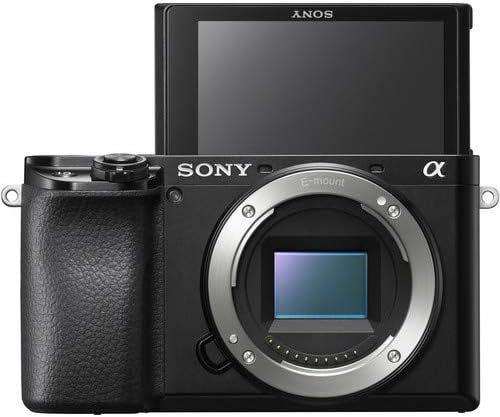
It combines a 26MP APS-C sensor with advanced autofocus, in-body stabilization, a compact body, and access to Sony’s enormous E-mount ecosystem.
That makes it particularly attractive for travelers who want one small camera that can do almost everything.
Sony lists an APS-C sensor, up to 11 fps continuous shooting, subject-recognition autofocus, and in-body stabilization among the camera’s capabilities.
Key Features
- 26MP APS-C sensor
- Compact body
- In-body image stabilization
- Up to 11 fps continuous shooting
- AI-based subject recognition
- 4K video
- Fully articulating touchscreen
- Sony E-mount lens compatibility
- Strong autofocus
- Weather-resistant design
Why the α6700 Works So Well for Travel
The α6700 occupies an excellent middle ground.
It’s smaller than many full-frame systems while retaining enough performance for serious photography.
It is particularly good for travelers who don’t want to specialize.
You could photograph a landscape in the morning, street photography at noon, wildlife in the afternoon, and a restaurant video at night.
The camera is capable of handling all of those situations.
A Strong Choice for Active Travelers
The α6700 becomes particularly interesting for:
- Hiking
- Backpacking
- Adventure travel
- Wildlife trips
- Safari
- Cycling trips
- Outdoor travel
- City exploration
Its smaller APS-C body can reduce the overall weight of the kit, especially when paired with compact lenses.
Strong Autofocus
Travel photographers often encounter unpredictable subjects.
A person suddenly walks through your frame.
A bird takes flight.
A cyclist approaches.
A child starts running.
A boat moves across the scene.
The α6700’s subject-recognition autofocus gives it the flexibility to handle these situations without requiring the photographer to constantly change autofocus settings.
Excellent Travel Video Camera
The fully articulating screen and strong video capabilities also make the α6700 appealing to travel creators.
You can use it for:
- Travel vlogs
- YouTube videos
- Walking tours
- Short-form video
- Hotel content
- Food videos
- Travel reels
This makes it a particularly strong hybrid travel camera.
Lens Selection Is a Major Advantage
Sony’s E-mount ecosystem is one of the biggest reasons to consider the α6700.
You can build an extremely compact travel setup with a small prime or standard zoom.
Or you can add a telephoto lens when you’re heading somewhere with wildlife.
That flexibility is difficult to match with a fixed-lens compact camera.
Where the α6700 Falls Short
The main compromise is sensor size.
Although modern APS-C sensors can produce excellent photographs, a full-frame camera can still provide advantages for photographers who frequently work in extremely low light or want very shallow depth of field.
The 26MP resolution is also lower than the 40.2MP sensor in the X-T50.
However, resolution isn’t everything.
For many travelers, the α6700’s combination of autofocus, stabilization, size, lens selection, and video capability may be more useful than having additional megapixels.
Best Travel Lens Pairing
For a compact everyday kit:
16–50mm-class standard zoom
For street photography:
20mm or 24mm prime
For portraits:
35mm or 50mm equivalent prime
For wildlife and distant subjects:
70–350mm-class telephoto
For maximum versatility:
18–135mm-class travel zoom
Who Should Buy the Sony α6700?
The α6700 is particularly suited to:
- Backpackers
- Adventure travelers
- Travel vloggers
- Hybrid shooters
- Street photographers
- Wildlife travelers
- Travelers who want a small interchangeable-lens camera
- Photographers already invested in Sony E-mount
Who Should Skip It?
Consider the α7C II or another full-frame camera if:
- Full-frame low-light performance is your priority
- You frequently make very large prints
- You want the strongest background separation
- You already own a full-frame lens collection
Verdict:
Best all-round compact mirrorless travel camera for photographers who want versatility, strong autofocus, stabilization, video, and a relatively small APS-C system.
Sony α7C II vs Fujifilm X-T50 vs Sony α6700
These three cameras represent three slightly different approaches to travel photography.
| Feature | Sony α7C II | Fujifilm X-T50 | Sony α6700 |
|---|---|---|---|
| Sensor | Full frame | APS-C | APS-C |
| Resolution | 33MP | 40.2MP | 26MP |
| Stabilization | Up to 7 stops | Up to 7 stops | Yes |
| Main Advantage | Full-frame performance | Resolution + portability | Versatility + AF |
| Travel Style | Serious/hybrid travel | Street/landscape | Adventure/all-round |
| Video | Excellent | Excellent | Excellent |
| Lens System | Sony E | Fujifilm X | Sony E |
| Portability | Excellent | Excellent | Excellent |
Which One Should You Choose?
Choose the Sony α7C II if you want the best combination of compact size and full-frame performance.
Choose the Fujifilm X-T50 if you prioritize high resolution, physical controls, JPEG output, and a compact APS-C system.
Choose the Sony α6700 if you want maximum versatility in a small package, particularly for travel that includes wildlife, action, and video.
The important point is that all three can produce excellent travel photographs.
The right choice depends more on your travel style than on which camera has the longest specification list.
Travel Camera Buying Tip: Don’t Forget the Lens
Before purchasing any of these cameras, calculate the weight and price of the complete setup.
A camera body may look inexpensive and compact until you add the lens you actually need.
For example:
Camera + standard zoom + spare battery + memory card + bag
is a much more realistic travel comparison than camera-body weight alone.
For most travelers, a versatile standard zoom is the best starting point.
If you regularly photograph wildlife or distant subjects during trips, adding a lightweight telephoto lens can transform what you can capture.
If you want to understand how longer focal lengths can help with distant subjects, see our guide to how to use a telephoto lens for perfect candid shots.
And if you’re still deciding between camera systems, our DSLR vs mirrorless camera guide explains the major differences before you commit to a system.
What Comes Next?
The first three cameras cover three of the most important travel-camera approaches: compact full frame, high-resolution APS-C, and versatile APS-C.
But travel photography also has an important compact-camera category.
Some photographers don’t want to carry interchangeable lenses at all.
Others want extremely high resolution from a compact full-frame body.
And street photographers may prioritize a fixed lens and pocketability above everything else.
Those categories are where the next cameras in our ranking become particularly interesting.
4. Sony α7CR — Best High-Resolution Full-Frame Travel Camera
If image resolution is one of your highest priorities, the Sony α7CR is one of the most compelling travel cameras available in 2026.
It combines a 61MP full-frame sensor with a relatively compact body, giving travel photographers an unusual combination of high resolution and portability.
That makes it particularly attractive for landscape, architecture, cityscape, travel portraits, and photographers who like to crop heavily.
Key Features
- 61MP full-frame sensor
- Compact mirrorless body
- In-body image stabilization
- Advanced subject-recognition autofocus
- Electronic viewfinder
- Fully articulating touchscreen
- 4K video
- Sony E-mount lens ecosystem
- Compact body design
Why the α7CR Is Excellent for Travel
Travel photography frequently involves situations where you cannot get as close to your subject as you’d like.
You may be standing across a plaza photographing architecture.
You may be photographing a mountain from a distant viewpoint.
You may spot an interesting detail on a building while walking through a city.
You may also want to crop a landscape photograph later to create a different composition.
The α7CR’s 61MP sensor provides substantial resolution for these situations.
You can capture a wide composition and retain significant detail when cropping.
Excellent for Landscape Photography
The α7CR is particularly attractive for serious landscape photographers.
A high-resolution full-frame sensor gives you considerable flexibility when working with detailed scenes containing:
- Mountains
- Buildings
- Trees
- Clouds
- Rocks
- Water
- Fine architectural details
If you’re the type of traveler who returns home with hundreds of landscape photographs and spends time processing them carefully, the α7CR is a very strong option.
Compact Full-Frame Advantage
The major attraction is that Sony has put a very high-resolution full-frame sensor into a relatively compact camera body.
That means you can obtain full-frame image quality without carrying a large professional camera body.
However, there’s an important catch.
The Lens Still Matters
A small camera body doesn’t automatically create a lightweight travel kit.
A large, fast full-frame lens can make the overall system significantly heavier.
For travel, the α7CR makes the most sense when paired with compact lenses.
A small prime can produce an exceptionally portable setup.
A compact standard zoom can turn it into a much more versatile travel camera.
Best Travel Lens Pairings
For landscapes and architecture:
20–24mm-class wide-angle lens
For everyday travel:
24–70mm-class compact zoom
For maximum flexibility:
24–105mm-class zoom
For street photography:
35mm-class prime
For portraits:
50mm or 85mm-class prime
Where the α7CR Falls Short
The biggest disadvantage is that 61MP files are large.
That means:
- More storage requirements
- Larger memory-card usage
- More demanding computer storage
- Larger RAW files
- Potentially slower editing workflows
Not every traveler needs 61MP.
If you’re mainly sharing photographs on social media, a lower-resolution camera may already provide more than enough image quality.
Who Should Buy the Sony α7CR?
The α7CR is particularly suited to:
- Landscape photographers
- Architecture photographers
- Serious travel photographers
- Photographers who crop heavily
- Large-print photographers
- Full-frame enthusiasts
- Travelers who want high resolution in a compact body
Who Should Skip It?
Choose something else if:
- Maximum portability is more important than resolution
- You don’t need full-frame
- You primarily share images online
- Storage space is a concern
- You want a lower-cost travel system
Verdict:
Best high-resolution full-frame travel camera for photographers who want maximum detail without moving to a large professional body.
5. Fujifilm X100VI — Best Fixed-Lens Travel Camera
The Fujifilm X100VI takes a completely different approach to travel photography.
Instead of carrying an interchangeable-lens camera and several lenses, you get a compact camera with a fixed 23mm f/2 lens, equivalent to approximately 35mm on full frame.
This simplicity is one of its greatest strengths.
You don’t need to decide which lens to pack.
You don’t need to change lenses in dusty environments.
You don’t need to carry an additional camera bag full of glass.
You simply take the camera and go.
Key Features
- 40.2MP APS-C sensor
- Fixed 23mm f/2 lens
- 35mm-equivalent field of view
- In-body image stabilization
- Hybrid optical/electronic viewfinder
- Tilting touchscreen
- Fujifilm Film Simulations
- Compact rangefinder-style design
- 6.2K video
Why the X100VI Is So Good for Travel
The fixed lens forces you to simplify.
That can actually improve your photography.
Instead of constantly thinking:
“Should I use the 24mm lens or the 50mm lens?”
you concentrate on composition, timing, light, and your position.
The 35mm-equivalent field of view is particularly useful for:
- Street photography
- Travel portraits
- Cafés
- Restaurants
- Architecture
- Environmental portraits
- Everyday travel scenes
Excellent for Street Photography
The X100VI’s compact rangefinder-style design can be much less intimidating than a large professional camera.
That’s useful when photographing people and everyday life while traveling.
A smaller camera can also be easier to carry discreetly through busy markets, streets, and public spaces.
Film Simulations Are a Major Attraction
Fujifilm’s Film Simulation modes are another reason the X100VI appeals to travelers.
You can create distinctive JPEG images directly in the camera without relying entirely on post-processing.
For someone traveling for several weeks and returning with thousands of images, reducing editing time can be a major advantage.
Built-In Stabilization
The X100VI also includes in-body image stabilization.
That gives it an advantage over many older compact fixed-lens cameras when shooting handheld in lower light.
The Biggest Limitation: One Lens
This is also its greatest weakness.
You cannot zoom.
If you’re photographing:
- Wildlife
- Distant mountains
- Sports
- Distant architecture
you may wish you had a longer focal length.
Likewise, if you’re photographing extremely large buildings or interiors, you may want something wider.
You have to work with the 35mm-equivalent field of view.
Who Should Buy the Fujifilm X100VI?
It’s ideal for:
- Street photographers
- City travelers
- Minimalist photographers
- Travelers who hate changing lenses
- Photographers who value JPEG output
- Travel photographers who prioritize portability
- Everyday documentary photography
Who Should Skip It?
Avoid making it your only travel camera if you regularly photograph:
- Wildlife
- Sports
- Distant subjects
- Very wide landscapes
- Events requiring different focal lengths
Verdict:
Best fixed-lens travel camera for photographers who value simplicity, portability, street photography, and Fujifilm’s distinctive image rendering.
6. OM SYSTEM OM-3 — Best Adventure & Outdoor Travel Camera
For travelers who spend more time outdoors than inside museums and cafés, the OM SYSTEM OM-3 deserves serious consideration.
Its Micro Four Thirds system provides an important advantage for travel:
small lenses and a compact overall system.
This becomes particularly valuable when your trip involves hiking, trekking, backpacking, climbing, cycling, or outdoor exploration.
Key Features
- Micro Four Thirds sensor
- Approximately 20MP resolution
- Compact body
- In-body image stabilization
- Computational photography features
- Strong weather-resistant design
- Subject-detection autofocus
- Extensive Micro Four Thirds lens ecosystem
- High-speed shooting capabilities
Why the OM-3 Is Interesting for Travel
Travel photographers often underestimate the value of a lightweight telephoto lens.
Suppose you’re hiking through a national park.
You may want to photograph:
- Birds
- Monkeys
- Deer
- Mountain goats
- Distant waterfalls
- Boats
- People across a valley
A full-frame telephoto lens can become large and heavy.
Micro Four Thirds can provide significant focal-length reach while keeping the physical lens relatively compact.
That makes the OM system particularly attractive for adventure travel.
Excellent for Hiking and Backpacking
The OM-3 makes sense when you’re carrying your equipment for hours.
A lightweight camera and compact lenses leave more room and weight capacity for:
- Water
- Food
- Clothing
- Camping equipment
- Hiking gear
- Batteries
This is one area where a smaller sensor system can have a practical advantage that isn’t visible on a specification sheet.
Weather Resistance
Outdoor travelers can encounter unpredictable weather.
The OM system has a strong reputation for weather-resistant camera equipment, making it particularly appealing for photographers who don’t want to stop shooting whenever conditions become unpleasant.
However, weather resistance should never be treated as permission to deliberately expose the camera to extreme water or environmental conditions.
Computational Photography
OM SYSTEM’s computational features are another interesting advantage.
Features designed around things such as high-resolution capture, live composite-style shooting, and other computational techniques can be useful for travelers who want creative results without carrying additional equipment.
That can be particularly useful for:
- Night scenes
- Star photography
- Water movement
- Long-exposure effects
- High-resolution landscapes
The Micro Four Thirds Trade-Off
The biggest limitation is sensor size.
A full-frame camera generally provides greater flexibility for extremely shallow depth of field and demanding low-light work.
If your primary travel photography happens at night and you frequently shoot at very high ISO settings, a full-frame camera may be a better fit.
But if your priority is small lenses, portability, reach, and outdoor durability, the OM system becomes very attractive.
Best Travel Lens Pairing
For general travel:
12–45mm-class standard zoom
For wildlife and distant subjects:
40–150mm-class telephoto
For extreme reach:
100–400mm-class telephoto
For landscapes and architecture:
7–14mm-class wide-angle zoom
Who Should Buy the OM SYSTEM OM-3?
It’s particularly suited to:
- Backpackers
- Hikers
- Adventure travelers
- Outdoor photographers
- Wildlife travelers
- Nature photographers
- Travelers who want compact telephoto lenses
Who Should Skip It?
Choose a full-frame system if:
- Maximum low-light performance is critical
- You frequently shoot at night
- You want extremely shallow depth of field
- You prioritize the largest possible sensor
Verdict:
Best adventure travel camera for photographers who value compact lenses, outdoor capability, stabilization, and telephoto reach.
7. Nikon Zf — Best Travel Camera for Street Photography
The Nikon Zf combines modern full-frame mirrorless technology with a retro-inspired body and physical control layout.
For travel photographers who enjoy street photography and want a camera that feels engaging to operate, the Zf is one of the most distinctive choices on this list.
Its full-frame sensor provides strong image quality, while Nikon’s Z-mount system gives travelers access to a growing range of lenses.
Key Features
- 24.5MP full-frame sensor
- In-body image stabilization
- Subject-detection autofocus
- Retro-inspired controls
- Electronic viewfinder
- Fully articulating touchscreen
- Strong low-light capability
- Nikon Z-mount lens ecosystem
- 4K video
Why the Nikon Zf Works for Travel
Travel photography isn’t always about speed.
Sometimes it’s about slowing down.
You might walk through an old neighborhood, notice interesting light on a building, and spend several minutes composing a photograph.
The Zf’s physical controls can make that process more engaging.
Dedicated dials allow photographers to interact directly with shutter speed, ISO, and exposure settings rather than relying entirely on menus.
Excellent for Street Photography
The Zf is particularly well suited to street photography because of its combination of:
- Full-frame image quality
- Compact-ish body
- Retro styling
- Physical controls
- Strong autofocus
- Excellent low-light capability
Paired with a small prime lens, it can make a very capable street-travel setup.
Excellent in Low Light
Travel photographers often work in cities after dark.
The Zf’s full-frame sensor gives it an advantage in these situations.
A fast prime can make the system particularly effective for:
- Night streets
- Restaurants
- Indoor markets
- Evening portraits
- Architecture at blue hour
- Cultural events
A Unique Advantage: Monochrome Photography
The Nikon Zf also offers a dedicated monochrome shooting mode.
For photographers who enjoy black-and-white street photography, this can be a fun and useful creative feature.
Travel destinations often provide excellent monochrome subjects because strong light, shadows, architecture, and human activity can translate extremely well into black-and-white images.
Where the Nikon Zf Falls Short
The retro styling comes with a few compromises.
The body is not as small as some compact APS-C cameras.
It can also become relatively heavy when paired with large professional Z-mount lenses.
Again, the same travel principle applies:
The lens determines a large part of the final travel-system size.
Best Travel Lens Pairing
For street photography:
28mm or 40mm-class prime
For general travel:
24–70mm-class zoom
For portraits:
50mm or 85mm-class prime
For landscapes:
20–24mm-class wide-angle lens
Who Should Buy the Nikon Zf?
The Zf is ideal for:
- Street photographers
- Travel photographers who enjoy manual controls
- Full-frame enthusiasts
- Night photographers
- Documentary photographers
- Photographers who prefer retro camera designs
Who Should Skip It?
Consider another option if:
- Absolute minimum weight is your priority
- You want a pocketable camera
- You primarily shoot wildlife with long lenses
- You don’t care about physical exposure controls
Verdict:
Best travel camera for street photographers who want full-frame image quality, strong low-light performance, and an engaging retro-style shooting experience.
Travel Camera Comparison: α7CR vs X100VI vs OM-3 vs Zf
| Camera | Sensor | Main Strength | Best Travel Style |
|---|---|---|---|
| Sony α7CR | Full frame | 61MP resolution | Landscapes & architecture |
| Fujifilm X100VI | APS-C | Fixed-lens simplicity | Street & city travel |
| OM SYSTEM OM-3 | Micro Four Thirds | Compact outdoor system | Hiking & adventure |
| Nikon Zf | Full frame | Street + low light | Urban/documentary |
Which One Should You Choose?
Choose the Sony α7CR if resolution is your priority.
Choose the Fujifilm X100VI if you want the simplest possible high-quality travel setup.
Choose the OM SYSTEM OM-3 if your trip involves hiking, nature, wildlife, and outdoor adventure.
Choose the Nikon Zf if street photography and low-light shooting are central to your travel style.
There is no universal winner here.
The best travel camera is the one that matches how you actually travel and photograph.
A Crucial Travel Photography Decision: Zoom or Prime?
Before buying your camera, you should also decide whether you want a zoom lens or a prime lens.
Zoom Lens
A zoom is generally better for travelers who want versatility.
One lens can cover multiple situations without requiring lens changes.
That’s especially useful when you’re traveling with limited luggage.
Prime Lens
A prime lens is generally better for travelers who prioritize:
- Low-light performance
- Small size
- Simplicity
- Street photography
- Portraits
- Creative composition
The Fujifilm X100VI effectively builds this philosophy into the camera itself with its fixed 35mm-equivalent lens.
Which Is Better?
For most first-time travel-camera buyers, a versatile zoom is the safer choice.
For experienced photographers who already understand their preferred focal length, a compact prime can be an excellent minimalist solution.
Travel Photography Isn’t About Carrying the Most Gear
One of the easiest mistakes travelers make is packing too much camera equipment.
You don’t necessarily need:
- Three camera bodies
- Five lenses
- A giant tripod
- Multiple filters
- A huge flash
- Every accessory you own
A carefully selected camera and lens combination can often produce better travel photographs simply because you’ll actually carry it everywhere.
For photographers who need more reach, however, a telephoto lens can make a major difference. Our guide to how to use a telephoto lens for perfect candid shots explains how focal length and shooting technique can help when your subject is farther away.
And if you’re still comparing camera technologies before choosing a system, our DSLR vs mirrorless camera guide covers the major differences between the two systems.
8. Canon EOS R8 — Best Lightweight Full-Frame Value
The Canon EOS R8 is an excellent choice for travelers who want the benefits of a full-frame sensor without stepping up to a larger or more expensive professional camera.
Its combination of a 24.2MP full-frame sensor, compact body, strong autofocus, and 4K video makes it particularly attractive to photographers who want a capable full-frame travel camera without carrying a heavyweight setup.
Key Features
- 24.2MP full-frame sensor
- Compact and lightweight body
- Dual Pixel CMOS AF II
- Subject detection and tracking
- Up to 40 fps electronic shooting
- 4K video
- Fully articulating touchscreen
- Canon RF lens mount
- USB-C connectivity
- Excellent high-ISO capability
Why the EOS R8 Is Good for Travel
The biggest reason to consider the R8 is its full-frame performance in a relatively lightweight body.
Travel photographers often want the image quality advantages of a larger sensor but don’t want to carry a large professional camera.
The R8 provides a useful middle ground.
It’s particularly suitable for travelers who photograph a combination of:
- Landscapes
- City streets
- Architecture
- Portraits
- Food
- Family
- Events
- Low-light scenes
Excellent Autofocus
Canon’s Dual Pixel CMOS AF II system gives the R8 strong subject detection and tracking.
That’s useful when your travel photography isn’t limited to static landscapes.
You may encounter:
- People walking toward you
- Children playing
- Animals
- Birds
- Vehicles
- Performers
- Sports during a trip
A responsive autofocus system makes the camera more versatile for these unexpected moments.
Strong Low-Light Performance
The full-frame sensor is another advantage for travel.
Night markets, restaurants, city streets, museums, and evening events can all require higher ISO settings.
The R8’s full-frame sensor gives photographers a strong starting point for this type of photography.
Pair it with a compact fast prime and you can create a relatively lightweight low-light travel setup.
Excellent for Travel Video
The R8 is also a capable hybrid camera.
Its 4K video capability and fully articulating screen make it useful for travelers who want to create both photographs and video.
That makes it suitable for:
- Travel YouTube
- Vlogging
- Reels
- Family travel videos
- Hotel content
- Destination videos
The Major Limitation: Battery
One of the areas where travelers need to plan ahead is battery capacity.
The compact body comes with a relatively small battery, so photographers who spend entire days away from accommodation should carry a spare or have a suitable charging solution.
This is a small inconvenience compared with the R8’s portability, but it is worth considering before a long trip.
RF Lens Considerations
Canon’s RF ecosystem offers a growing range of lenses, including relatively compact options.
For travel, pairing the R8 with a small standard zoom or compact prime makes much more sense than automatically choosing the largest professional RF lenses.
Best Travel Lens Pairing
For everyday travel:
24–50mm-class compact zoom
For general-purpose coverage:
24–105mm-class zoom
For street photography:
28mm or 35mm-class prime
For portraits:
50mm or 85mm-class prime
Who Should Buy the Canon EOS R8?
The R8 is especially good for:
- Full-frame beginners
- Travel photographers
- Family travelers
- Landscape photographers
- Portrait photographers
- Hybrid photo/video shooters
- Photographers who want Canon’s autofocus system
Who Should Skip It?
Consider another camera if:
- Long battery life is a major priority
- You need in-body image stabilization
- You want a rugged professional body
- You need extensive controls and customization
Verdict:
Best lightweight full-frame value for travelers who want strong image quality and autofocus without carrying a large professional camera.
9. Fujifilm X-M5 — Best Budget Lightweight Travel Camera
The Fujifilm X-M5 is one of the most interesting choices for travelers who want a small, relatively affordable interchangeable-lens camera.
It uses a 26.1MP APS-C sensor and has a particularly compact body, making it attractive for photographers who prioritize portability.
The X-M5 is also designed with hybrid creators in mind, so it can work as both a travel photography camera and a compact video camera.
Key Features
- 26.1MP APS-C sensor
- Very compact body
- Lightweight design
- Fujifilm Film Simulation modes
- Subject-detection autofocus
- Fully articulating touchscreen
- 6.2K video
- Multiple built-in microphones
- Fujifilm X-mount lens ecosystem
Why the X-M5 Is Great for Travel
The X-M5’s greatest advantage is simple:
You can build a very small interchangeable-lens travel kit around it.
That matters for travelers who don’t want a large camera hanging from their neck all day.
It’s especially attractive for:
- Backpacking
- City travel
- Family vacations
- Street photography
- Travel vlogging
- Everyday photography
Lightweight Doesn’t Mean Limited
The X-M5 is small, but its APS-C sensor gives it substantially more flexibility than many smartphone cameras and basic compact cameras.
You can also change lenses depending on the destination.
A wide-angle lens can turn it into a landscape camera.
A compact prime can make it ideal for street photography.
A telephoto can give you additional reach for wildlife.
This flexibility is one of the biggest advantages of an interchangeable-lens travel camera.
Fujifilm Film Simulations
As with the X-T50 and X100VI, Fujifilm’s Film Simulation system is a major attraction.
Travelers who don’t want to spend hours editing photographs can experiment with different looks directly in the camera.
That makes the X-M5 particularly interesting for social-media-focused travelers.
You can photograph a scene, transfer the image, and potentially share it without a complicated editing workflow.
Excellent for Travel Video
The X-M5 is also designed to appeal to content creators.
The fully articulating screen is particularly useful for:
- Self-recording
- Travel vlogging
- Walking videos
- Reels
- YouTube Shorts
- Destination videos
That makes it one of the stronger choices for travelers who care almost as much about video as still photography.
The Major Compromise: No Built-In Viewfinder
The X-M5 does not include an electronic viewfinder.
Instead, composition is primarily performed using the rear screen.
That’s perfectly workable for many travelers, but photographers accustomed to using a viewfinder may find it less convenient, particularly under strong sunlight.
Where the X-M5 Makes Sense
The X-M5 isn’t trying to compete directly with a professional full-frame camera.
Its appeal is different.
It’s about:
small size + good image quality + interchangeable lenses + video + affordability.
That can be exactly what a casual traveler needs.
Best Travel Lens Pairing
For a compact everyday kit:
15–45mm-class power zoom
For street photography:
23mm or 27mm-class compact prime
For portraits:
33mm or 50mm-class prime
For wildlife:
70–300mm-class telephoto
Who Should Buy the Fujifilm X-M5?
It’s particularly suitable for:
- Budget-conscious travelers
- Beginners
- Backpackers
- Content creators
- Students
- Casual photographers
- Travelers upgrading from a smartphone
Who Should Skip It?
Consider the X-T50 or another camera if:
- You require an electronic viewfinder
- You want in-body image stabilization
- You need a more traditional photography experience
- You frequently use large lenses
Verdict:
Best budget lightweight travel camera for beginners and creators who want a small interchangeable-lens system.
10. Ricoh GR IV — Best Pocketable Travel Camera
The Ricoh GR IV takes portability to the extreme.
Unlike the interchangeable-lens cameras in this guide, the GR IV is designed to be a genuinely pocketable camera that you can carry almost everywhere.
It combines an APS-C sensor with a fixed 28mm-equivalent f/2.8 lens, making it particularly well suited to street photography, city travel, documentary photography, and everyday snapshots. Current travel-camera coverage from DPReview highlights the GR IV specifically as a pocketable travel option.
Key Features
- APS-C sensor
- 28mm-equivalent fixed lens
- f/2.8 maximum aperture
- Extremely compact body
- Image stabilization
- Built for quick everyday shooting
- Touchscreen
- RAW photography
- Pocket-friendly design
Why the GR IV Is Different
The GR IV isn’t about having the most features.
It’s about being there when the photograph happens.
A large interchangeable-lens camera may stay inside your backpack because you’re tired of carrying it.
A pocketable camera can stay with you.
That makes a huge difference for travel photography.
You can carry it while:
- Walking through a market
- Exploring a city
- Going to dinner
- Visiting a museum
- Riding public transportation
- Exploring neighborhoods
- Taking an evening walk
Excellent Street Photography Camera
The 28mm-equivalent perspective provides a relatively wide field of view while remaining suitable for documentary photography.
It allows you to include context around your subject rather than isolating everything with a telephoto lens.
That’s particularly useful for:
- Street scenes
- Architecture
- Environmental portraits
- Markets
- Travel stories
- Everyday moments
Minimalist Travel Photography
The GR IV is particularly attractive to photographers who believe that less equipment can produce better travel photography.
There are no lenses to change.
No large camera bag is required.
No decisions about which focal length to carry.
You simply take the camera.
The Fixed Lens Is Also Its Biggest Limitation
A 28mm-equivalent lens won’t work equally well for every travel situation.
It isn’t ideal for:
- Distant wildlife
- Sports
- Tight portraits
- Distant details
- Compressed landscapes
You have to move yourself rather than changing focal length.
That can be either a limitation or a creative advantage depending on your style.
Weather Resistance
Travelers should also be aware that the GR IV does not offer the same level of weather sealing associated with some rugged interchangeable-lens systems.
If you’re traveling in heavy rain, dusty environments, or near water, additional protection is sensible.
Who Should Buy the Ricoh GR IV?
The GR IV is ideal for:
- Street photographers
- Minimalist travelers
- City travelers
- Documentary photographers
- Travelers who want a pocketable camera
- Photographers who dislike carrying camera bags
Who Should Skip It?
Choose an interchangeable-lens camera if you need:
- Telephoto reach
- Wildlife capability
- Sports photography
- Multiple focal lengths
- Extensive video flexibility
Verdict:
Best pocketable travel camera for photographers who value portability and spontaneous street photography above interchangeable-lens flexibility.
The Final Three: R8 vs X-M5 vs GR IV
These three cameras represent three different interpretations of affordable travel photography.
| Camera | Format | Main Advantage | Best For |
|---|---|---|---|
| Canon EOS R8 | Full frame | Image quality + AF | Serious travel |
| Fujifilm X-M5 | APS-C | Small interchangeable-lens system | Budget travelers & creators |
| Ricoh GR IV | APS-C | Pocketability | Street & minimalist travel |
Choose the Canon EOS R8 If…
You want full-frame image quality and strong autofocus while keeping the body relatively compact.
Choose the Fujifilm X-M5 If…
You want a small interchangeable-lens camera and don’t want to spend as much as you would on a premium full-frame system.
Choose the Ricoh GR IV If…
You want the smallest practical high-quality camera and are comfortable working with one fixed focal length.
The Complete Travel Camera Matters More Than the Body
At this point, we’ve covered all 10 cameras in our ranking.
But there’s an important mistake you should avoid before buying one.
Don’t compare camera bodies alone.
Compare the complete kit.
For example:
Body + everyday lens + spare battery + memory card + bag
is your real travel system.
A 400g camera paired with a 1kg lens can be less convenient than a 500g camera paired with a 300g lens.
This is why the smallest camera isn’t automatically the best travel camera.
The goal is to find the best balance between image quality, lens flexibility, and total carrying weight.
Travel Camera Rankings So Far
Our complete ranking is:
- Sony α7C II — Best Overall Travel Camera
- Fujifilm X-T50 — Best APS-C Travel Camera
- Sony α6700 — Best All-Round Compact Mirrorless
- Sony α7CR — Best High-Resolution Full-Frame
- Fujifilm X100VI — Best Fixed-Lens Travel Camera
- OM SYSTEM OM-3 — Best Adventure & Outdoor Travel Camera
- Nikon Zf — Best Travel Camera for Street Photography
- Canon EOS R8 — Best Lightweight Full-Frame Value
- Fujifilm X-M5 — Best Budget Lightweight Travel Camera
- Ricoh GR IV — Best Pocketable Travel Camera
The next step is to stop looking at individual cameras and answer the question most travelers actually need answered:
Which camera is best for YOUR type of travel?
That means comparing the cameras specifically for landscapes, street photography, backpacking, wildlife, international travel, travel video, low light, and different budgets.
Best Camera for Landscape Travel Photography
Landscape photography puts a different set of demands on a travel camera. Resolution, dynamic range, stabilization, lens selection, and the ability to capture fine detail can matter more than extreme autofocus speed.
For travelers photographing mountains, coastlines, deserts, architecture, and dramatic cityscapes, the Sony α7CR is one of the strongest choices in this guide.
Its 61MP full-frame sensor provides substantial resolution for landscapes and architecture, while its compact body makes it considerably easier to carry than many traditional high-resolution full-frame cameras.
The Nikon Z8 is another excellent choice if image quality is more important than keeping the kit extremely small. It offers high resolution and a broader professional feature set, although the overall system can become significantly heavier once you add full-frame lenses.
For a smaller APS-C setup, the Fujifilm X-T50 is particularly attractive. Its 40.2MP sensor provides plenty of detail while keeping the camera and lenses relatively compact.
Best landscape travel cameras
| Camera | Best for | Main advantage |
|---|---|---|
| Sony α7CR | Serious landscape travel | 61MP full frame |
| Fujifilm X-T50 | Lightweight landscapes | 40.2MP APS-C |
| Nikon Z8 | Professional landscape work | High-resolution full frame |
| Sony α7C II | General travel landscapes | Compact full frame |
| Fujifilm X100VI | Minimalist travel | Fixed 35mm-equivalent lens |
Our pick: Sony α7CR
If your travel photography revolves around landscapes and architecture and you want maximum detail without carrying a large professional body, the α7CR is an excellent fit.
Best Camera for Street Photography While Traveling
Street photography rewards cameras that are discreet, responsive, comfortable to carry, and easy to operate.
You do not necessarily need the highest resolution or the longest zoom. A compact camera that you actually want to carry around all day can be more useful than a larger camera with technically superior specifications.
The Fujifilm X100VI is one of the most compelling choices because its fixed 23mm f/2 lens provides a 35mm-equivalent field of view that works particularly well for everyday street scenes, environmental portraits, architecture, and travel snapshots.
Its compact rangefinder-inspired design also makes it less conspicuous than a large professional camera and zoom lens combination.
The Ricoh GR IV takes the compact concept even further. Its fixed 28mm-equivalent f/2.8 lens and genuinely pocketable design make it especially appealing for travelers who want a camera available at all times.
For photographers who want interchangeable lenses, the Nikon Zf offers a compelling combination of full-frame image quality and physical controls inspired by traditional cameras.
Best street travel cameras
| Camera | Best for | Why |
|---|---|---|
| Fujifilm X100VI | Classic travel street photography | 35mm-equivalent fixed lens |
| Ricoh GR IV | Maximum portability | Pocketable design |
| Nikon Zf | Full-frame street photography | Retro controls + full frame |
| Fujifilm X-T50 | Flexible street shooting | Compact body + interchangeable lenses |
| Sony α6700 | Fast-moving street scenes | Strong autofocus + compact size |
Our pick: Fujifilm X100VI
For photographers who specifically want a dedicated travel street camera, the X100VI provides a remarkably focused shooting experience.
If you want something even smaller and more discreet, the Ricoh GR IV is difficult to ignore.
Best Camera for Backpacking
Backpacking changes the equation dramatically.
When you are carrying clothes, food, hiking equipment, batteries, and other essentials, every additional kilogram matters. A technically excellent camera becomes less useful if its size makes you leave it inside your backpack.
For this type of travel, Micro Four Thirds and APS-C systems can be particularly attractive because their lenses can be substantially smaller than comparable full-frame options.
The OM SYSTEM OM-3 is a particularly interesting choice for outdoor-oriented travelers. Its compact Micro Four Thirds system can provide considerable reach without requiring the large lenses commonly associated with full-frame wildlife and telephoto photography.
The Fujifilm X-T50 is another excellent backpacking option. It combines a relatively compact body with a high-resolution APS-C sensor and a broad selection of small Fujifilm lenses.
The Sony α6700 is also worth considering when autofocus performance and a compact interchangeable-lens system are priorities.
Best backpacking cameras
Best overall: OM SYSTEM OM-3
Best APS-C: Fujifilm X-T50
Best autofocus-focused option: Sony α6700
Best full-frame option: Sony α7C II
Best pocketable option: Ricoh GR IV
The lens matters as much as the camera
Backpackers should not choose a camera based solely on body weight.
A lightweight camera paired with a huge professional zoom can still become a heavy travel system.
Instead, consider a compact travel zoom or a small prime lens.
For travelers who regularly photograph distant wildlife, mountains, or subjects across valleys, a telephoto lens can dramatically expand what a compact camera system can do. Our guide on how to use a telephoto lens for candid photography also explains why longer focal lengths are useful when you cannot physically move closer to your subject.
Best Camera for International Travel
International travel introduces additional considerations beyond image quality.
You may be walking through cities for hours, traveling on trains, visiting museums, photographing architecture, eating at restaurants, and moving between locations every day.
The best camera therefore needs to balance:
- Size
- Weight
- Battery life
- Reliability
- Autofocus
- Image quality
- Lens availability
- Video capability
- Low-light performance
The Sony α7C II is our strongest all-around recommendation for this type of travel.
It combines a full-frame sensor with a relatively compact body and strong autofocus, making it suitable for everything from city photography to landscapes and travel portraits.
The Fujifilm X-T50 is an excellent alternative for photographers who prefer a smaller APS-C system and want Fujifilm’s color profiles and physical controls.
For travelers who want almost zero lens-related decisions, the Fujifilm X100VI provides a fixed-lens approach that can make a travel kit extremely simple.
Best international travel cameras
| Camera | Best for |
|---|---|
| Sony α7C II | Best overall international travel |
| Fujifilm X-T50 | Lightweight interchangeable-lens travel |
| Fujifilm X100VI | Simple fixed-lens travel |
| Sony α6700 | Compact hybrid travel |
| Canon EOS R8 | Lightweight full-frame value |
Our pick: Sony α7C II
For most international travelers, the best camera is the one that provides enough capability without becoming a burden.
Best Camera for Wildlife While Traveling
Wildlife photography during a trip creates a difficult compromise.
You need portability because you are already traveling, but wildlife often requires significant focal length, fast autofocus, stabilization, and good high-ISO performance.
The OM SYSTEM OM-3 is particularly interesting for travelers who want a relatively compact system with strong telephoto possibilities.
The smaller Micro Four Thirds sensor format allows manufacturers to build compact lenses that provide substantial effective focal lengths.
The Sony α6700 is another strong option. Its APS-C sensor provides additional reach compared with a full-frame body when using the same focal length, while Sony’s autofocus system makes it useful for moving subjects.
For photographers who prioritize maximum image quality and have more room in their luggage, the Sony α7C II or another full-frame body paired with a suitable telephoto lens can make more sense.
For a deeper comparison of dedicated wildlife cameras, see our guide to the best cameras for wildlife photography.
Best travel wildlife cameras
Best compact wildlife system: OM SYSTEM OM-3
Best APS-C option: Sony α6700
Best full-frame compact option: Sony α7C II
Best high-end option: Sony α7CR or a larger professional full-frame body
Best Camera for Travel Vlogging and Video
Travel photographers increasingly want a camera that can handle both still images and video.
That means looking beyond megapixels.
Important video features include:
- 4K recording
- Autofocus tracking
- Image stabilization
- Microphone support
- Flip or articulating screen
- Compact dimensions
- Good battery life
- Easy handheld operation
The Sony α7C II is one of the strongest all-round options because it combines full-frame image quality with modern autofocus and strong hybrid capabilities.
The Sony α6700 is also an excellent choice for creators who want a smaller APS-C system.
For travelers who prioritize compact video creation over having an electronic viewfinder, the Fujifilm X-M5 can be especially attractive.
Best travel video cameras
| Camera | Best for |
|---|---|
| Sony α7C II | Premium hybrid travel |
| Sony α6700 | Compact creator setup |
| Fujifilm X-M5 | Lightweight vlogging |
| Fujifilm X-T50 | Photo + video balance |
| Canon EOS R8 | Full-frame hybrid value |
Best overall hybrid: Sony α7C II
If your trip involves roughly equal amounts of photography and video, a modern hybrid mirrorless camera is generally more versatile than a dedicated compact camera.
Best Camera for Night and Low-Light Travel Photography
Night markets, city streets, restaurants, concerts, illuminated buildings, and evening landscapes can be some of the most memorable subjects during a trip.
A larger sensor can be helpful in these conditions, but the lens you choose is equally important.
A fast prime lens can often make a bigger practical difference than moving from one camera body to another.
The Sony α7C II is an excellent general choice because its full-frame sensor gives it strong low-light potential while retaining a relatively compact body.
The Nikon Zf is another compelling option, especially for photographers who enjoy traditional controls and street photography.
The Sony α7CR offers extremely high resolution, although photographers should not assume that more megapixels automatically means better low-light performance. For night travel, the overall sensor design, lens aperture, stabilization, shutter speed, and shooting technique all matter.
Best low-light travel cameras
- Sony α7C II — Best overall
- Nikon Zf — Best for street and night photography
- Canon EOS R8 — Strong full-frame value
- Sony α7CR — Best when resolution remains important
- Fujifilm X-T50 — Strong compact APS-C alternative
Best Budget Travel Camera
You do not need to spend several thousand dollars to get a capable travel camera.
For many travelers, a mid-range APS-C camera provides the best balance between price, image quality, size, and lens availability.
The Fujifilm X-M5 is one of the most interesting budget-oriented choices in this lineup.
It is small, lightweight, and built around a 26.1MP APS-C sensor. Its compact design makes it particularly appealing to travelers who want something substantially more capable than a smartphone without carrying a large camera.
The Canon EOS R8 is another option for buyers who specifically want full-frame image quality without moving into the price and weight of Canon’s professional bodies.
Older camera models can also represent excellent value, particularly when purchased from reputable used-camera dealers.
Best budget travel cameras
| Camera | Best for |
|---|---|
| Fujifilm X-M5 | Budget + portability |
| Canon EOS R8 | Affordable full frame |
| Sony α6700 | Higher-performance APS-C |
| Ricoh GR IV | Premium pocketable option |
Our budget pick: Fujifilm X-M5
For someone moving up from a smartphone or entry-level camera, the X-M5 offers a compelling combination of portability and capability.
Best Full-Frame Travel Camera
Full-frame cameras remain attractive for travelers who prioritize:
- Low-light performance
- Shallow depth of field
- Dynamic range
- High-end lens choices
- Professional image quality
The challenge is size.
Traditional professional full-frame bodies and lenses can quickly turn a travel kit into a heavy piece of luggage.
That is why compact full-frame bodies are particularly interesting for travel.
Our full-frame travel picks
Best overall: Sony α7C II
Best high resolution: Sony α7CR
Best street photography: Nikon Zf
Best value: Canon EOS R8
The Sony α7C II offers the most balanced combination for the majority of travelers.
The α7CR makes more sense for photographers who frequently crop images or print large landscapes and architecture photographs.
Best APS-C Travel Camera
APS-C cameras occupy an excellent middle ground.
They generally provide better portability than full-frame systems while offering substantially more flexibility and image quality than smartphones and many compact cameras.
The Fujifilm X-T50 is our top APS-C choice in this guide.
Its combination of high resolution, compact dimensions, stabilization, and Fujifilm’s extensive lens ecosystem makes it particularly well suited to travel.
The Sony α6700 is the better choice for photographers who put greater emphasis on autofocus and hybrid shooting.
X-T50 vs α6700 for travel
| Feature | Fujifilm X-T50 | Sony α6700 |
|---|---|---|
| Sensor | 40.2MP APS-C | 26MP APS-C |
| Portability | Excellent | Excellent |
| Autofocus | Very capable | Excellent |
| Stabilization | Yes | Yes |
| Lens ecosystem | Excellent | Excellent |
| Best for | Detail + travel photography | Hybrid + action |
| Overall travel character | Photography-focused | Versatile hybrid |
If you are deciding specifically between these two cameras, our existing Sony α6700 vs Fujifilm X-T5 comparison can also help explain the broader differences between Sony and Fujifilm APS-C systems.
Best Pocketable Travel Camera
Sometimes the best travel camera is the one that can actually fit into your pocket.
This is where the Ricoh GR IV becomes particularly interesting.
Unlike an interchangeable-lens mirrorless system, it is designed around a compact fixed-lens concept. That eliminates the need to carry multiple lenses and makes it easier to take the camera with you everywhere.
Its 28mm-equivalent focal length is particularly useful for:
- Street photography
- Architecture
- Everyday travel
- Food
- Environmental portraits
- City scenes
The Fujifilm X100VI is another excellent compact option, although it is larger than the GR IV and not truly pocket-sized in the same sense.
Pocketability ranking
- Ricoh GR IV — Most pocketable
- Fujifilm X100VI — Compact fixed-lens premium option
- Fujifilm X-M5 — Compact interchangeable-lens option
- Sony α6700 — Compact APS-C system
- Sony α7C II — Compact full-frame system
Full-Frame vs APS-C vs Micro Four Thirds for Travel
There is no universally superior sensor format for travel photography.
The right choice depends on what you photograph and how much equipment you are willing to carry.
Full frame
Advantages:
- Strong low-light capability
- Excellent dynamic range
- Shallow depth of field
- Extensive professional lens options
Disadvantages:
- Larger lenses
- Higher system cost
- Greater overall weight
Best for: serious landscape, night, portrait, and professional travel photography.
APS-C
Advantages:
- Excellent image quality
- Smaller bodies and lenses
- Strong balance of cost and performance
- Excellent travel lens options
Disadvantages:
- Less extreme low-light performance than comparable full frame
- Some high-end lenses can still become large
Best for: most enthusiast travelers.
Micro Four Thirds
Advantages:
- Very compact lenses
- Excellent reach
- Lightweight telephoto systems
- Strong stabilization
Disadvantages:
- Smaller sensor
- Less flexibility for extreme shallow depth of field
Best for: hiking, backpacking, wildlife, adventure travel, and travelers prioritizing weight.
Choose Your Camera Based on Your Travel Style
Instead of asking only, “What is the best travel camera?”, ask:
“What kind of traveler am I?”
City traveler
Choose:
Fujifilm X100VI, Ricoh GR IV, Nikon Zf, or Sony α6700
Prioritize compactness, street photography, and discreet operation.
Landscape traveler
Choose:
Sony α7CR, Fujifilm X-T50, Sony α7C II, or Nikon Z8
Prioritize resolution, dynamic range, stabilization, and lens quality.
Backpacker
Choose:
OM SYSTEM OM-3, Fujifilm X-T50, or Sony α6700
Prioritize total system weight rather than camera-body weight alone.
Luxury traveler
Choose:
Sony α7C II, Sony α7CR, Nikon Zf, or Fujifilm X100VI
You can prioritize build quality, image quality, design, and shooting experience.
Wildlife traveler
Choose:
OM SYSTEM OM-3, Sony α6700, or a full-frame Sony/Canon/Nikon system
Prioritize autofocus, reach, stabilization, and telephoto lens availability.
Travel content creator
Choose:
Sony α7C II, Sony α6700, or Fujifilm X-M5
Prioritize autofocus, video, stabilization, microphones, and portability.
Camera + Lens vs Fixed-Lens Travel Setup
One of the biggest decisions is whether to use an interchangeable-lens camera or a fixed-lens compact.
Interchangeable lens
A camera such as the Sony α7C II, Sony α6700, or Fujifilm X-T50 lets you change lenses depending on the trip.
That means you can carry:
- A compact wide-angle lens
- A standard zoom
- A portrait prime
- A telephoto
The disadvantage is that every additional lens increases weight and takes up space.
Fixed lens
A camera such as the Fujifilm X100VI or Ricoh GR IV removes that decision.
You have one focal length.
That sounds restrictive, but it can actually make travel photography more enjoyable because you spend less time thinking about equipment and more time looking for photographs.
The best travel kit may be surprisingly simple
For many travelers, a camera plus one versatile lens is enough.
You do not need to recreate a professional studio kit inside your backpack.
A compact body + compact zoom can be a better travel solution than a high-end body + three large professional lenses.
What Should You Actually Buy?
If you have reached this point and are still unsure, use this simplified decision tree:
Want the best all-round full-frame travel camera?
→ Sony α7C II
Want the best compact APS-C travel camera?
→ Fujifilm X-T50
Want excellent autofocus in a small system?
→ Sony α6700
Want maximum landscape resolution in a compact body?
→ Sony α7CR
Want a premium fixed-lens street camera?
→ Fujifilm X100VI
Want a pocketable camera?
→ Ricoh GR IV
Want an adventure/backpacking-oriented system?
→ OM SYSTEM OM-3
Want a retro full-frame shooting experience?
→ Nikon Zf
Want affordable full-frame?
→ Canon EOS R8
Want a small budget-friendly camera?
→ Fujifilm X-M5
Travel Camera Buying Rule
Before buying, calculate the complete travel system, not just the camera price.
For example:
Camera body + lens + spare battery + memory card + charger + bag + accessories = actual travel cost
And for weight:
Camera + lens + batteries + accessories = actual carrying weight
This is especially important when comparing full-frame and APS-C systems.
A camera that looks lightweight on a specification sheet may become much heavier after adding the lens you actually need.
For most travelers, the sweet spot is a system that is:
small enough to carry → capable enough to use → versatile enough for the trip.
That balance matters more than chasing the highest specification.
Takeaway
There is no single camera that wins every travel category.
The Sony α7C II is the strongest all-round choice for travelers who want full-frame quality in a relatively compact system.
The Fujifilm X-T50 is arguably the most balanced APS-C option for photographers who prioritize portability and still-image quality.
The Sony α6700 is particularly attractive for hybrid shooters and travelers who value autofocus.
The Fujifilm X100VI and Ricoh GR IV are excellent choices for photographers who want a simpler fixed-lens experience.
And if your trip involves hiking, wildlife, or adventure photography, the OM SYSTEM OM-3 can make a lot of sense because the overall Micro Four Thirds system can remain compact while still providing substantial reach.
The most important lesson is simple:
Don’t buy the biggest camera you can afford. Buy the smallest camera system that can comfortably handle the photography you actually plan to do.
In the next section, we’ll turn this into a practical travel-camera buying guide, including camera settings, essential accessories, common mistakes, FAQs, and the final recommendations.
Travel Camera Settings for Better Photos
Buying the right camera is only half the equation. The way you configure it can have a major effect on your travel photography.
You do not need complicated professional settings for every situation. A few sensible defaults can make a travel camera much easier to use.
Use Aperture Priority for everyday travel
Aperture Priority is an excellent starting point for travel photography.
It lets you control depth of field while the camera automatically selects an appropriate shutter speed.
For landscapes and architecture, try a moderate aperture such as f/5.6 to f/8 when conditions allow.
For portraits, food, or subjects where you want background separation, a wider aperture can help.
Use Auto ISO when light changes constantly
Travel often means moving between bright outdoor scenes, shaded streets, restaurants, museums, and evening environments.
Auto ISO can reduce the need to constantly change exposure settings.
Set a sensible maximum ISO according to your camera’s capabilities and shooting requirements.
Keep autofocus simple
For everyday travel:
- Use single-point or flexible-area autofocus for static subjects.
- Use subject tracking for moving people or animals.
- Use eye detection for portraits.
- Use continuous autofocus when your subject is moving.
Modern mirrorless cameras are extremely capable, but the best autofocus mode is still the one appropriate for the subject.
Shoot RAW when maximum flexibility matters
If you plan to edit your photographs seriously, RAW files provide considerably more flexibility than JPEG files.
RAW is particularly useful when you photograph:
- High-contrast landscapes
- Sunsets
- Night scenes
- Architecture
- Backlit subjects
- Difficult exposure conditions
For travelers who want quick sharing without extensive editing, many cameras can also record RAW + JPEG.
Use stabilization when appropriate
If your camera has IBIS or your lens has optical stabilization, take advantage of it for handheld photography in low light.
However, stabilization does not freeze moving subjects.
If a person is moving through a dark street, you may still need a sufficiently fast shutter speed even when image stabilization is active.
Essential Travel Photography Accessories
A camera does not travel alone.
A few carefully chosen accessories can make a much bigger difference than carrying a large collection of unnecessary equipment.
1. Spare battery
A spare battery is one of the most useful travel accessories you can carry.
Long days of photography, video recording, GPS-enabled features, high screen brightness, and cold conditions can all increase battery consumption.
2. Memory cards
Carry at least one additional memory card.
If possible, choose cards appropriate for your camera’s resolution and video requirements.
For an expensive international trip, losing an entire day’s photographs because of a failed or full memory card is an avoidable problem.
3. Compact camera bag
Your bag should protect the camera without becoming another piece of heavy luggage.
For travel, a compact sling, small shoulder bag, or lightweight camera backpack can be more practical than a large professional case.
4. Lens cloth and cleaning kit
Dust, fingerprints, rain, sand, and food particles can quickly find their way onto a camera during travel.
A small microfiber cloth and basic cleaning supplies take up almost no space.
5. Compact tripod
A tripod can be useful for:
- Night photography
- Long exposures
- Landscapes
- Star photography
- Self-portraits
- Travel video
But backpackers should carefully consider whether the extra weight is worth carrying.
6. Power bank and USB charging
If your camera supports USB charging, a compatible power bank can be extremely useful when traveling between destinations.
This can be particularly valuable during long flights, train journeys, road trips, or days when you do not have convenient access to a wall outlet.
7. Camera rain protection
Even weather-resistant cameras benefit from sensible protection during heavy rain.
A simple rain cover or lightweight protective solution can prevent a sudden weather change from turning into an expensive problem.
Should You Carry Multiple Lenses While Traveling?
This is one of the biggest questions travel photographers face.
The answer depends on the trip.
One-lens setup
A single versatile zoom is ideal if:
- You want maximum simplicity.
- You travel frequently.
- You walk long distances.
- You dislike changing lenses.
- You want to keep luggage light.
This is often the best choice for ordinary city and sightseeing trips.
Two-lens setup
A two-lens kit can provide considerably more flexibility.
For example:
Standard zoom + telephoto zoom
This gives you the ability to photograph:
- Landscapes
- Architecture
- Street scenes
- Portraits
- Wildlife
- Distant subjects
If wildlife or distant subjects are part of your itinerary, a telephoto lens becomes particularly valuable.
Our guide on how to use a telephoto lens for perfect candid shots covers the practical benefits of longer focal lengths and maintaining distance from your subject.
Prime-only setup
A compact prime lens can be an excellent choice for street photography and minimalist travel.
The limitation is obvious: you cannot zoom.
But that limitation can actually encourage you to move, compose more deliberately, and concentrate on the scene rather than constantly changing focal lengths.
Common Travel Camera Mistakes to Avoid
Buying a camera that is too large
A professional camera can produce incredible photographs.
But if you leave it in your hotel because it is too heavy, its specifications do not matter.
Portability should be treated as a performance characteristic for travel photography.
Spending everything on the camera body
A camera body is only one part of a photography system.
A less expensive body paired with an excellent lens can often produce a better practical travel setup than an expensive body paired with an unsuitable lens.
Carrying too much equipment
More equipment does not automatically produce better photographs.
Extra lenses, flashes, tripods, filters, batteries, and accessories add weight and complexity.
Take equipment because you have a specific use for it.
Ignoring weather
Travel weather can change quickly.
Rain, humidity, dust, sand, snow, and extreme temperatures can all affect photography equipment.
Check the manufacturer’s guidance for your specific camera and lens before exposing the system to difficult conditions.
Forgetting to back up photographs
Do not wait until you return home to think about backups.
If the photographs are important, consider maintaining more than one copy during the trip.
Cloud storage, a laptop, portable storage, or a second backup method can reduce the consequences of losing a memory card or camera.
Not checking storage before leaving
Always check:
- Battery level
- Memory card capacity
- Camera settings
- Date and time
- Image format
- Autofocus mode
- ISO settings
A five-minute equipment check before leaving your accommodation can prevent an entire day of frustration.
How Much Should You Spend on a Travel Camera?
There is no universal travel-camera budget.
Instead, divide the market into practical categories.
Entry-level and budget
Best for:
- Smartphone upgrades
- Casual travelers
- Students
- First interchangeable-lens camera buyers
Consider cameras such as the Fujifilm X-M5 or an appropriately priced older-generation APS-C model.
Mid-range
Best for:
- Enthusiast photographers
- Frequent travelers
- Hybrid shooters
- Serious hobbyists
The Fujifilm X-T50 and Sony α6700 are particularly strong choices in this category.
Premium
Best for:
- Professional photographers
- Serious landscape photographers
- Full-frame enthusiasts
- Travelers who prioritize maximum image quality
The Sony α7C II, Sony α7CR, and Nikon Zf are compelling options.
High-end professional
If photography is a major part of your profession and travel is built around producing commercial-quality images, larger professional bodies and lenses may be justified.
However, they should not automatically be considered the best travel cameras for ordinary travelers.
Frequently Asked Questions
What is the best camera for travel photography in 2026?
The Sony α7C II is our overall pick because it offers an excellent balance of full-frame image quality, autofocus, stabilization, video capability, and relatively compact system design.
For travelers who prefer APS-C, the Fujifilm X-T50 is an excellent alternative.
Is full frame better for travel photography?
Not necessarily.
Full frame can provide advantages in low light, dynamic range, and depth-of-field control, but APS-C and Micro Four Thirds systems can be considerably easier to carry.
For travel, the best format is the one that provides the image quality you need without making the system unnecessarily heavy.
Is an APS-C camera good enough for travel photography?
Absolutely.
Modern APS-C cameras can deliver excellent image quality and are often an outstanding choice for travel because they provide a strong combination of performance, portability, and lens availability.
The Fujifilm X-T50 and Sony α6700 are two particularly strong examples.
What is the best small camera for travel?
It depends on how small you want to go.
The Ricoh GR IV is one of the best options when pocketability is the priority.
The Fujifilm X100VI is an excellent compact fixed-lens alternative.
For interchangeable lenses, the Fujifilm X-M5 and Sony α6700 are strong choices.
Is the Sony α7C II good for travel?
Yes.
Its compact full-frame body, strong autofocus, stabilization, and hybrid photo/video capabilities make it particularly well suited to travelers who want full-frame performance without carrying a traditional large professional body.
Is the Fujifilm X-T50 good for travel photography?
Yes.
The X-T50 combines a high-resolution APS-C sensor, compact design, stabilization, and access to Fujifilm’s extensive lens lineup.
It is especially attractive to photographers who prioritize still photography and portability.
What lens is best for travel photography?
There is no single best travel lens.
A versatile standard zoom is usually the most practical one-lens solution.
A compact prime can be better for street photography, while a telephoto zoom becomes valuable for wildlife, sports, and distant subjects.
Is a fixed-lens camera good for travel?
Yes.
Fixed-lens cameras such as the Fujifilm X100VI and Ricoh GR IV can be excellent travel cameras because they reduce weight, simplify the shooting process, and eliminate the need to carry multiple lenses.
How many lenses should I take on vacation?
For most travelers, one or two lenses are enough.
A single versatile zoom is the simplest solution.
If wildlife, sports, or distant subjects are important, adding a compact telephoto can substantially increase your photographic options.
Should I take a camera or just use my phone?
For casual snapshots, a modern smartphone may be enough.
A dedicated camera becomes more valuable when you want:
Better control over exposure
Interchangeable lenses
Optical reach
Better subject separation
RAW photography
Greater editing flexibility
More control over low-light photography
The best choice depends on how seriously you want to pursue photography during the trip.
Related Articles
If you’re building a complete photography kit, these guides from The Candid Shoot can help you make the next decision:
Best Cameras for Wildlife Photography
If wildlife is part of your itinerary, our guide to the best cameras for wildlife photography compares cameras designed for reach, autofocus, speed, and demanding outdoor shooting.
Read our guide to the best cameras for wildlife photography.
Best Cameras for Sports Photography
Travel sometimes includes sporting events, action, and fast-moving subjects. Our guide to the best cameras for sports photography focuses on autofocus, burst shooting, tracking, and speed.
Sony α6700 vs Fujifilm X-T5
If you’re deciding between Sony and Fujifilm’s APS-C ecosystems, our Sony α6700 vs Fujifilm X-T5 comparison provides a useful system-level comparison.
DSLR vs Mirrorless
Still deciding what type of camera system to buy? Our DSLR vs mirrorless camera guide explains the major differences between the two systems.
Best Camera for Beginners
If this is your first interchangeable-lens camera, our guide to the best camera for beginners in photography can help you understand what to look for before buying.
Explore More Camera & Equipment Guides
Travel photography is only one part of choosing the right camera system.
For more buying guides, camera comparisons, lens advice, and photography equipment recommendations, explore the Camera & Equipment section on The Candid Shoot.
Recommended Resources
Before purchasing a travel camera, it is worth checking the manufacturer’s current specifications and consulting independent photography reviews.
- Sony Camera Support — Official specifications, manuals, firmware, and support information.
- Canon Cameras — Official Canon camera specifications and product information.
- Nikon Imaging Products — Official Nikon camera and imaging information.
- Fujifilm Digital Cameras — Official Fujifilm camera specifications and product information.
- OM SYSTEM Cameras — Official OM SYSTEM camera specifications and product information.
- Ricoh Imaging — Official Ricoh camera and imaging information.
- DPReview Camera Reviews — Independent camera reviews, comparisons, and buying guides.
Manufacturer specifications are particularly useful for checking dimensions, weight, battery ratings, weather-resistance information, recording formats, and lens compatibility before making a purchase.
Affiliate Buying Tip
If you decide to purchase a camera after reading this guide, compare the complete system cost, not just the body price.
A practical calculation is:
Camera body + primary lens + memory card + spare battery + bag + essential accessories = actual travel-camera budget
For affiliate-supported recommendations, readers should also compare current prices, availability, included accessories, and return policies before purchasing.
Prices can change frequently, so the current retailer listing should always be checked before completing an order.
Why Trust The Candid Shoot?
The Candid Shoot approaches camera buying guides from the perspective of practical photography education rather than simply listing specifications.
Our recommendations consider the factors that matter when a camera is actually used as part of a photography system: portability, sensor format, autofocus, stabilization, lens availability, image quality, video capability, and the photographer’s intended use.
We also recognize that the most expensive camera is not automatically the best camera for every photographer.
Our goal is to explain the trade-offs clearly so readers can choose equipment based on their own shooting style, travel requirements, and budget.
We do not present retailer specifications as personal hands-on testing. Product specifications and capabilities should always be verified against the manufacturer’s current information before purchasing.
Final Verdict: The Best Cameras for Travel Photography in 2026
After comparing the cameras across portability, image quality, autofocus, stabilization, lens flexibility, video, and different travel scenarios, these are our overall recommendations.
| Category | Camera | Why we recommend it |
|---|---|---|
| Best Overall | Sony α7C II | Excellent full-frame travel balance |
| Best APS-C | Fujifilm X-T50 | High resolution + compact system |
| Best Compact Hybrid | Sony α6700 | Strong AF + portability |
| Best High Resolution | Sony α7CR | 61MP full-frame sensor |
| Best Fixed Lens | Fujifilm X100VI | Excellent travel/street experience |
| Best Adventure | OM SYSTEM OM-3 | Compact outdoor-oriented system |
| Best Street | Nikon Zf | Full-frame + classic controls |
| Best Full-Frame Value | Canon EOS R8 | Lightweight full-frame option |
| Best Budget | Fujifilm X-M5 | Compact and accessible |
| Best Pocketable | Ricoh GR IV | Extremely portable fixed-lens design |
Best overall: Sony α7C II
For the broadest range of travelers, the Sony α7C II is our winner.
It offers the image-quality advantages of full frame without forcing travelers into a traditionally large camera body.
It works particularly well for photographers who want one camera to handle landscapes, cities, portraits, street photography, low light, and travel video.
Best APS-C travel camera: Fujifilm X-T50
The Fujifilm X-T50 is an excellent choice for photographers who want high resolution and a compact APS-C system.
Its combination of portability, image quality, stabilization, and lens flexibility makes it one of the most attractive options for serious travel photographers.
Best compact travel camera: Sony α6700
The Sony α6700 is particularly appealing when autofocus, hybrid shooting, and a compact interchangeable-lens system are priorities.
Best fixed-lens travel camera: Fujifilm X100VI
If you want to simplify your travel setup and enjoy a more deliberate shooting experience, the Fujifilm X100VI is an outstanding choice.
Best pocketable option: Ricoh GR IV
If carrying a camera everywhere is your number-one priority, the Ricoh GR IV deserves serious consideration.
Conclusion
The best camera for travel photography is not necessarily the camera with the largest sensor, the highest resolution, or the most expensive price tag.
It is the camera you can comfortably carry, quickly operate, and confidently use throughout the trip.
For most travelers, that means finding the right balance between image quality, portability, lens flexibility, autofocus, stabilization, battery life, and price.
The Sony α7C II is our best overall recommendation for travelers who want compact full-frame performance.
The Fujifilm X-T50 is an outstanding APS-C alternative, while the Sony α6700 provides a particularly strong combination of autofocus and portability.
For photographers who prefer a fixed-lens approach, the Fujifilm X100VI and Ricoh GR IV provide compelling alternatives that can make traveling considerably simpler.
And if your journey involves hiking, wildlife, or adventure photography, the OM SYSTEM OM-3 demonstrates why a smaller sensor format can sometimes be the smarter travel choice.
Ultimately, choose the system that matches your trip.
A camera that stays in your bag because it is too heavy cannot capture the photograph that is happening in front of you.
The best travel camera is the one that gives you enough capability to create the photographs you want while remaining easy enough to carry everywhere.
Last Modified
Last modified: September 2026
CTA: Ready to Choose Your Travel Camera?
Your ideal travel camera depends on where you’re going, what you photograph, and how much equipment you’re willing to carry.
Before buying, compare the complete camera-and-lens system rather than choosing a body based only on specifications.
Then pack light, carry the camera with you, and focus on the reason you’re traveling in the first place:
to experience the world — and bring back photographs worth remembering.

Leave a Reply