
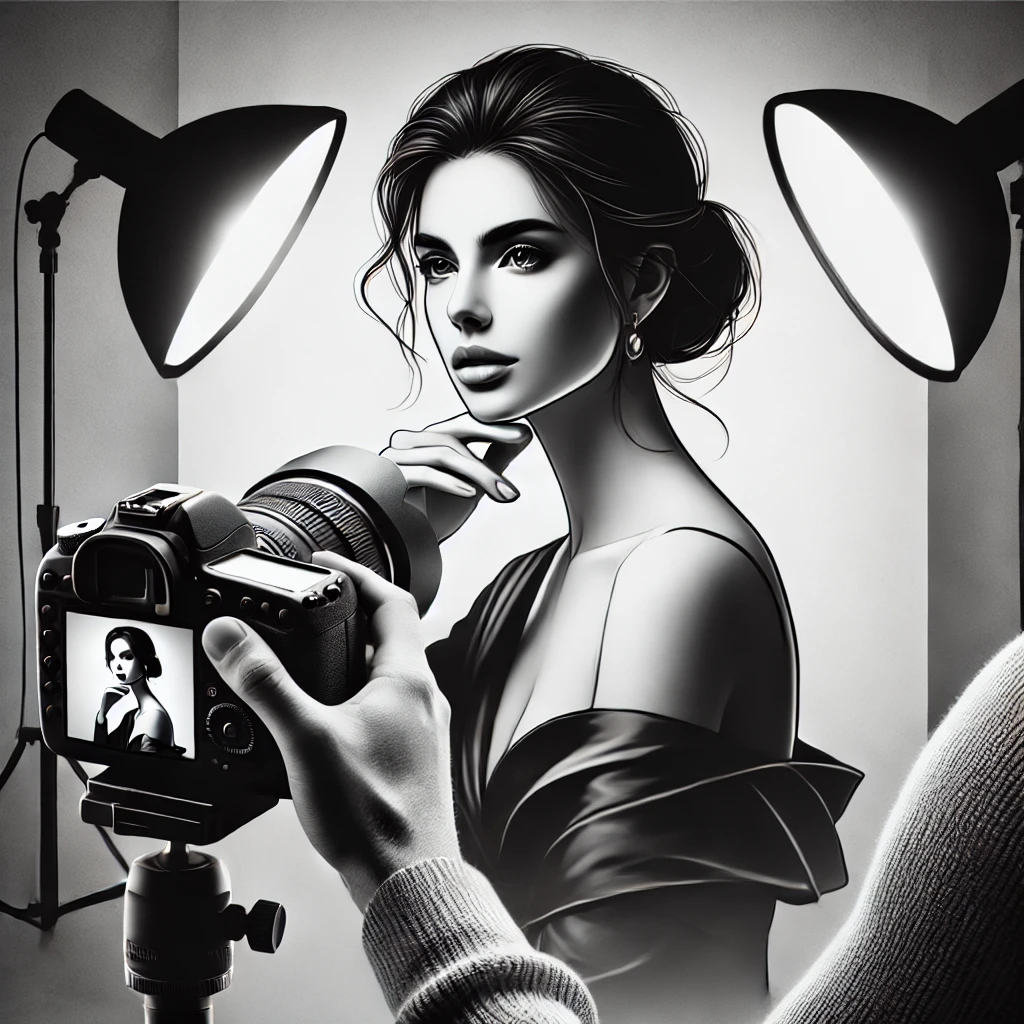
Black & white portrait photography is a timeless art form that highlights emotion, depth, and contrast in ways that color photography often cannot. It strips away distractions, allowing viewers to focus on expressions, textures, and lighting. Whether you are a beginner or an experienced photographer, mastering black & white portrait photography requires a deep understanding of composition, lighting, and post-processing techniques.
In this comprehensive guide, we will explore the power of black & white portrait photography, why it remains relevant in the digital era, and how you can master the craft to create stunning portraits.
Understanding the Essence of Black & White Portrait Photography
Why Black & White Photography Stands Out
Black & white portraits have an unmatched aesthetic appeal that conveys depth and drama. Some reasons why black & white photography remains a favorite among professionals and art enthusiasts include:
- Eliminates Color Distractions – When color is removed, the focus shifts to the subject’s expressions, gestures, and features.
- Enhances Contrast & Shadows – Light and shadow interplay become more pronounced, adding depth to the image.
- Timeless Appeal – Black & white portraits do not age the same way color images do, giving them a classic, ageless quality.
- Highlights Emotional Impact – Expressions and moods are often intensified in black & white, making them more powerful and evocative.
The History of Black & White Portrait Photography
From the early days of film photography to modern digital formats, black & white portraits have stood the test of time. Iconic photographers like Ansel Adams, Richard Avedon, and Dorothea Lange have used black & white photography to create some of the most compelling portraits in history. Understanding their techniques and inspirations can help you refine your own approach.
Essential Camera Settings for Black & White Portrait Photography
Choosing the Right Camera & Lenses
The choice of camera and lens plays a crucial role in capturing striking black & white portraits.
- Camera: Full-frame cameras tend to capture a broader dynamic range, which is essential for tonal variation in black & white portraits.
- Lenses: A prime lens (50mm or 85mm) with a wide aperture (f/1.8, f/1.4) is ideal for capturing sharp details while producing a beautiful background blur (bokeh).
Best Camera Settings for Black & White Portraits
- ISO: Keep ISO as low as possible (100-400) to minimize noise and retain image clarity.
- Aperture: A wide aperture (f/2.8 or lower) helps separate the subject from the background.
- Shutter Speed: Use a shutter speed of at least 1/200 sec to freeze movement.
- Shooting in RAW: Always shoot in RAW format to allow maximum flexibility in post-processing.
Mastering Lighting Techniques for Black & White Portraits
The Role of Light in Black & White Photography
Lighting is the most crucial aspect of black & white portrait photography. Since there is no color to add dimension, light and shadows define the structure of the image.
Best Lighting Techniques
- Rembrandt Lighting – A classic technique that creates a small triangle of light on the shadowed cheek, adding drama.
- Split Lighting – Illuminates half the face while leaving the other half in shadow for a bold, intense look.
- Loop Lighting – Creates a small shadow of the nose on the subject’s cheek, adding depth while keeping the face well-lit.
- Backlighting – Placing the light source behind the subject creates a soft glow and enhances contrast.
Composition Techniques for Stunning Black & White Portraits
The Rule of Thirds
Placing the subject off-center using the rule of thirds can create a more balanced and engaging composition.
Leading Lines
Using leading lines directs the viewer’s eye to the subject’s face, making the portrait more compelling.
Negative Space
Leaving ample empty space around the subject can make the portrait feel more dramatic and cinematic.
Textures & Patterns
Since color is removed, textures and patterns play a crucial role in making the portrait visually interesting.
Post-Processing for Black & White Portrait Photography
Converting Color Images to Black & White
- Use professional editing software like Adobe Lightroom or Photoshop to convert images to black & white.
- Adjust contrast, brightness, and sharpness to enhance the details.
- Use the HSL (Hue, Saturation, Luminance) panel to fine-tune the intensity of different shades.
Dodging & Burning
This technique enhances highlights and deepens shadows, creating a three-dimensional effect.
Adding Grain for a Vintage Look
A slight grain effect can add an old-film aesthetic to your portraits, making them feel timeless.
Common Mistakes to Avoid in Black & White Portrait Photography
Over-Reliance on Filters
Using built-in black & white filters without adjusting tones and contrast can make images look flat.
Poor Lighting
Inadequate lighting results in muddy tones, making the portrait look dull and lifeless.
Lack of Focus on the Subject
Ensure the subject’s eyes are sharp and in focus, as they are the most important feature in any portrait.
Conclusion
Mastering the art of black & white portrait photography requires a keen eye for lighting, composition, and contrast. By focusing on these elements, you can create timeless, emotion-driven portraits that leave a lasting impact. Whether you’re capturing candid moments or staged shots, black & white photography has the power to evoke strong emotions and tell profound stories.
Start experimenting today, and bring out the full potential of black & white portrait photography in your work!
-
Best Cameras for Travel Photography in 2026: Top 10 Picks
-

Best Cameras for Sports Photography in 2026: Top 10 Picks
-
Best Cameras for Wildlife Photography in 2026
-
Best Camera for Wedding Photography in 2026
-
Best Cameras for Travel Photography in 2026: Top 10 Picks
Discover the best cameras for travel photography in 2026. Compare Sony, Canon, Nikon, Fujifilm and more for portability, image quality, landscapes, street photography and travel video.
-
Best Cameras for Sports Photography in 2026: Top 10 Picks
Discover the best cameras for sports photography in 2026. Compare Sony, Canon, Nikon and Fujifilm cameras for fast action, autofocus, burst shooting and professional sports.
-
Best Cameras for Wildlife Photography in 2026
Discover the best cameras for wildlife photography in 2026. Compare Canon, Nikon, Sony, OM SYSTEM, Panasonic and Fujifilm cameras for birds and wildlife.
-
Best Camera for Wedding Photography in 2026
Discover the 10 best camera for wedding photography in 2026. Compare autofocus, low-light performance, image quality, battery life, and features to find the right camera
-
Sony A6700 vs Fujifilm X-T5: Which APS-C Camera Is Better in 2026?
Sony A6700 vs Fujifilm X-T5: compare image quality, autofocus, IBIS, video, lenses, battery, controls and real-world performance to find the right camera.
-
Sony A6700 vs Canon R7: Which Camera Is Better in 2026?
Sony A6700 vs Canon R7 compared for image quality, autofocus, wildlife, video, battery, lenses, and value. Find out which APS-C camera is right for you.




Leave a Reply