
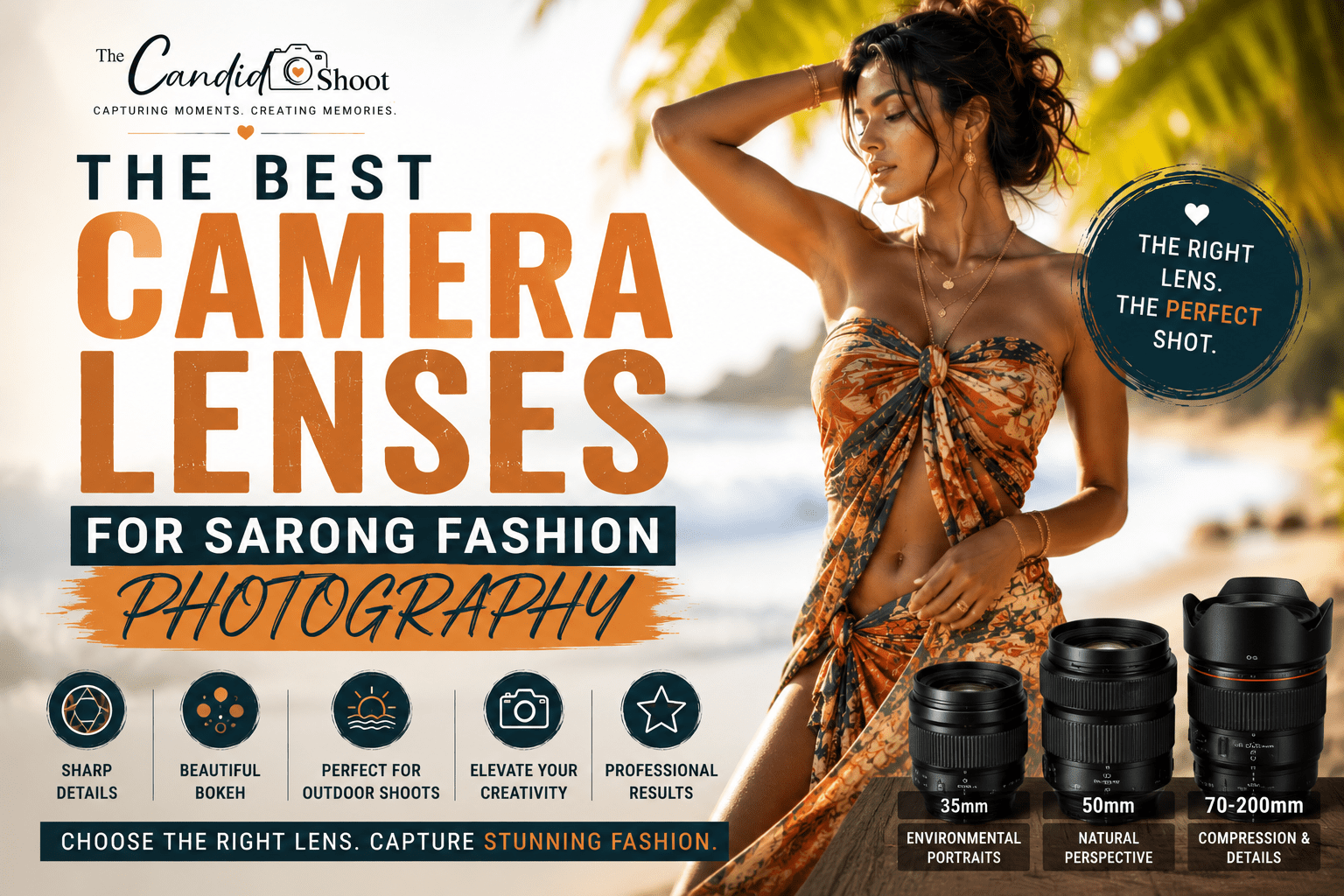
Looking for the perfect lens? Learn about the best camera lenses for sarong fashion photography for sharp, aesthetic, and Instagram-worthy beach images.
Table of Contents
Introduction – Camera Lenses for Sarong Fashion Photography
Sarong fashion photography requires a balance of vibrant details, flowing fabric motion, and natural aesthetics. The right lens can make all the difference in capturing the elegance and fluidity of sarongs. Whether you’re shooting on a tropical beach, in an urban landscape, or inside a well-lit studio, choosing the ideal lens ensures your images are sharp, well-exposed, and visually compelling. In this guide, we will explore the best lenses for sarong fashion photography, covering focal lengths, aperture considerations, lens types, and practical tips for achieving professional-quality shots.
Related Articles:
📸 Canon Lens Collection
Explore professional portrait and fashion photography lenses:
👉 Canon Official Lens Collection
Understanding Lens Types for Fashion Photography
Choosing the right lens starts with understanding the available types and how they affect your images. Below are the key categories for fashion photography:
1. Prime Lenses
Prime lenses have a fixed focal length and are known for their superior image quality and wide apertures. These lenses are ideal for fashion photography, offering beautiful bokeh and enhanced sharpness.
Best Prime Lenses for Sarong Photography:
- 50mm f/1.2 or f/1.4 – Great for mid-range shots and achieving a creamy bokeh.
- 85mm f/1.4 or f/1.8 – Perfect for capturing detailed portraits with a soft background.
- 35mm f/1.4 – Ideal for full-body shots and environmental fashion photography.
2. Zoom Lenses
Zoom lenses provide flexibility in framing without changing your position, making them perfect for dynamic fashion shoots.
Best Zoom Lenses for Sarong Photography:
- 24-70mm f/2.8 – A versatile option that covers wide to mid-range shots.
- 70-200mm f/2.8 – Great for capturing fashion details and compressing backgrounds for a professional look.
3. Wide-Angle Lenses
Wide-angle lenses work well for landscape-integrated fashion photography, particularly on beaches or outdoor locations.
Best Wide-Angle Lenses:
- 16-35mm f/2.8 – Ideal for environmental shots that incorporate scenic backdrops.
- 24mm f/1.4 – Great for unique, artistic perspectives while maintaining subject prominence.
Choosing the Camera Lenses for Sarong Fashion Photography
1. Portrait-Focused Sarong Photography
If your goal is to capture close-up beauty shots, opt for lenses with a longer focal length and a wide aperture for smooth background blur.
Best Choices:
- 85mm f/1.4 or f/1.8
- 70-200mm f/2.8
2. Full-Body Fashion Shots
To capture the flowing movement of a sarong while maintaining a natural background, mid-range lenses are ideal.

Best Choices:
- 50mm f/1.2 or f/1.4
- 24-70mm f/2.8
3. Dynamic Outdoor Sarong Photography
For fashion photography that integrates landscapes, a wide-angle or zoom lens is perfect.
Best Choices:
- 16-35mm f/2.8
- 24mm f/1.4
Key Features to Look in a Camera Lenses for Sarong Fashion Photography
1. Aperture (f/Stop) Considerations
A wide aperture (low f-stop) allows for more light and beautiful subject-background separation. Ideal f-stop ranges for sarong fashion photography:
- f/1.2 to f/2.8 for portrait and detail shots
- f/2.8 to f/4 for outdoor and full-body images
2. Autofocus and Image Stabilization
Fast and accurate autofocus is essential for capturing movement, while image stabilization is beneficial for handheld shooting.
3. Lens Coating and Build Quality
High-end lenses with anti-reflective coatings reduce glare and enhance colors, crucial for outdoor sarong fashion shoots.
Pro Tips for Camera Lenses for Sarong Fashion Photography
1. Use Natural Light for Enhanced Texture
Soft lighting conditions, such as during golden hour, enhance the flow and texture of the sarong fabric.
2. Capture Movement with the Right Shutter Speed
- 1/500s or faster for motion capture
- 1/250s for balanced exposure in moderate light
3. Experiment with Angles and Composition
Try shooting from different perspectives to showcase the elegance and movement of the sarong creatively.
4. Pair the Right Lens with Your Camera Sensor
Full-frame cameras perform best with prime and zoom lenses, while crop-sensor cameras benefit from wide-angle options to compensate for focal length multiplication.
Conclusion – Camera Lenses for Sarong Fashion Photography
Selecting the best lenses for sarong fashion photography depends on your preferred style, location, and desired visual effect. Whether you’re aiming for striking portraits, full-body compositions, or scenic outdoor shots, choosing the right lens will elevate your fashion photography game. Investing in quality glass ensures your images are crisp, vibrant, and professional.
By mastering focal lengths, aperture settings, and lens functionalities, you can achieve breathtaking sarong fashion shots that captivate audiences and enhance your portfolio.
Which lens is your go-to for fashion photography? Let us know in the comments!
FAQs – Camera Lenses for Sarong Fashion Photography
1. Which lens is best for sarong fashion photography?
The best lens for sarong fashion photography is usually a 50mm or 85mm prime lens. These lenses create a natural perspective and beautiful background blur (bokeh), which helps highlight the subject and flowing fabric of the sarong. An 85mm lens is especially ideal for portraits because it compresses the background and gives a cinematic, professional look. If you want versatility, a 35mm lens also works well for capturing both the model and scenic beach surroundings in one frame.
2. Are wide-angle lenses good for beach fashion photography?
Yes, wide-angle lenses are excellent for beach fashion photography, especially when you want to capture landscapes along with the subject. A 24mm or 35mm lens allows you to include the ocean, sky, and environment, making the image more storytelling-focused. However, wide-angle lenses should be used carefully because they can slightly distort facial features if you get too close. They work best for full-body shots, walking poses, and dynamic beach compositions that emphasize scenery and movement.
3. What focal length works best for fashion photography?
The ideal focal length for fashion photography ranges between 35mm and 85mm. A 35mm lens is great for environmental portraits where the background plays an important role. A 50mm lens provides a natural look similar to the human eye, making it versatile for both indoor and outdoor shoots. The 85mm lens is widely used for professional fashion portraits due to its flattering compression and smooth background blur. Choosing depends on whether you want storytelling, versatility, or high-end portrait aesthetics.
4. Which lens creates cinematic beach portraits?
Cinematic beach portraits are best created using lenses with wide apertures like 50mm f/1.8 or 85mm f/1.4. These lenses help achieve shallow depth of field, making the subject stand out beautifully against soft, blurred backgrounds. This effect is ideal for capturing dreamy sarong fashion photography during golden hour. The compression of telephoto lenses also enhances facial features and creates a luxury editorial feel. Combined with natural light and movement, these lenses produce highly cinematic and visually appealing results.
5. Can beginners use prime lenses for fashion photography?
Yes, beginners can absolutely use prime lenses for fashion photography. In fact, prime lenses like 50mm f/1.8 are often recommended as the first upgrade after a kit lens. They are lightweight, affordable, and produce sharp, high-quality images with beautiful background blur. Since prime lenses have a fixed focal length, they also help beginners learn composition and positioning more effectively. With practice, they allow users to develop a stronger understanding of framing, lighting, and subject placement in fashion photography.
Related Articles:
- Viral Photography Ideas
- Best Camera for Instagram and Reels
- Best Budget Camera for Photography in India Under ₹50000
- Lifestyle Photography Tips for Instagram Influencers
- Indoor Photoshoot Ideas at Home
📖 Digital Photography School
Learn professional lens techniques for fashion and portrait photography:
👉 Digital Photography School
Leave a Reply