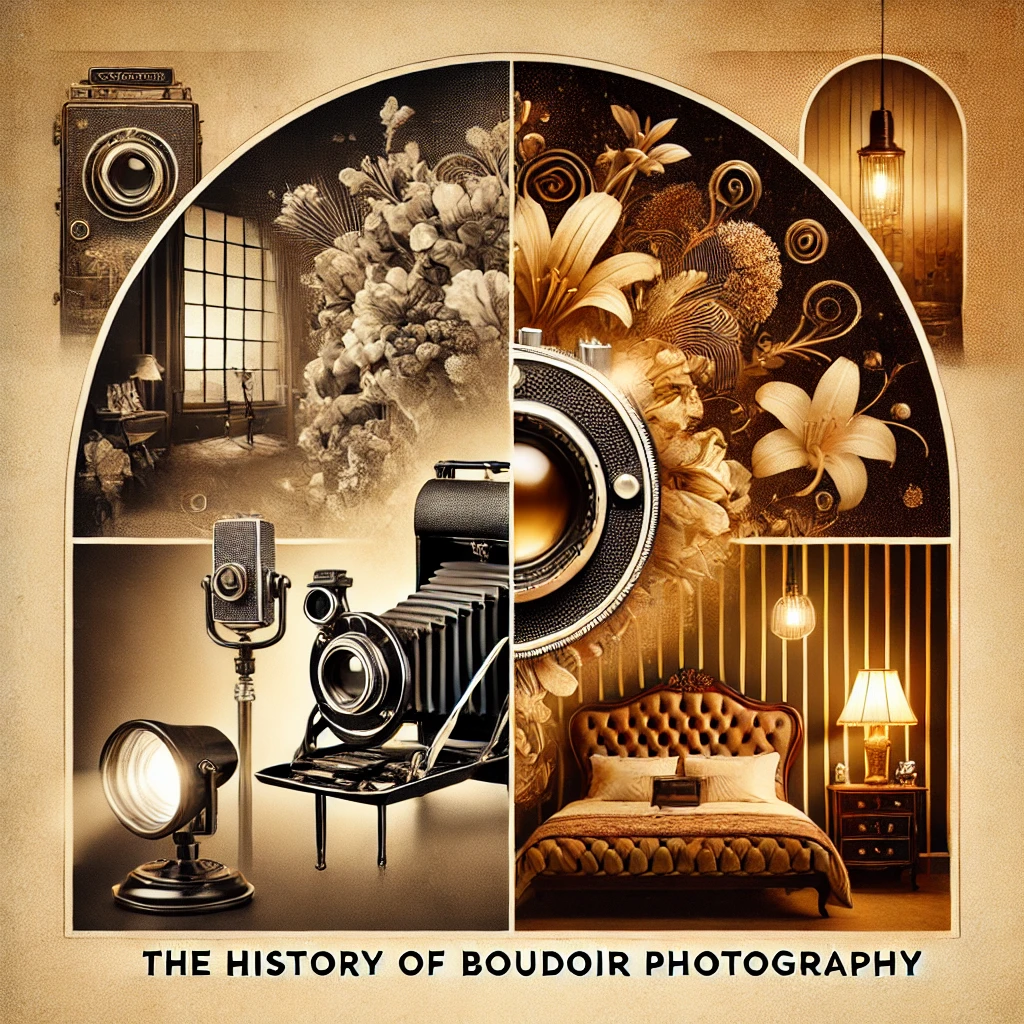
The Timeless Art of Boudoir Photography
Boudoir photography is more than just intimate portraits—it is a celebration of self-confidence, sensuality, and artistic expression. From its early roots in classical art to its modern transformation into an empowering photography genre, boudoir has evolved significantly over time.
Whether captured in soft, dreamy tones or bold, high-contrast imagery, boudoir photography has continuously reflected shifting beauty ideals, cultural attitudes, and personal empowerment.
In this extensive guide, we will explore:
- The origins of boudoir photography in classical portraiture
- The rise of vintage Hollywood glamour photography
- How boudoir evolved through the decades
- The impact of modern movements like body positivity and self-love
- Tips for creating your own boudoir session inspired by historical styles
Let’s dive into the fascinating history of boudoir photography, tracing its evolution from vintage elegance to contemporary empowerment.
1. The Roots of Boudoir Photography: Art, Eroticism, and Expression
Boudoir and Its Origins in Classical Art
Before photography, sensual portraiture existed in the form of paintings, sketches, and sculptures. European aristocrats in the 17th and 18th centuries often commissioned intimate, romanticized portraits that subtly hinted at sensuality.
Artists like François Boucher and Jean-Honoré Fragonard painted noblewomen in soft, reclining poses, surrounded by silk, lace, and luxurious settings. These artworks, often created in private chambers (or “boudoirs”), laid the foundation for the later evolution of boudoir photography.
The Victorian Era: The First Boudoir Photographs
The 19th century marked the dawn of photography, and with it came the first boudoir-style images. Early daguerreotypes and cabinet cards captured women in soft-focus, dreamlike settings, often dressed in elegant lingerie or delicate gowns.
However, Victorian society was notoriously conservative, and boudoir photography remained largely underground. It was often linked to burlesque performers, courtesans, and silent rebels who dared to defy rigid social norms.
2. The Rise of Vintage Glamour: Boudoir Photoshoot in the Early 20th Century
1920s–1930s: The Golden Age of Hollywood and Pin-Up Culture
With the rise of Hollywood, boudoir photography found a new identity—one rooted in glamour, allure, and sophistication.
Notable influences included:
- Hollywood studio portraits featuring icons like Jean Harlow, Marlene Dietrich, and Greta Garbo.
- The emergence of pin-up photography, popularized by artists like Alberto Vargas.
- The use of soft lighting, dramatic poses, and vintage lingerie to create a luxurious, romantic aesthetic.
During this era, boudoir photography shifted from being a secret indulgence to an aspirational art form, inspiring women to embrace their confidence and beauty.
1940s–1950s: The Burlesque Influence and Classic Pin-Ups
The 1940s and 1950s saw an explosion of pin-up culture, with stars like Bettie Page defining the era. Boudoir-style photography became associated with:
- Playful yet sensual posing, often featuring stockings, corsets, and vintage curls.
- High-contrast black-and-white photography, enhancing dramatic lighting and mood.
- A growing acceptance of women’s sexual empowerment, albeit still within the constraints of the time.
This period cemented boudoir as a celebration of femininity, blending artistic allure with everyday glamour.
3. The Evolution of Boudoir Photoshoot Through the Decades
1960s–1970s: The Feminist Movement and Sexual Liberation
The 1960s and 1970s brought significant cultural shifts. As feminism gained traction, attitudes toward women’s bodies and sensuality transformed. Boudoir photography:
- Became more bold, daring, and unfiltered.
- Moved beyond traditional beauty standards to embrace diverse body types.
- Shifted toward natural, candid shots, moving away from heavily posed imagery.
This was also the era of Playboy magazine and editorial-style boudoir, which introduced more mainstream sensual photography.
1980s–1990s: Boudoir Photography as a Personal Empowerment Tool
During the 1980s and 1990s, boudoir photography experienced another shift: it became a gift and personal experience rather than just a commercial art form. Women increasingly booked sessions as:
- Bridal boudoir gifts for their partners.
- Self-confidence photoshoots, celebrating milestones and personal growth.
- Artistic portraits, blending fashion, editorial, and personal sensuality.
The emergence of soft-focus photography and pastel tones defined the era’s aesthetic.
4. Modern Boudoir Photography: Inclusivity, Diversity, and Self-Love
The 2000s–Present: Breaking Beauty Stereotypes
Today, boudoir photography has evolved into a powerful tool for self-love, confidence, and artistic expression. Unlike past decades, modern boudoir:
- Embraces all body types, genders, and identities.
- Prioritizes authenticity over perfection, focusing on real emotions and comfort.
- Celebrates self-empowerment, with many people booking sessions for personal growth rather than external validation.
The Role of Social Media in Redefining Boudoir
Platforms like Instagram, Pinterest, and TikTok have transformed how boudoir photography is perceived. Photographers and clients now have the freedom to share stories, breaking stigmas around body image and intimacy.
5. How to Create a Boudoir Photoshoot Inspired by Different Eras
If you’re inspired by the history of boudoir, why not create a photoshoot that blends vintage elegance with modern confidence? Here’s how:
Vintage Glam (1920s–1950s)
- Wardrobe: Silk robes, corsets, garter belts.
- Makeup & Hair: Classic red lips, Hollywood waves.
- Lighting: Soft, high-contrast lighting for a cinematic effect.
Boho & Natural (1960s–1970s)
- Wardrobe: Sheer fabrics, floral elements.
- Makeup & Hair: Bare skin, effortless waves.
- Posing: More candid, free-flowing movements.
Modern Empowerment (2000s–Present)
- Wardrobe: Anything that makes you feel confident!
- Posing: Bold, fierce, and unapologetically YOU.
- Lighting: Soft natural light for an ethereal effect.
Conclusion: The Everlasting Allure of Boudoir Photography
From vintage elegance to modern self-love, boudoir photography has always been a mirror of cultural and personal empowerment. Whether you appreciate its classical roots or embrace its contemporary boldness, the heart of boudoir remains the same: a celebration of confidence, beauty, and authenticity.
If you’re considering a boudoir session, remember—it’s not just about looking beautiful, it’s about feeling powerful.The Timeless Art of Boudoir Photography
Boudoir photography is more than just intimate portraits—it is a celebration of self-confidence, sensuality, and artistic expression. From its early roots in classical art to its modern transformation into an empowering photography genre, boudoir has evolved significantly over time.
Whether captured in soft, dreamy tones or bold, high-contrast imagery, boudoir photography has continuously reflected shifting beauty ideals, cultural attitudes, and personal empowerment.
In this extensive guide, we will explore:
- The origins of boudoir photography in classical portraiture
- The rise of vintage Hollywood glamour photography
- How boudoir evolved through the decades
- The impact of modern movements like body positivity and self-love
- Tips for creating your own boudoir session inspired by historical styles
Let’s dive into the fascinating history of boudoir Photoshoot, tracing its evolution from vintage elegance to contemporary empowerment.
1. The Roots of Boudoir Photoshoot: Art, Eroticism, and Expression
Boudoir and Its Origins in Classical Art
Before photography, sensual portraiture existed in the form of paintings, sketches, and sculptures. European aristocrats in the 17th and 18th centuries often commissioned intimate, romanticized portraits that subtly hinted at sensuality.
Artists like François Boucher and Jean-Honoré Fragonard painted noblewomen in soft, reclining poses, surrounded by silk, lace, and luxurious settings. These artworks, often created in private chambers (or “boudoirs”), laid the foundation for the later evolution of boudoir photography.
The Victorian Era: The First Boudoir Photographs
The 19th century marked the dawn of photography, and with it came the first boudoir-style images. Early daguerreotypes and cabinet cards captured women in soft-focus, dreamlike settings, often dressed in elegant lingerie or delicate gowns.
However, Victorian society was notoriously conservative, and boudoir photography remained largely underground. It was often linked to burlesque performers, courtesans, and silent rebels who dared to defy rigid social norms.
2. The Rise of Vintage Glamour: Boudoir Photoshoot in the Early 20th Century
1920s–1930s: The Golden Age of Hollywood and Pin-Up Culture
With the rise of Hollywood, boudoir photography found a new identity—one rooted in glamour, allure, and sophistication.
Notable influences included:
- Hollywood studio portraits featuring icons like Jean Harlow, Marlene Dietrich, and Greta Garbo.
- The emergence of pin-up photography, popularized by artists like Alberto Vargas.
- The use of soft lighting, dramatic poses, and vintage lingerie to create a luxurious, romantic aesthetic.
During this era, boudoir photography shifted from being a secret indulgence to an aspirational art form, inspiring women to embrace their confidence and beauty.
1940s–1950s: The Burlesque Influence and Classic Pin-Ups
The 1940s and 1950s saw an explosion of pin-up culture, with stars like Bettie Page defining the era. Boudoir-style photography became associated with:
- Playful yet sensual posing, often featuring stockings, corsets, and vintage curls.
- High-contrast black-and-white photography, enhancing dramatic lighting and mood.
- A growing acceptance of women’s sexual empowerment, albeit still within the constraints of the time.
This period cemented boudoir as a celebration of femininity, blending artistic allure with everyday glamour.
3. The Evolution of Boudoir Photoshoot Through the Decades
1960s–1970s: The Feminist Movement and Sexual Liberation
The 1960s and 1970s brought significant cultural shifts. As feminism gained traction, attitudes toward women’s bodies and sensuality transformed. Boudoir photography:
- Became more bold, daring, and unfiltered.
- Moved beyond traditional beauty standards to embrace diverse body types.
- Shifted toward natural, candid shots, moving away from heavily posed imagery.
This was also the era of Playboy magazine and editorial-style boudoir, which introduced more mainstream sensual photography.
1980s–1990s: Boudoir Photoshoot as a Personal Empowerment Tool
During the 1980s and 1990s, boudoir photography experienced another shift: it became a gift and personal experience rather than just a commercial art form. Women increasingly booked sessions as:
- Bridal boudoir gifts for their partners.
- Self-confidence photoshoots, celebrating milestones and personal growth.
- Artistic portraits, blending fashion, editorial, and personal sensuality.
The emergence of soft-focus photography and pastel tones defined the era’s aesthetic.
4. Modern Boudoir Photoshoot: Inclusivity, Diversity, and Self-Love
The 2000s–Present: Breaking Beauty Stereotypes
Today, boudoir photography has evolved into a powerful tool for self-love, confidence, and artistic expression. Unlike past decades, modern boudoir:
- Embraces all body types, genders, and identities.
- Prioritizes authenticity over perfection, focusing on real emotions and comfort.
- Celebrates self-empowerment, with many people booking sessions for personal growth rather than external validation.
The Role of Social Media in Redefining Boudoir
Platforms like Instagram, Pinterest, and TikTok have transformed how boudoir photography is perceived. Photographers and clients now have the freedom to share stories, breaking stigmas around body image and intimacy.
5. How to Create a Boudoir Photoshoot Inspired by Different Eras
If you’re inspired by the history of boudoir, why not create a photoshoot that blends vintage elegance with modern confidence? Here’s how:
Vintage Glam (1920s–1950s)
- Wardrobe: Silk robes, corsets, garter belts.
- Makeup & Hair: Classic red lips, Hollywood waves.
- Lighting: Soft, high-contrast lighting for a cinematic effect.
Boho & Natural (1960s–1970s)
- Wardrobe: Sheer fabrics, floral elements.
- Makeup & Hair: Bare skin, effortless waves.
- Posing: More candid, free-flowing movements.
Modern Empowerment (2000s–Present)
- Wardrobe: Anything that makes you feel confident!
- Posing: Bold, fierce, and unapologetically YOU.
- Lighting: Soft natural light for an ethereal effect.
Conclusion: The Everlasting Allure of Boudoir Photography
From vintage elegance to modern self-love, boudoir photography has always been a mirror of cultural and personal empowerment. Whether you appreciate its classical roots or embrace its contemporary boldness, the heart of boudoir remains the same: a celebration of confidence, beauty, and authenticity.
If you’re considering a boudoir session, remember—it’s not just about looking beautiful, it’s about feeling powerful.
-
Vivo X300 Pro Photography Kit: Next-Gen Mobile Imaging
-
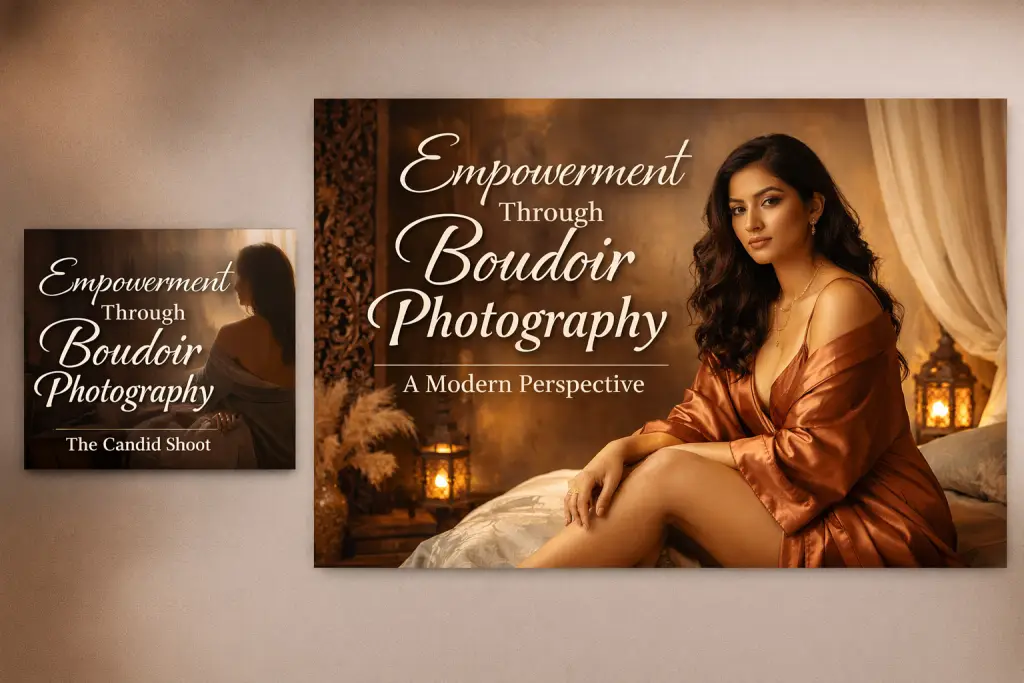
Empowerment Through Boudoir Photography: The Candid Shoot
-
Bold Photography: Creating Powerful & Confident Visual Stories
-
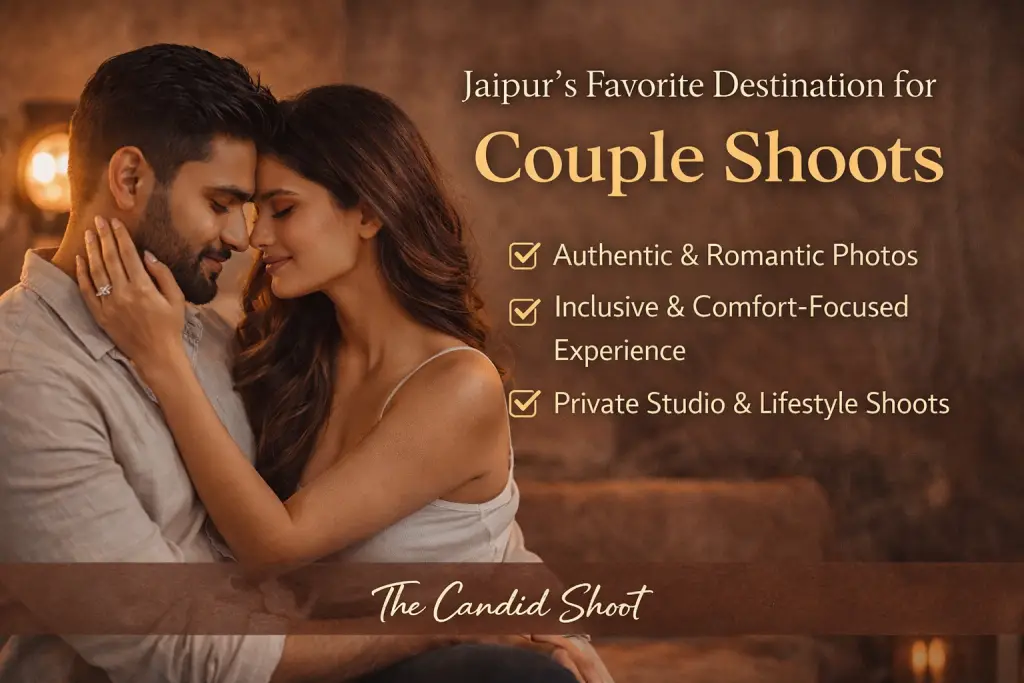
Jaipur’s Favorite Destination for Couple Shoots | The Candid Shoot
-
Vivo X300 Pro Photography Kit: Next-Gen Mobile Imaging
Discover the complete vivo X300 Pro photography kit guide with in-depth camera analysis, real-world case studies, portrait techniques, cinematic workflows, and pro-level tips. Learn how vivo X300 Pro transforms mobile photography for creators, influencers, and studio professionals. The vivo X300 Pro — Redefining Mobile Imaging for Creators Why the vivo X300 Pro Deserves a Dedicated
-
Empowerment Through Boudoir Photography: The Candid Shoot
Boudoir Photography as Empowerment Boudoir photography has evolved far beyond traditional notions of intimacy or sensuality. Modern boudoir photography is about empowerment, confidence, and self-expression, not merely performing for the camera. At its heart, boudoir photography is a visual dialogue between the subject and themselves, mediated by a professional photographer. It provides a private, safe
-
Jaipur’s Favorite Destination for Couple Shoots | The Candid Shoot
Why Couple Shoots Matter More Than Ever Couple shoots have evolved far beyond posed photographs and forced smiles. Today, couples look for experiences that feel natural, meaningful, and reflective of who they are together. A couple shoot is no longer about perfection. It is about presence, connection, and shared emotion. At The Candid Shoot, we
-
Bold Shoot Photographer with Studio in Jaipur | The Candid Shoot
The phrase “bold shoot photographer” often triggers assumptions—many of them incomplete, outdated, or shaped by stereotypes. In reality, bold photography has evolved far beyond shock value or surface-level aesthetics. Today, bold shoots represent self-expression, body confidence, emotional honesty, and artistic courage. At The Candid Shoot, bold photography is not about exposure—it is about expression. It
-
Styling Tips for Maternity Shoots: Looking Timeless, and Confident
Styling as the Silent Storyteller in Maternity Shoots Maternity shoots are not simply about documenting pregnancy. They are about honoring a season of transformation—physical, emotional, relational, and often spiritual. Styling plays a foundational role in how that transformation appears, feels, and endures through photographs. When people look back at maternity photographs years later, they rarely